Cognitive and magnetic resonance imaging brain morphometric correlates of brain-derived neurotrophic factor Val66Met gene polymorphism in patients with schizophrenia and healthy volunteers
- PMID: 16818862
- PMCID: PMC3065118
- DOI: 10.1001/archpsyc.63.7.731
Cognitive and magnetic resonance imaging brain morphometric correlates of brain-derived neurotrophic factor Val66Met gene polymorphism in patients with schizophrenia and healthy volunteers
Abstract
Context: Relatively little is known about genetic determinants of cognitive dysfunction in schizophrenia. Recent studies suggest that a brain-derived neurotrophic factor (BDNF) prodomain single nucleotide polymorphism resulting in a valine (Val)-to-methionine (Met) substitution is associated with impaired declarative memory in healthy volunteers and patients with schizophrenia. These studies indicate that the BDNF(Met) variant may mediate hippocampal cognitive functions by modulating intracellular trafficking and activity-dependent BDNF release. To our knowledge, the way in which this functional single nucleotide polymorphism affects other neurocognitive measures has not been examined. Its role in determining cognitive deficits in schizophrenia has also not been systematically studied.
Objectives: To characterize the neurocognitive and brain morphometric phenotypic correlates of the BDNF Val66Met polymorphism and to test the specificity of the BDNF(Met) variant on cognitive dysfunction in schizophrenia.
Design, setting, and participants: A comprehensive battery of standardized neuropsychological tests was administered to 144 healthy volunteers and 293 patients with schizophrenia spectrum disorder at a tertiary care university hospital. Approximately two thirds of the sample also underwent high-resolution magnetic resonance imaging brain scans.
Main outcome measures: Genotype effects (in Met allele carriers vs Val homozygotes) on 5 cognitive domain z scores and magnetic resonance imaging gray matter brain volume measures (Talairach atlas-based cerebral lobes and optimized voxel-based morphometry) were examined using general linear models.
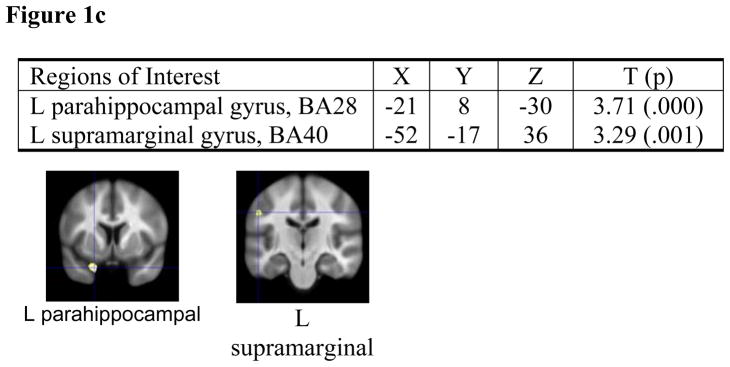
Results: On verbal memory, there was a significant genotype effect but no genotype x diagnosis effects. In both patients with schizophrenia and healthy volunteers, Met allele carriers had poorer verbal memory performance than their Val-homozygous counterparts. On visuospatial abilities, there were significant genotype and genotype x diagnosis effects. Met allele-associated visuospatial impairment was specific to patients with schizophrenia but not healthy volunteers. There were significant genotype effects on gray matter volumes within brain regions known to subserve these 2 cognitive domains, with Met allele carriers having smaller temporal and occipital lobar gray matter volumes. Optimized voxel-based morphometry further suggests that parietal heteromodal cortical gray matter deficits may underlie visuospatial impairment in patients with schizophrenia carrying the Met allele.
Conclusions: We replicated the association between the BDNF(Met) variant and poor medial temporal lobe-related memory performance. The consonance of our cognitive and brain morphology findings further suggests that the BDNF(Met) variant may have a specific role in conferring visuospatial dysfunction in schizophrenia.
Figures


References
-
- Moldin SO. Indicators of liability to schizophrenia: perspectives from genetic epidemiology. Schizophr Bull. 1994;20:169–84. - PubMed
-
- Harrison PJ, Weinberger DR. Schizophrenia genes, gene expression, and neuropathology: on the matter of their convergence. Mol Psychiatry. 2005;10:40–68. - PubMed
-
- Lessmann V, Gottmann K, Malcangio M. Neurotrophin secretion: current facts and future prospects. Prog Neurobiol. 2003;69:341–74. - PubMed
Publication types
MeSH terms
Substances
Grants and funding
LinkOut - more resources
Full Text Sources
Other Literature Sources
Medical
Miscellaneous