


Photoirradiation of retinyl palmitate in ethanol with ultraviolet light--formation of photodecomposition products, reactive oxygen species, and lipid peroxides
- PMID: 16823091
- PMCID: PMC3807509
- DOI: 10.3390/ijerph2006030021
Photoirradiation of retinyl palmitate in ethanol with ultraviolet light--formation of photodecomposition products, reactive oxygen species, and lipid peroxides
Abstract
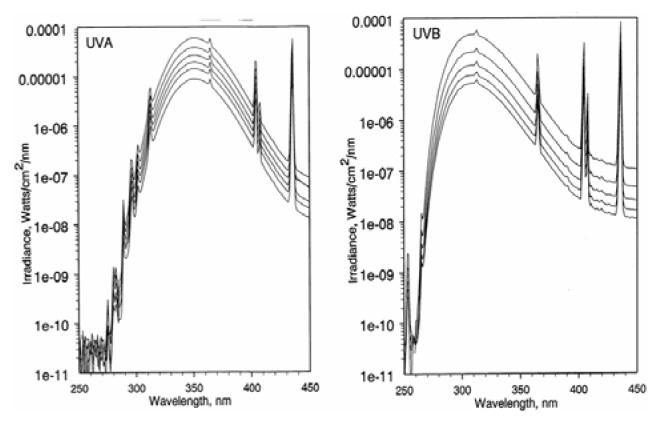
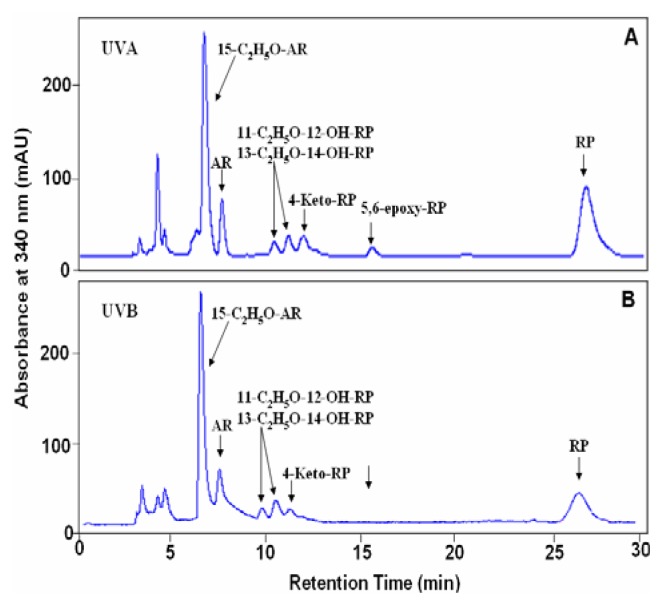
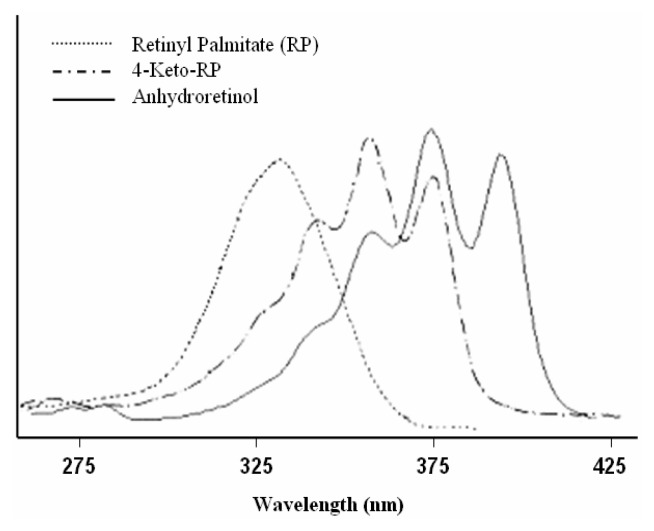
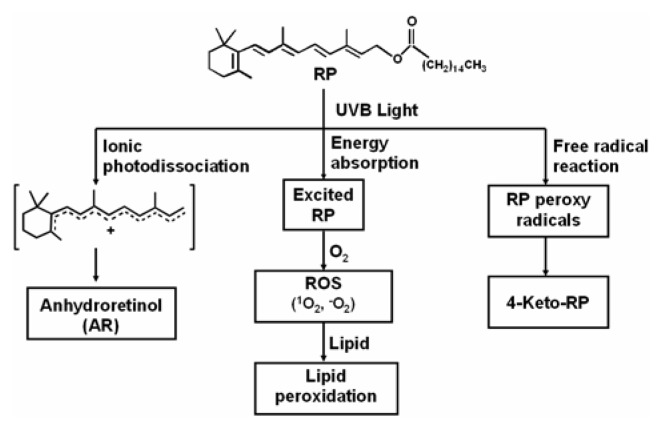
We have previously reported that photoirradiation of retinyl palmitate (RP), a storage and ester form of vitamin A (retinol), with UVA light resulted in the formation of photodecomposition products, generation of reactive oxygen species, and induction of lipid peroxidation. In this paper, we report our results following the photoirradiation of RP in ethanol by an UV lamp with approximately equal UVA and UVB light. The photodecomposition products were separated by reversed-phase HPLC and characterized spectroscopically by comparison with authentic standards. The identified products include: 4-keto-RP, 11-ethoxy-12-hydroxy-RP, 13-ethoxy-14-hydroxy-RP, anhydroretinol (AR), and trans- and cis-15-ethoxy-AR. Photoirradiation of RP in the presence of a lipid, methyl linoleate, resulted in induction of lipid peroxidation. Lipid peroxidation was inhibited when sodium azide was present during photoirradiation which suggests free radicals were formed. Our results demonstrate that, similar to irradiation with UVA light, RP can act as a photosensitizer leading to free radical formation and induction of lipid peroxidation following irradiation with UVB light.
Figures



References
-
- (IARC) International Agency for Research on Cancer. Handbooks of Cancer Prevention: Vitamin A. Vol. 3 Lyon, France: 1998.
-
- Tee E. S. Carotenoids and retinoids in human nutrition. Crit. Rev. Food Sci. Nutr. 1992;31:103–163. - PubMed
-
- Idson B. Vitamins in cosmetics, an update I. Overview and Vitamin A. Drug Cosmet. Ind. 1990;146:26–91.
-
-
Data from the U.S. Food and Drug Administration’s Voluntary Cosmetics Registration Program, 2004
-
-
- Fu P. P., Howard P. C., Culp S., Xia Q., Webb P. J., Blankenship L., Wamer W. G., Bucher J. R. Do topically applied skin creams containing retinyl palmitate affect the photocarcinogenicity of simulated solar light? J. Food Drug Anal. 2002;10:262–268.
Publication types
MeSH terms
Substances
LinkOut - more resources
Full Text Sources
Medical
Research Materials