


The nicotinic receptor antagonists abolish pathobiologic effects of tobacco-derived nitrosamines on BEP2D cells
- PMID: 16835749
- PMCID: PMC12161024
- DOI: 10.1007/s00432-006-0113-9
The nicotinic receptor antagonists abolish pathobiologic effects of tobacco-derived nitrosamines on BEP2D cells
Abstract
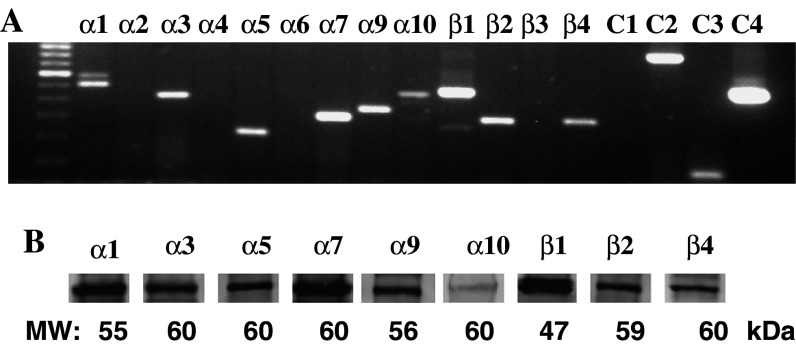
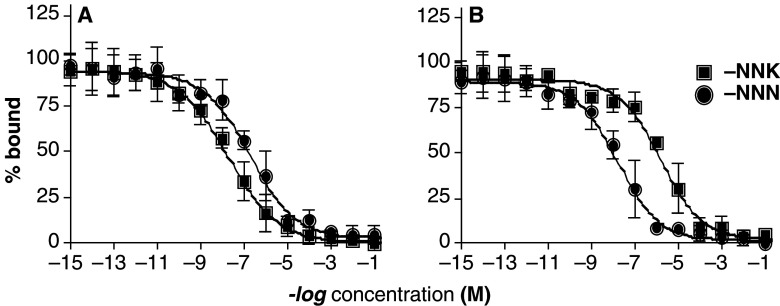
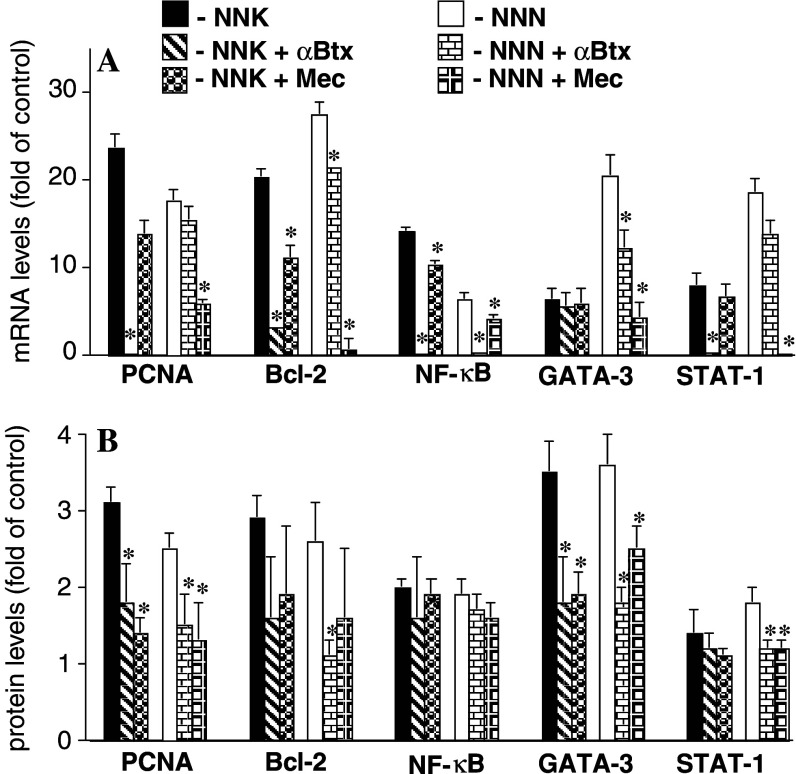
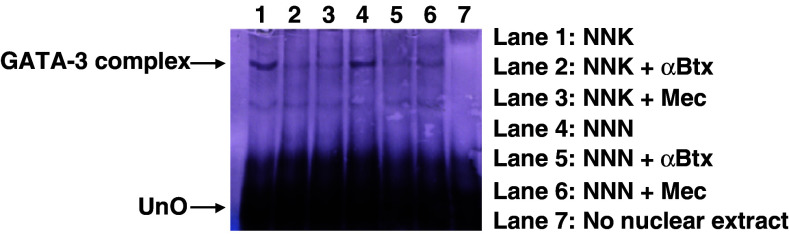
Identification of the mechanisms leading to malignant transformation of respiratory cells may prove useful in the prevention and treatment of tobacco-related lung cancer. Nitrosamines 4-(methylnitrosamino)-1-(3-pyridyl)-1-butanone (NNK) and N'-nitrosonornicotine (NNN) can induce tumors both locally and systemically. In addition to the genotoxic effect, they have been shown to affect lung cells due to ligating the nicotinic acetylcholine receptors (nAChRs) expressed on the plasma membrane. In this study, we sought to establish the role for nAChRs in malignant transformation caused by NNK and NNN. We used the BEP2D cells that represent a suitable model for studying the various stages of human bronchial carcinogenesis. We found that these cells express alpha1, alpha3, alpha5, alpha7, alpha9, alpha10, beta1, beta2, and beta4 nAChR subunits that can form high-affinity binding sites for NNK and NNN. Exposure of BEP2D cells to either NNK or NNN in both cases increased their proliferative potential which could be abolished in the presence of nAChR antagonists alpha-bungarotoxin, which worked most effectively against NNK, or mecamylamine, which was most efficient against NNN. The BEP2D cells stimulated with the nitrosamines showed multifold increases of the transcription of the PCNA and Bcl-2 genes by both real-time polymerase chain reaction and in-cell western assays. To gain a mechanistic insight into NNK- and NNN-initiated signaling, we investigated the expression of genes encoding the signal transduction effectors GATA-3, nuclear factor-kappaB, and STAT-1. Experimental results indicated that stimulation of nAChRs with NNK led to activation of all three signal transduction effectors under consideration, whereas NNN predominantly activated GATA-3 and STAT-1. The GATA-3 protein-binding activity induced by NNK and NNN correlated with elevated gene expression. The obtained results support the novel concept of receptor-mediated action of NNK and NNN placing cellular nAChRs in the center of the pathophysiologic loop, and suggest that an nAChR antagonist may serve as a chemopreventive agent.
Figures
References
-
- Abravaya K, Myers MP, Murphy SP, Morimoto RI (1992) The human heat shock protein hsp70 interacts with HSF, the transcription factor that regulates heat shock gene expression. Genes Dev 6:1153–1164 - PubMed
-
- Arredondo J, Nguyen VT, Chernyavsky AI, Jolkovsky DL, Pinkerton KE, Grando SA (2001) A receptor-mediated mechanism of nicotine toxicity in oral keratinocytes. Lab Invest 81:1653–1668 - PubMed
-
- Arredondo J, Hall LH, Ndoye A, Nguyen VT, Chernyavsky AI, Bercovich D, Orr-Urtreger A, Beaudet AL, Grando SA (2003) Central role of fibroblast α3 nicotinic acetylcholine receptor in mediating cutaneous effects of nicotine. Lab Invest 83:207–225 - PubMed
Publication types
MeSH terms
Substances
Grants and funding
LinkOut - more resources
Full Text Sources
Other Literature Sources
Research Materials
Miscellaneous
