


In vivo effects of HIV-1 exposure in the presence and absence of single-dose nevirapine on cellular plasma activation markers of infants born to HIV-1-seropositive mothers
- PMID: 16837862
- PMCID: PMC2367220
- DOI: 10.1097/01.qai.0000225009.30698.ce
In vivo effects of HIV-1 exposure in the presence and absence of single-dose nevirapine on cellular plasma activation markers of infants born to HIV-1-seropositive mothers
Abstract
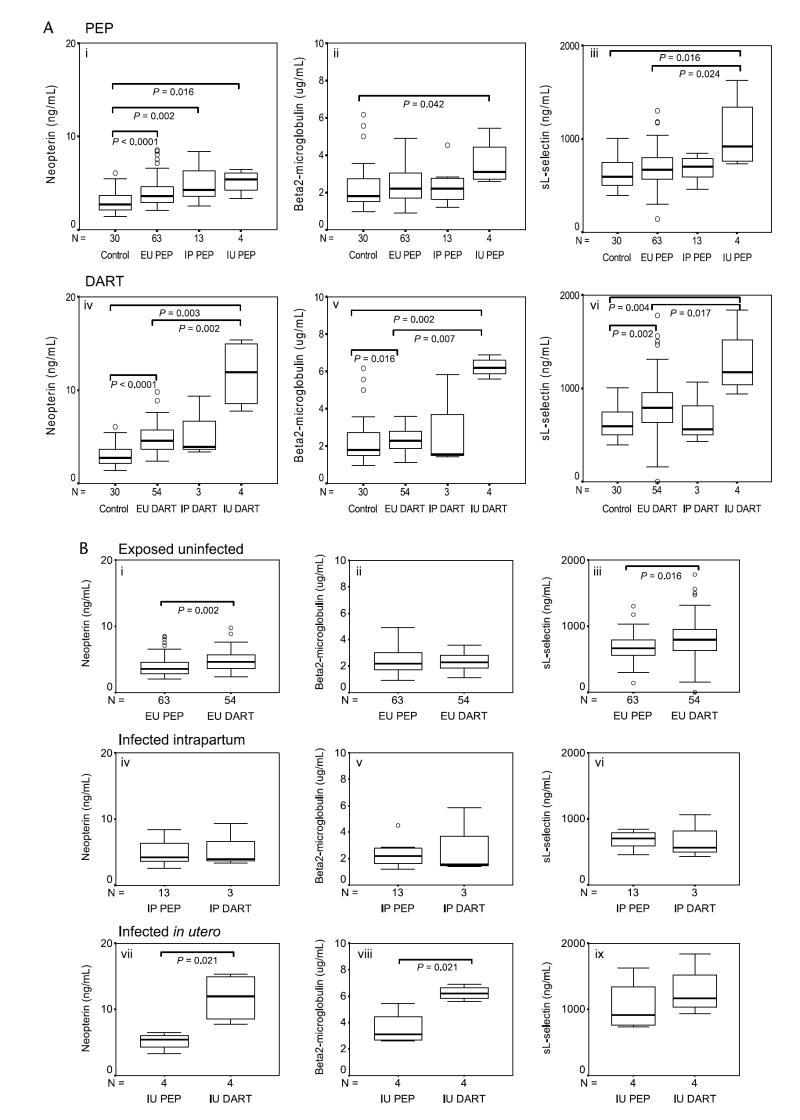
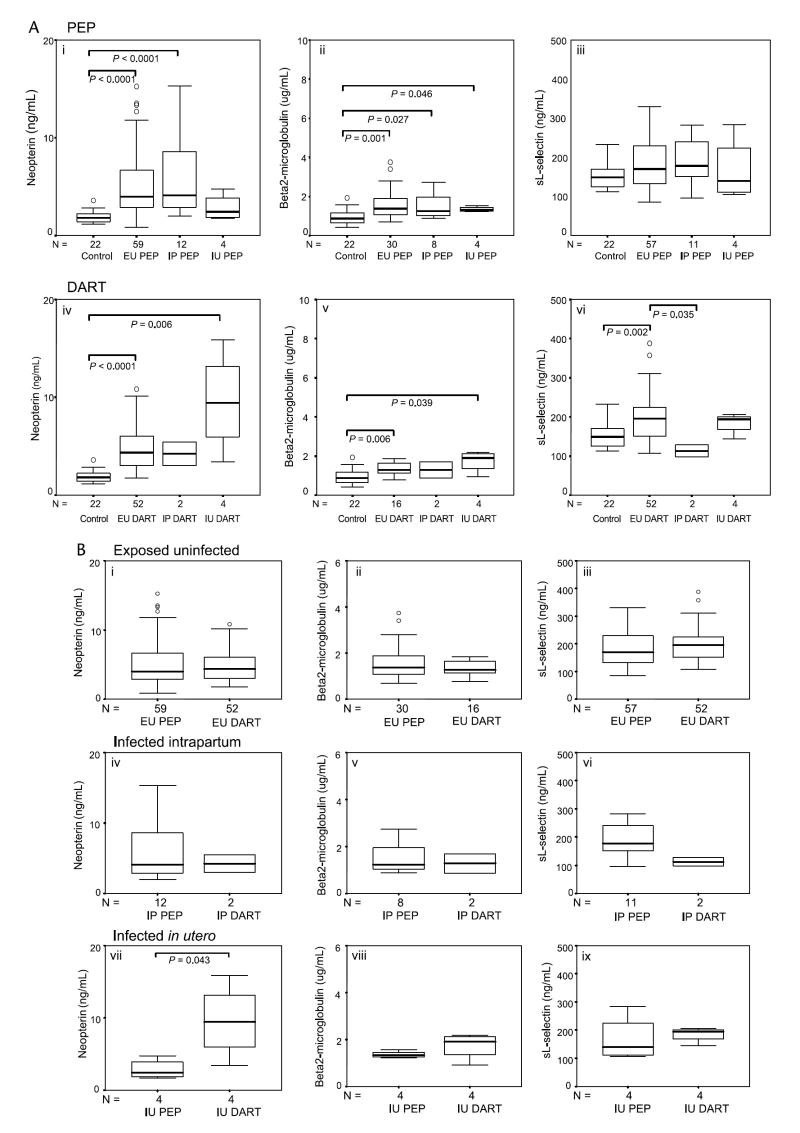
Short-course antiretroviral drug regimens reduce the risk of mother-to-child transmission of HIV-1, but mechanisms affording protection of such interventions remain poorly defined. Because T-cell activation is an important factor in productive HIV-1 infection, we tested the hypothesis that single-dose nevirapine (NVP) reduces immune activation, which in turn reduces the likelihood of transmission. We compared concentrations of cord and maternal blood plasma immune activation markers, neopterin, beta2-microglobulin, and soluble l-selectin, in 2 groups of HIV-1-exposed newborns whose mothers either received NVP at the onset of labor or who only received NVP as postexposure prophylaxis within 72 hours of birth and among HIV-unexposed controls. In utero exposure of the infant to HIV-1, regardless of NVP exposure, led to demonstrable increases in immune activation markers, this being most notable in the presence of preexisting infection. Contrary to what was hypothesized, immune activation was increased by prebirth exposure to single-dose NVP, with this effect being enhanced in infants already infected at birth. Our data suggest that reductions in immune activation do not explain transmission prevention effects of single-dose NVP. Our data also suggest a biological explanation for why HIV-1-infected infants exposed perinatally to antiretroviral drugs might experience hastened disease progression, namely, in some HIV-1-infected individuals, NVP may synergize with HIV-1 to enhance an environment that favors increased HIV-1 replication.
Figures
References
-
- Connor EM, Sperling RS, Gelber R, et al. Reduction of maternal-infant transmission of human immunodeficiency virus type 1 with zidovudine treatment. Pediatric AIDS Clinical Trials Group Protocol 076 Study Group. N Engl J Med. 1994;331(18):1173–1180. - PubMed
-
- Guay LA, Musoke P, Fleming T, et al. Intrapartum and neonatal single-dose nevirapine compared with zidovudine for prevention of mother-to-child transmission of HIV-1 in Kampala, Uganda: HIVNET 012 randomised trial. Lancet. 1999;354(9181):795–802. - PubMed
-
- Shaffer N, Chuachoowong R, Mock PA, et al. Short-course zidovudine for perinatal HIV-1 transmission in Bangkok, Thailand: a randomised controlled trial. Bangkok Collaborative Perinatal HIV Transmission Study Group. Lancet. 1999;353(9155):773–780. - PubMed
-
- Wiktor SZ, Ekpini E, Karon JM, et al. Short-course oral zidovudine for prevention of mother-to-child transmission of HIV-1 in Abidjan, Cote d’Ivoire: a randomised trial. Lancet. 1999;353(9155):781–785. - PubMed
-
- Dabis F, Msellati P, Meda N, et al. 6-Month efficacy, tolerance, and acceptability of a short regimen of oral zidovudine to reduce vertical transmission of HIV in breastfed children in Cote d’Ivoire and Burkina Faso: a double-blind placebo-controlled multicentre trial. DITRAME Study Group. DIminution de la Transmission Mere-Enfant. Lancet. 1999;353(9155):786–792. - PubMed
Publication types
MeSH terms
Substances
Grants and funding
LinkOut - more resources
Full Text Sources
Medical
