


Optimal P-wave duration for bedside diagnosis of interatrial block
- PMID: 16846442
- PMCID: PMC6932187
- DOI: 10.1111/j.1542-474X.2006.00113.x
Optimal P-wave duration for bedside diagnosis of interatrial block
Abstract
Background: Interatrial block (IAB; P wave > or = 110 ms) is highly prevalent and associated with atrial tachyarrhythmias, left atrial electromechanical dysfunction and is a potential risk for embolism. Investigators have often used different parameters for P-wave duration to define IAB, and this causes confusion further adding to clinician ignorance of IAB. We therefore appraised the mode P-wave duration in IAB and evaluated the sensitivity and specificity of using previously used durations.
Methods: We prospectively evaluated 225 electrocardiograms (ECGs) of patients at a tertiary care general hospital for P-wave duration. Of these, 49 were excluded because of severe motion artifact, errors in lead placement, absence of adequate patient identification, and atrial flutter or fibrillation. Mean, standard error of mean (SEM), standard deviation (SD), mode P-wave duration, specificity, and sensitivity were calculated of the remaining 176 ECGs.
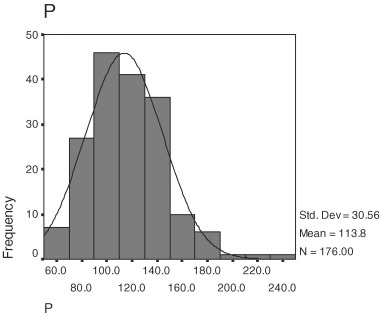
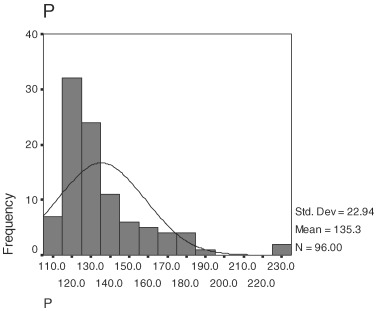
Results: From the sample (N = 176; ages 15-95 years; mean +/- SD = 69.15 +/- 16.53 years, female 50.3%), measured P-wave durations ranged from 50 ms to 230 ms (mean +/- SD = 113.75 +/- 30.56 ms, SEM 2.30 ms). 96 patients (54.55%) showed IAB (P wave > or = 110 ms) with the mode P-wave duration being 120 ms. Sensitivity and specificity of using P wave > or = 110 ms is 100% and 88.9%, respectively (accuracy 94.31%), while P wave > or =130 ms yielded 64% and 100%, respectively (accuracy 82.38%).
Conclusions: Mode P-wave duration in IAB is 120 ms, and thus, for all practical reasons, it may be used to clinically diagnose IAB using ECGs recorded at the bedside at 25 mm/s with 10 mm/mV standardization.
Figures
Comment in
-
Atrial electrical activity and atrial fibrillation.Ann Noninvasive Electrocardiol. 2006 Jul;11(3):201-2. doi: 10.1111/j.1542-474X.2006.00104.x. Ann Noninvasive Electrocardiol. 2006. PMID: 16846433 Free PMC article. No abstract available.
References
-
- Willems JL, Robles de Medina EO, Bernard R, et al Criteria for intraventricular conduction disturbances and pre‐excitation. World Health Organizational/International Society and Federation of Cardiology Task Force Ad hoc. J Am Coll Cardiol 1985;5:1261–1275. - PubMed
-
- Chung EK. Anatomy, electrophysiology and hemodynamics. Principles of Cardiac Arrhythmias. Baltimore , Williams and Wilkins Co.,1973, pp.14.
-
- Bayes de Luna A. Electrocardiographic alterations due to atrial pathology. Clinical Electrocardiography: A Textbook. New York , Futura Company Inc.,1998, pp.69.
-
- Cohen J, Scherf D. Complete interatrial and intra‐atrial block (atrial dissociation). Am Heart J 1965;70:23–24. - PubMed
-
- Asad N, Spodick DH. Prevalence of interatrial block in a general hospital population. Am J Cardiol 2003;91:609–610. - PubMed
MeSH terms
LinkOut - more resources
Full Text Sources
