


P wave dispersion predicts recurrence of paroxysmal atrial fibrillation in patients with atrioventricular nodal reentrant tachycardia treated with radiofrequency catheter ablation
- PMID: 16846443
- PMCID: PMC6932307
- DOI: 10.1111/j.1542-474X.2006.00114.x
P wave dispersion predicts recurrence of paroxysmal atrial fibrillation in patients with atrioventricular nodal reentrant tachycardia treated with radiofrequency catheter ablation
Abstract
Background: Paroxysmal atrial fibrillation (AF) recurs in up to one-third of patients with atrioventricular nodal reentrant tachycardia (AVNRT) treated with slow pathway ablation. Therefore, identification of patients at risk for recurrence of AF after slow pathway ablation is important because of the necessity for additional therapies. The purpose of this study was to determine whether successful slow pathway ablation influences P wave parameters and whether these parameters predict the recurrence of paroxysmal AF in patients with both AVNRT and paroxysmal AF after ablation.
Methods: Thirty-six patients with AVNRT and documented paroxysmal AF (Group 1) were compared to 36 age-matched controls with AVNRT only (Group 2). P wave durations and P dispersion were measured before and after ablation.
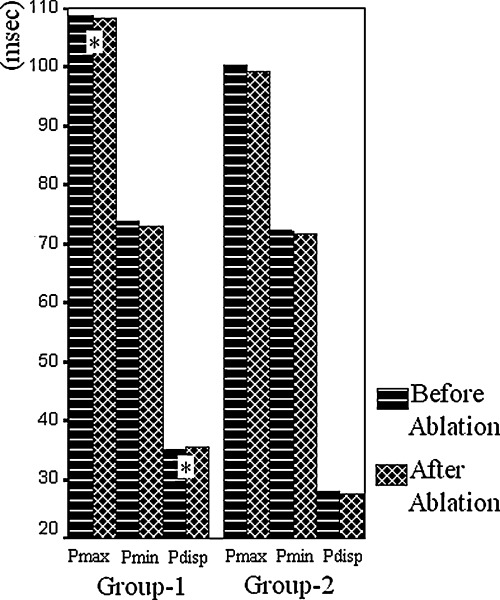
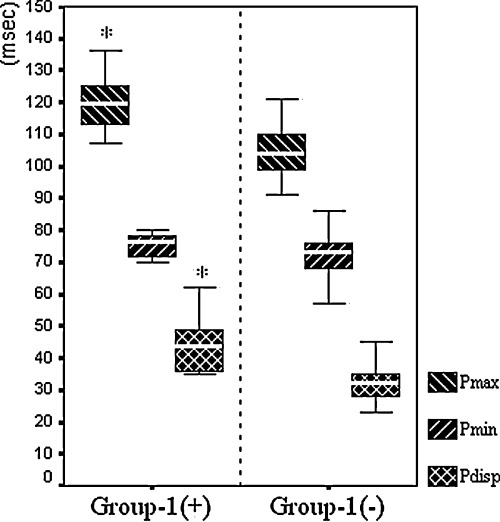
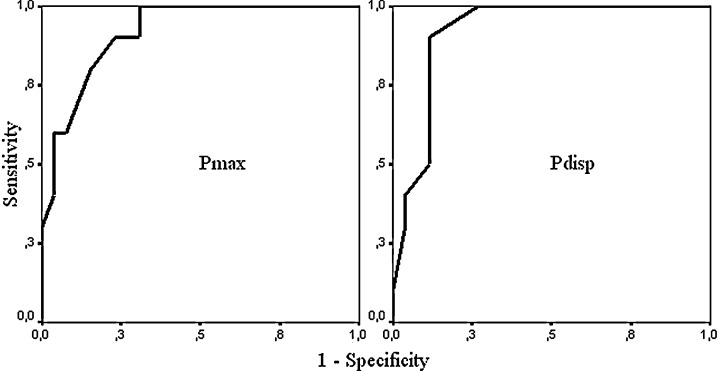
Results: No significant differences were observed between P wave parameters observed before and after ablation. Maximum P wave durations (Pmax) and P dispersion (Pdisp) were significantly higher in Group 1 than in Group 2 (P < 0.001 for both) whereas minimum P wave durations did not differ between groups, both before and after ablation. Ten patients (28%) in Group-1 had recurrence of AF during a mean follow-up of 34 +/- 11 months. Univariate predictors of AF recurrence were Pdisp > or =35.5 ms (P < 0.010), left atrial diameter >40 mm (P < 0.010), mitral or aortic calcification (P < 0.010), Pmax > or =112 ms (P < 0.050), valvular heart disease (P < 0.050), and atrial vulnerability (induction of AF lasting >30 second) after ablation (P < 0.050). However, only Pdisp > or =35.5 ms (P < 0.050) and left atrial diameter >40 mm (P < 0.010) were independent predictors of AF recurrences.
Conclusion: This study suggests that P wave dispersion could identify patients with AVNRT susceptible to recurrence of AF after slow pathway ablation.
Figures
Comment in
-
Atrial electrical activity and atrial fibrillation.Ann Noninvasive Electrocardiol. 2006 Jul;11(3):201-2. doi: 10.1111/j.1542-474X.2006.00104.x. Ann Noninvasive Electrocardiol. 2006. PMID: 16846433 Free PMC article. No abstract available.
References
-
- Elvas L, Gursoy S, Brugada J, et al Atrioventricular nodal reentrant tachycardia: A review. Can J Cardiol 1994;10:342–348. - PubMed
-
- Wolf PA, Abbott RD, Kannel WB. Atrial fibrillation as an independent risk factor for stroke: The Framingham Study. Stroke 1991;22:983–988. - PubMed
-
- D'Este D, Pasqual A, Bertaglia M, et al Evaluation of atrial vulnerability with transoesophageal stimulation in patients with atrioventricular junctional reentrant tachycardia. Comparison with patients with ventricular pre‐excitation and with normal subjects. Eur Heart J 1995;16:1632–1636. - PubMed
-
- Hamer ME, Wilkinson WE, Clair WK, et al Incidence of symptomatic atrial fibrillation in patients with paroxysmal supraventricular tachycardia. J Am Coll Cardiol 1995;25:984–988. - PubMed
-
- Hurwitz JL, German LD, Packer DL, et al Occurrence of atrial fibrillation in patients with paroxysmal supraventricular tachycardia due to atrioventricular nodal reentry. Pacing Clin Electrophysiol 1990;13:705–710. - PubMed
MeSH terms
LinkOut - more resources
Full Text Sources
Medical
