


Methamphetamine-induced behavioral sensitization in mice: alterations in mu-opioid receptor
- PMID: 16847721
- PMCID: PMC2925105
- DOI: 10.1007/s11373-006-9102-x
Methamphetamine-induced behavioral sensitization in mice: alterations in mu-opioid receptor
Abstract
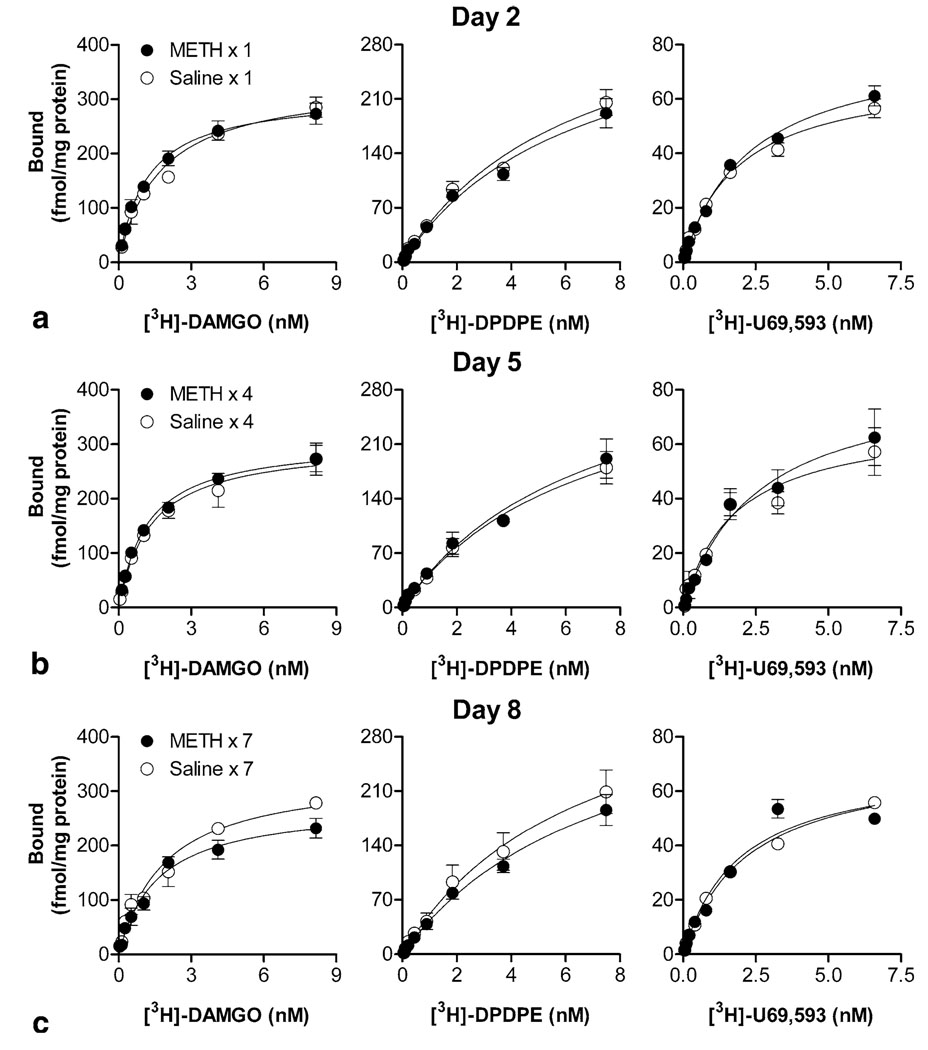
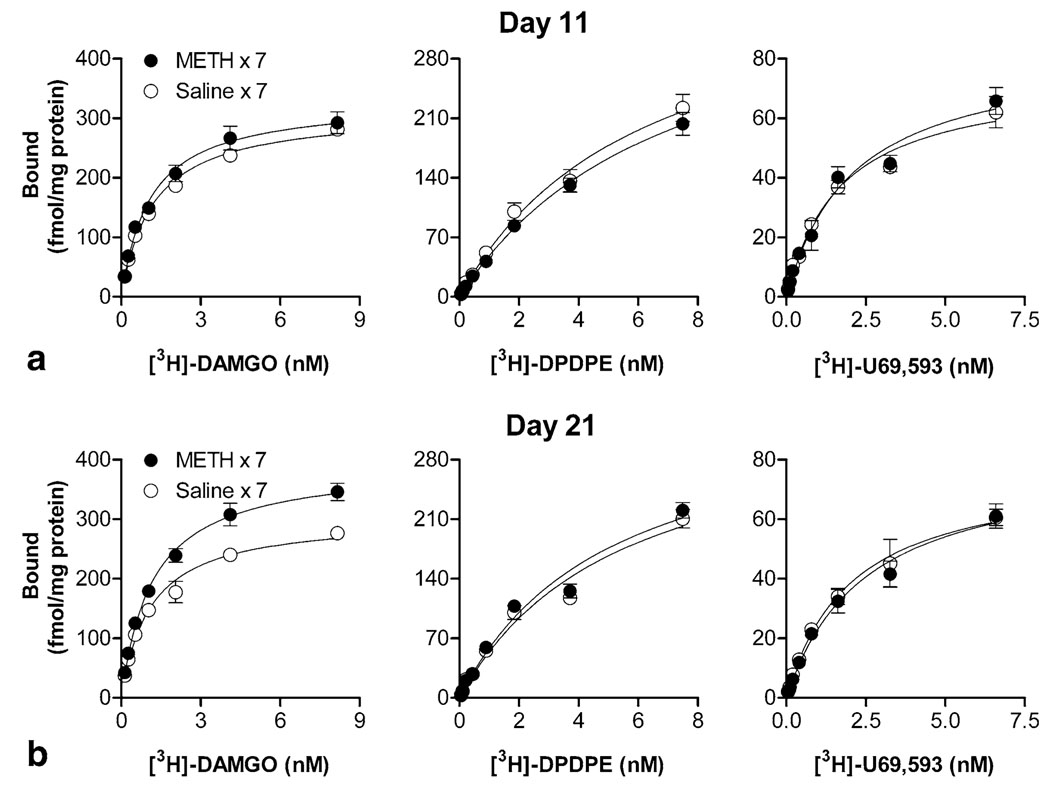
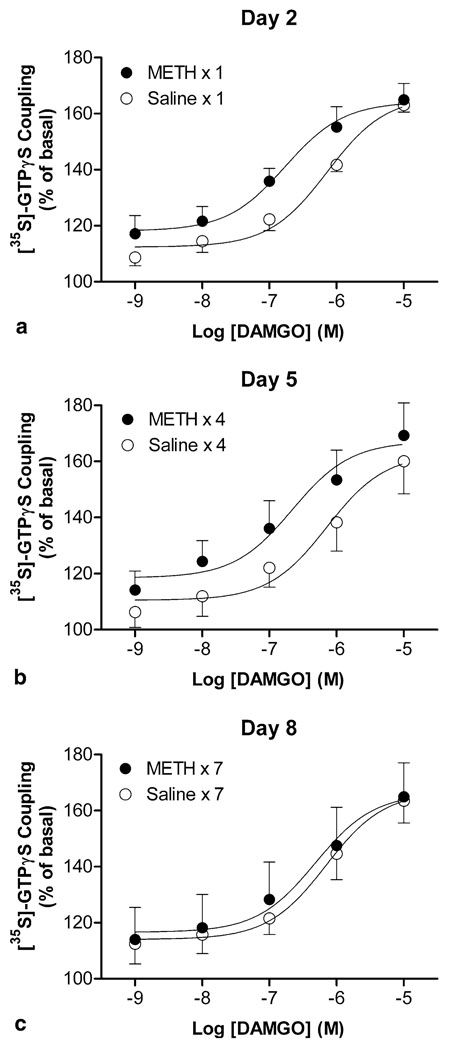
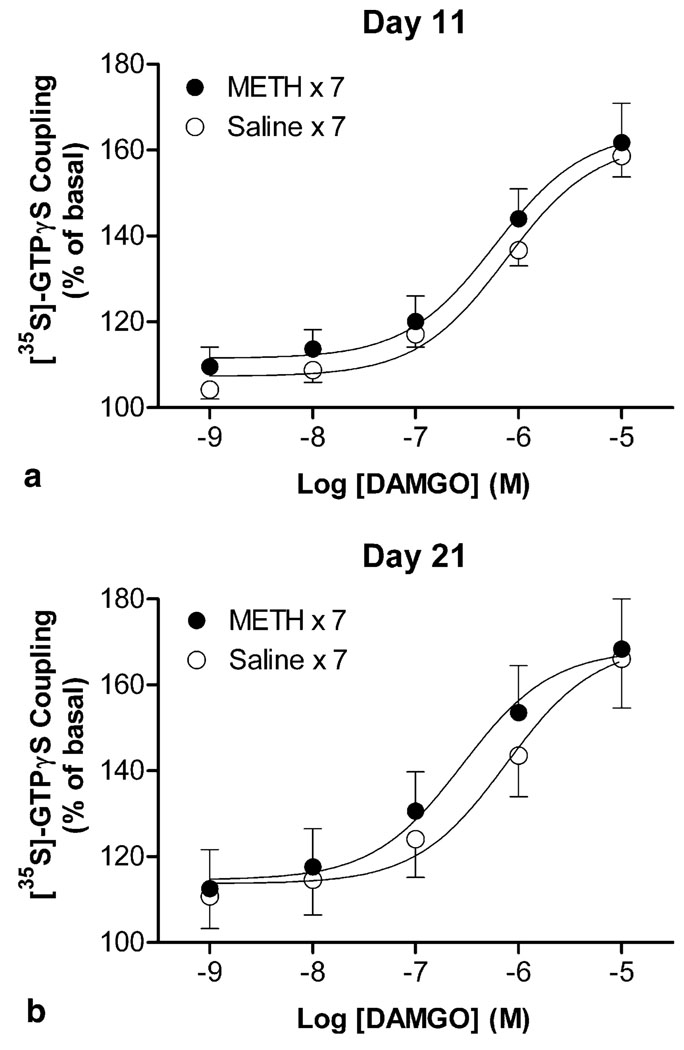
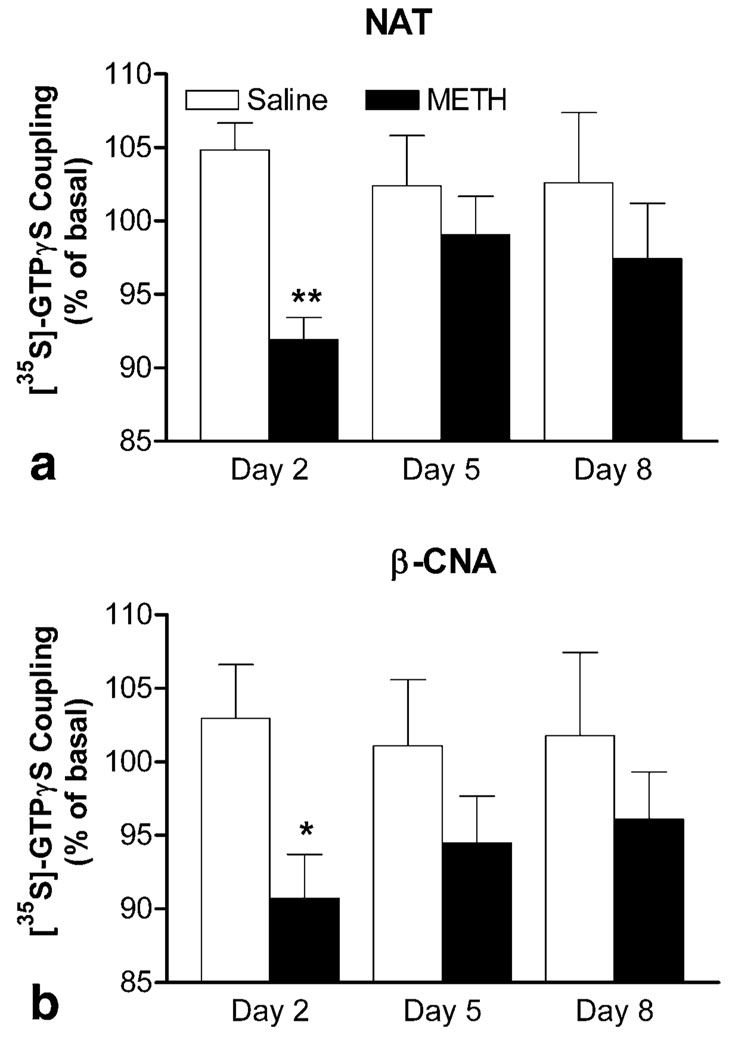
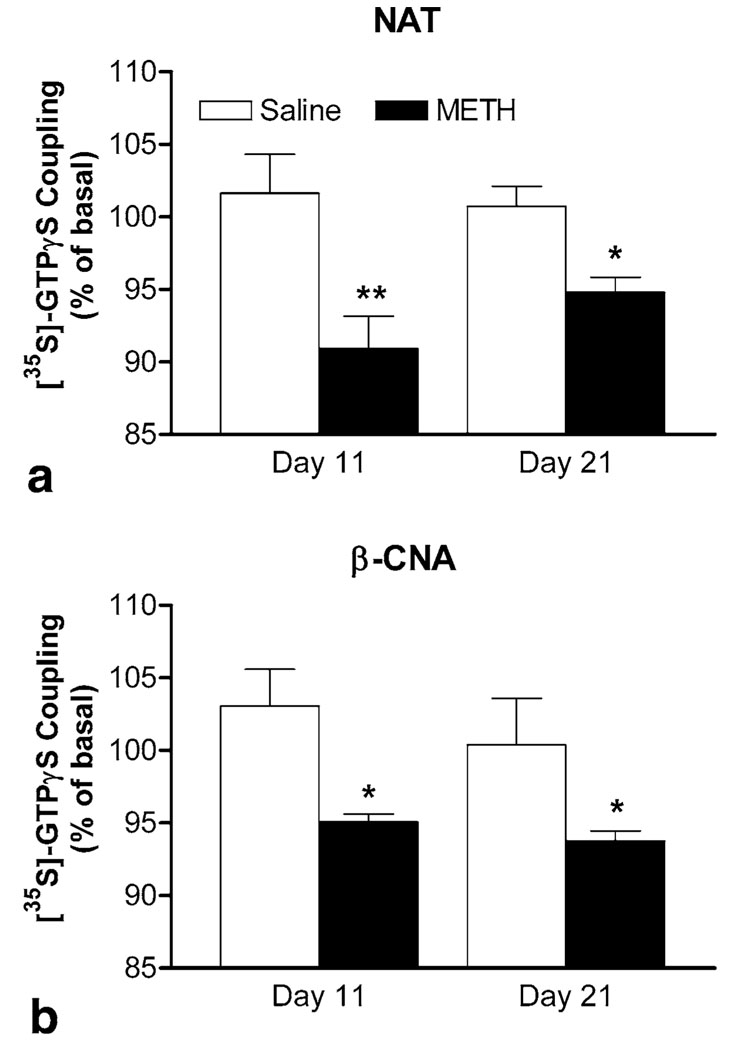
We had previously demonstrated that opioid receptors contribute to the induction and expression of behavioral sensitization induced by repeated daily injection with 2.5 mg/kg of methamphetamine for 7 days. Using the same regimen, the present study investigated the alterations in mu-opioid receptor during the induction (on days 2, 5, and 8) and expression (on days 11 and 21) periods of behavioral sensitization. Radioligand binding revealed that the maximal binding of mu-opioid receptor was not changed on days 2 and 5, but down-regulated on day 8. After cessation of drug treatment, the maximal binding of mu-opioid receptor gradually and time-dependently returned to normal level on day 11 and up-regulated on day 21. In contrast, no changes in delta- and kappa-opioid receptors were detectable on any given day examined. The potency of DAMGO for [(35)S]-GTPgammaS coupling was enhanced on days 2, 5, 11, and 21. Moreover, 1 muM of naltrexone or beta-chlornaltrexamine significantly suppressed the basal [(35)S]-GTPgammaS coupling on days 2, 11, and 21. These findings indicate enhanced responsiveness and elevated constitutive activity of mu-opioid receptor. In summary, our data clearly demonstrate that alterations in mu-opioid receptor are involved in and may contribute to the sensitization to locomotor stimulating effect of methamphetamine.
Figures
References
-
- Robinson TE, Becker JB. Enduring changes in brain and behavior produced by chronic amphetamine administration: a review and evaluation of animal models of amphetamine psychosis. Brain Res. 1986;396:157–198. - PubMed
-
- Itzhak Y, Ali SF. Behavioral consequences of methamphetamine-induced neurotoxicity in mice: relevance to the psychopathology of methamphetamine addiction. Ann. N.Y. Acad. Sci. 2002;965:127–135. - PubMed
-
- Wise RA, Bozarth MA. A psychomotor stimulant theory of addiction. Psychol. Rev. 1987;94:469–492. - PubMed
-
- Clarke PB, Jakubovic A, Fibiger HC. Anatomical analysis of the involvement of mesolimbocortical dopamine in the locomotor stimulant actions of d-amphetamine and apomorphine. Psychopharmacology (Berlin) 1988;96:511–520. - PubMed
Publication types
MeSH terms
Substances
Grants and funding
LinkOut - more resources
Full Text Sources
Medical
Research Materials