


eHealth Literacy: Essential Skills for Consumer Health in a Networked World
- PMID: 16867972
- PMCID: PMC1550701
- DOI: 10.2196/jmir.8.2.e9
eHealth Literacy: Essential Skills for Consumer Health in a Networked World
Abstract
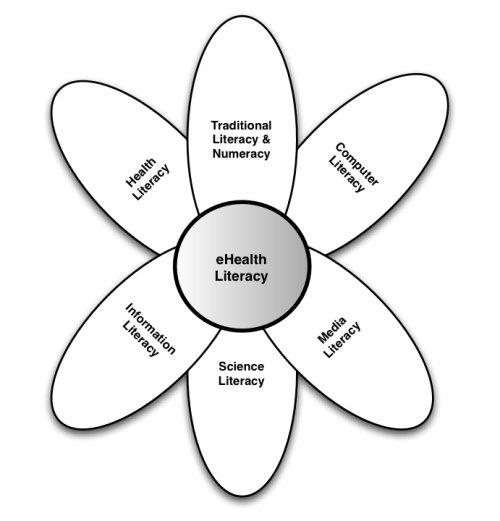
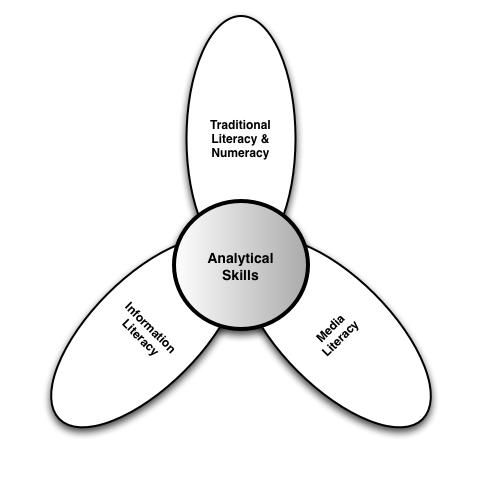
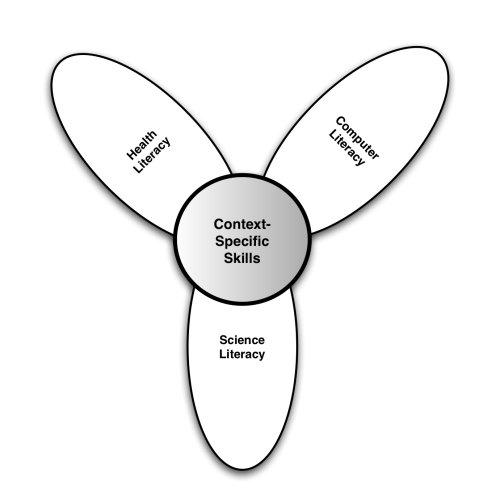
Electronic health tools provide little value if the intended users lack the skills to effectively engage them. With nearly half the adult population in the United States and Canada having literacy levels below what is needed to fully engage in an information-rich society, the implications for using information technology to promote health and aid in health care, or for eHealth, are considerable. Engaging with eHealth requires a skill set, or literacy, of its own. The concept of eHealth literacy is introduced and defined as the ability to seek, find, understand, and appraise health information from electronic sources and apply the knowledge gained to addressing or solving a health problem. In this paper, a model of eHealth literacy is introduced, comprised of multiple literacy types, including an outline of a set of fundamental skills consumers require to derive direct benefits from eHealth. A profile of each literacy type with examples of the problems patient-clients might present is provided along with a resource list to aid health practitioners in supporting literacy improvement with their patient-clients across each domain. Facets of the model are illustrated through a set of clinical cases to demonstrate how health practitioners can address eHealth literacy issues in clinical or public health practice. Potential future applications of the model are discussed.
Conflict of interest statement
None declared.
Figures
References
-
- National Center for Educational Statistics, authors. National Assessment of Adult Literacy (NAAL): A First Look at the Literacy of America's Adults in the 21st Century. Washington, DC: Institute of Education Sciences, US Department of Education; 2005.
-
- Statistics Canada, authors. Building on Our Competencies: Canadian Results of the International Adult Literacy and Skills Survey, 2003. Ottawa, ON: Human Resources and Skills Development Canada and Statistics Canada; 2005.
-
- Veenhof B, Clermont Y, Sciadas G. Literacy and Digital Technologies: Linkages and Outcomes. Ottawa, ON: Statistics Canada; 2005. [2006 Jun 16]. http://www.statcan.ca/bsolc/english/bsolc?catno=56F0004MIE2005012
Publication types
MeSH terms
LinkOut - more resources
Full Text Sources
Medical
