


p62 ubiquitin binding-associated domain mediated the receptor activator of nuclear factor-kappaB ligand-induced osteoclast formation: a new insight into the pathogenesis of Paget's disease of bone
- PMID: 16877352
- PMCID: PMC1698794
- DOI: 10.2353/ajpath.2006.050960
p62 ubiquitin binding-associated domain mediated the receptor activator of nuclear factor-kappaB ligand-induced osteoclast formation: a new insight into the pathogenesis of Paget's disease of bone
Abstract
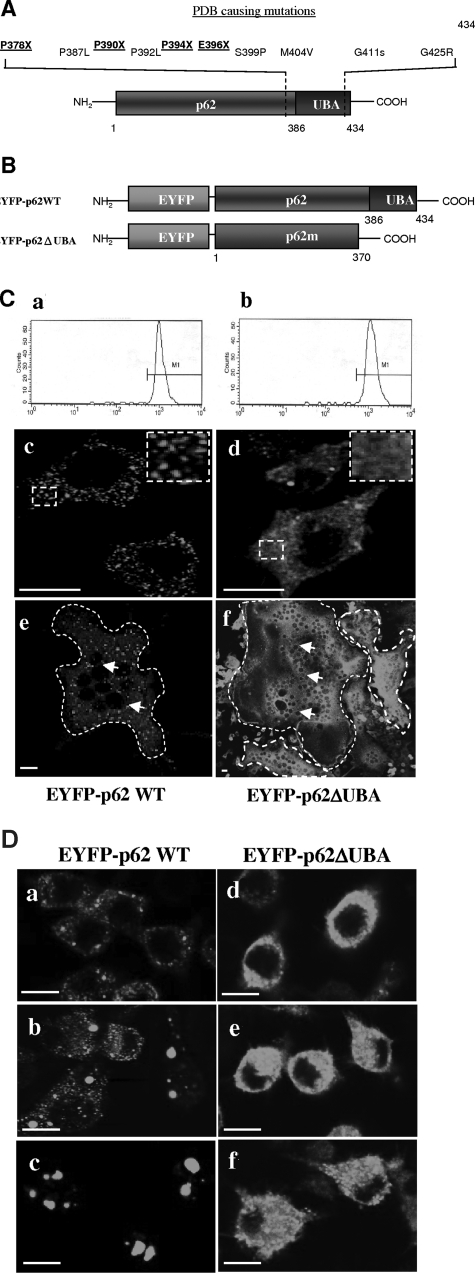
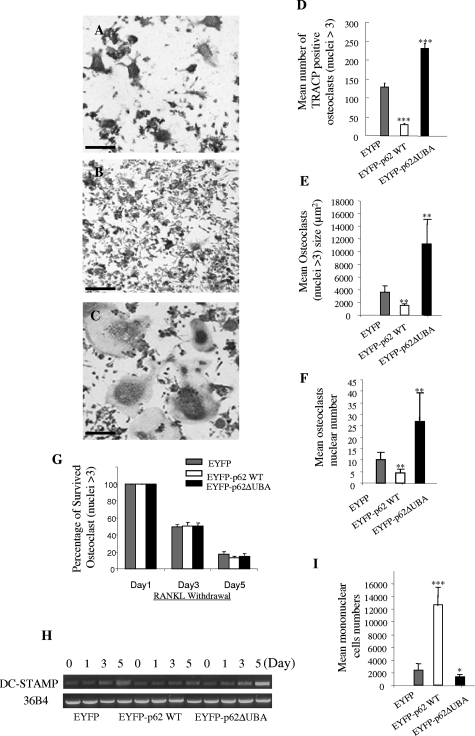
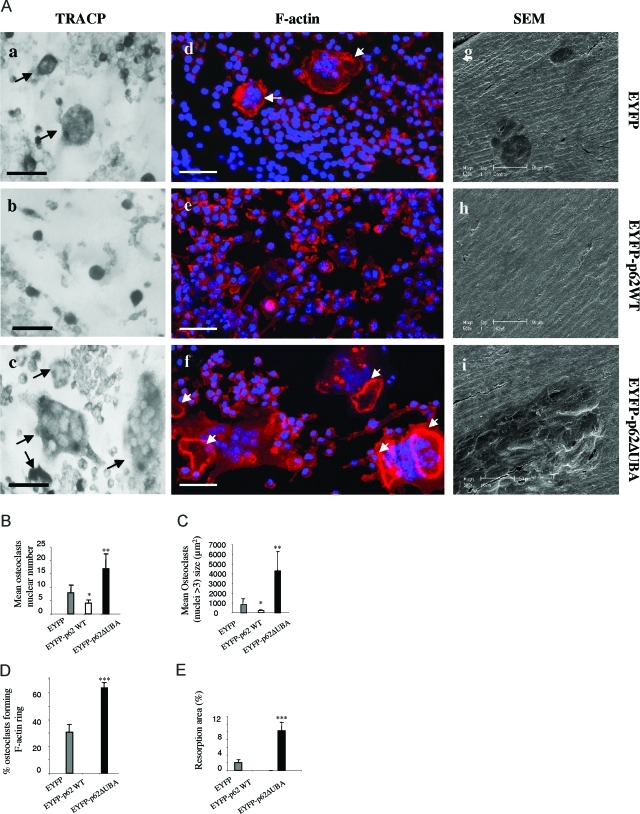
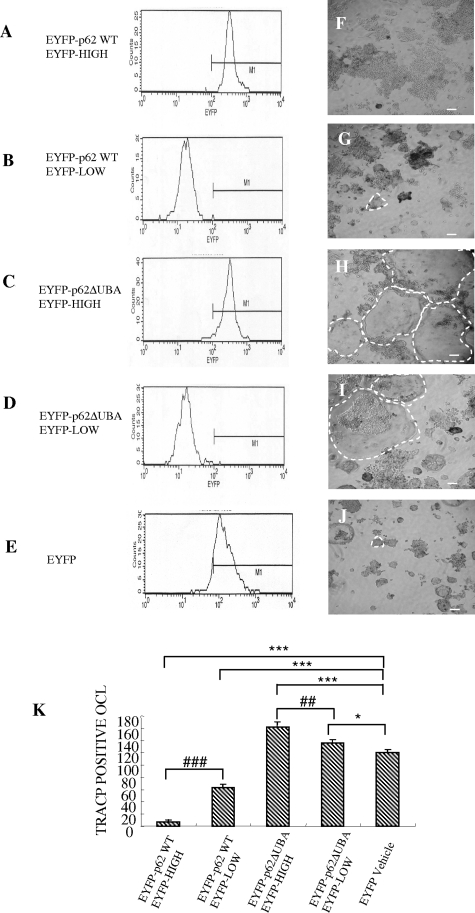
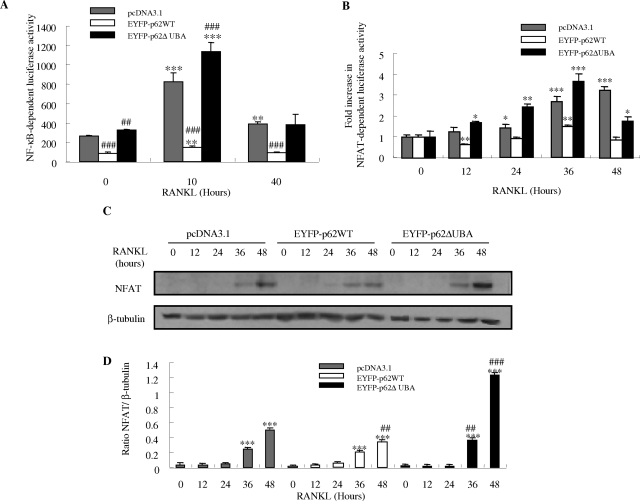
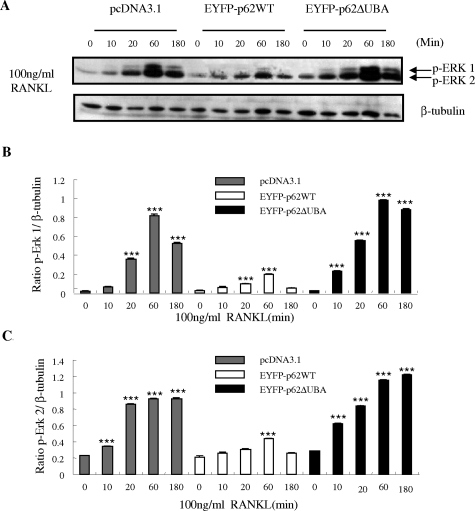
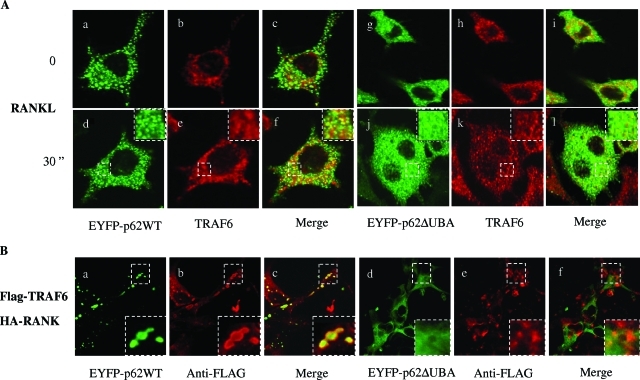
Paget's disease of bone (PDB) is a debilitating bone disorder characterized by giant osteoclasts, enhanced bone destruction, and irregular bone formation. Recently, mutations in SQSTM1 (also known as p62) have been detected in PDB sufferers, with all mutations resulting in either loss of function or truncation/deletion of the ubiquitin binding-associated (UBA) domain. We hypothesized that mutation in the p62 gene resulting in either deletion or premature termination of the UBA domain accounts for the elevated osteoclastic formation and bone resorption associated with PDB. Remarkably, overexpression of the p62 UBA domain deletion mutant (p62DeltaUBA) significantly enhanced osteoclastogenesis in vitro compared to cells expressing either wild-type p62 (p62WT) or a control vector in a RAW264.7 osteoclastogenic system. Overexpression of p62DeltaUBA potentiated the formation of abnormally large multinucleated osteoclasts and resorption of bone, reminiscent of PDB. Consistent with the enhancement of osteoclastogenesis, overexpression of p62DeltaUBA potentiated receptor activator of nuclear factor-kappaB ligand-induced activation of nuclear factor-kappaB, NFAT, and ERK phosphorylation. Furthermore, as determined by confocal microscopy, deletion of the p62 UBA domain impaired the association of p62 with TRAF6 in the proteasomal compartment. These results suggest that the UBA domain encodes essential regulatory elements required for receptor activator of nuclear factor-kappaB ligand-induced osteoclast formation and bone resorption that may be directly associated with the progression of PDB.
Figures
References
-
- Roodman GD. Mechanisms of abnormal bone turnover in Paget’s disease. Bone. 1999;24:39S–40S. - PubMed
-
- Reddy SV. Etiology of Paget’s disease and osteoclast abnormalities. J Cell Biochem. 2004;93:688–696. - PubMed
-
- Layfield R, Hocking LJ. SQSTM1 and Paget’s disease of bone. Calcif Tissue Int. 2004;75:347–357. - PubMed
-
- Morgan SL, Ward L, Ward BK, Walsh J, Xu J: A novel mutation (K378X) in the sequestosome1 gene associated with a sever phenotype in Paget’s disease of bone. International Symposium on Paget’s Disease, 2005 July 8–9, St. Catherine’s College, Oxford, UK
-
- Hocking LJ, Lucas GJ, Daroszewska A, Cundy T, Nicholson GC, Donath J, Walsh JP, Finlayson C, Cavey JR, Ciani B, Sheppard PW, Searle MS, Layfield R, Ralston SH. Novel UBA domain mutations of SQSTM1 in Paget’s disease of bone: genotype phenotype correlation, functional analysis, and structural consequences. J Bone Miner Res. 2004;19:1122–1127. - PubMed
MeSH terms
Substances
LinkOut - more resources
Full Text Sources
Medical
Miscellaneous
