Protein binding microarrays (PBMs) for rapid, high-throughput characterization of the sequence specificities of DNA binding proteins
- PMID: 16888363
- PMCID: PMC2690637
- DOI: 10.1385/1-59745-097-9:245
Protein binding microarrays (PBMs) for rapid, high-throughput characterization of the sequence specificities of DNA binding proteins
Abstract
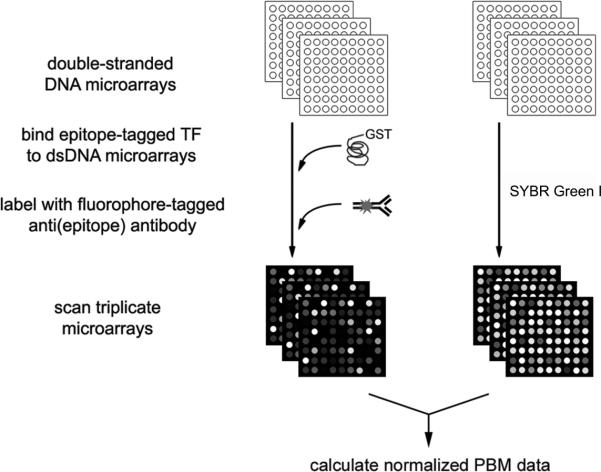
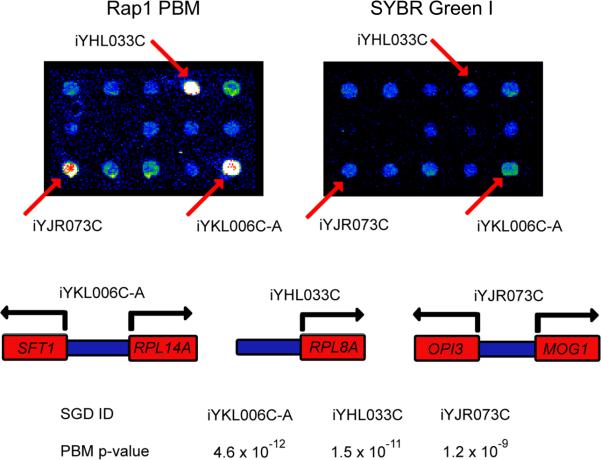
DNA binding proteins play a number of key roles in cells, in processes including transcriptional regulation, recombination, genome rearrangements, and DNA replication, repair, and modification. Of particular interest are the interactions between transcription factors and their DNA binding sites, as they are an integral part of the transcriptional regulatory networks that control gene expression. Despite their importance, the DNA binding specificities of most DNA binding proteins remain unknown, as earlier technologies aimed at characterizing DNA-protein interactions have been time consuming and not highly scalable. We have developed a new DNA microarray-based technology, termed protein binding microarrays (PBMs), that allows rapid, high-throughput characterization of the in vitro DNA binding site sequence specificities of transcription factors in a single day. The resulting DNA binding site data can be used in a number of ways, including for the prediction of the genes regulated by a given transcription factor, annotation of transcription factor function, and functional annotation of the predicted target genes.
Figures
References
-
- Sambrook J, Fritsch E, Maniatis T. Molecular Cloning: A Laboratory Manual. 2nd Ed. 3 vols. Cold Spring Harbor Laboratory Press; Cold Spring Harbor, NY: 1989.
-
- Liu X, Brutlag D, Liu J. BioProspector: discovering conserved DNA motifs in upstream regulatory regions of co-expressed genes. Pac. Symp. Biocomput. 2001:127–138. - PubMed
-
- Hughes JD, Estep PW, Tavazoie S, Church GM. Computational identification of cis-regulatory elements associated with groups of functionally related genes in Saccharomyces cerevisiae. J. Mol. Biol. 2000;296:1205–1214. - PubMed
Publication types
MeSH terms
Substances
Grants and funding
LinkOut - more resources
Full Text Sources
Molecular Biology Databases