


Molecular epidemiology of Neisseria gonorrhoeae in Amsterdam, The Netherlands, shows distinct heterosexual and homosexual networks
- PMID: 16891479
- PMCID: PMC1594601
- DOI: 10.1128/JCM.02311-05
Molecular epidemiology of Neisseria gonorrhoeae in Amsterdam, The Netherlands, shows distinct heterosexual and homosexual networks
Abstract
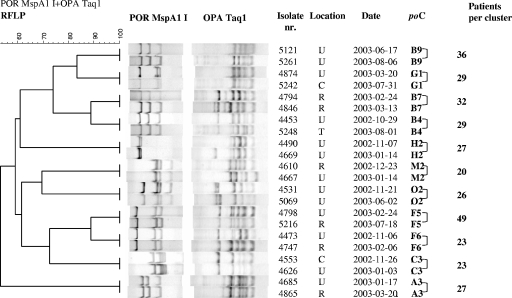
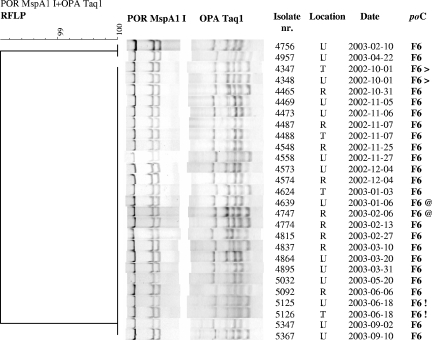
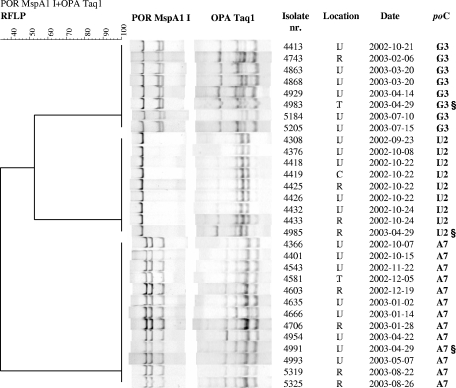
Molecular typing, added to epidemiological data, can better identify transmission patterns of gonorrhea in Western countries, where the incidence has recently been rising. From September 2002 to September 2003, patients with a laboratory-confirmed diagnosis of gonorrhea at the Clinic for Sexually Transmitted Infections in Amsterdam, The Netherlands, were subjected to a questionnaire pertaining to sexual risk behavior and sexual partners in the 6 months prior to the diagnosis. The Neisseria gonorrhoeae isolates were all genotyped using PCR-restriction fragment length polymorphism of the porin and opacity genes. All patients with a completed questionnaire and genotyped isolates were included in the study. We obtained 885 N. gonorrhoeae isolates from 696 patients that revealed 88 clusters and 46 unique genotypes. Patients infected at multiple anatomical sites with one or more strains and patients infected several times during the study period were shown to pursue high-risk sexual behavior and were considered core groups. There were 11 clusters of > or =20 patients; in seven clusters, 81% to 100% of patients were men who have sex with men (MSM), three clusters contained 87 to 100% heterosexual men and women, and one cluster was formed by equal proportions of MSM and heterosexual male and female patients. However, the various clusters differed in characteristics such as types of coinfections, numbers of sexual partners, Internet use to seek sexual partners, and locations of sexual encounters. Molecular epidemiology of gonococcal isolates in Amsterdam revealed core groups and clusters of MSM and heterosexual patients that probably indicate distinct transmission networks.
Figures
References
-
- Bhat, K. S., C. P. Gibbs, O. Barrera, S. G. Morrison, F. Jahnig, A. Stern, E. M. Kupsch, T. F. Meyer, and J. Swanson. 1991. The opacity proteins of Neisseria gonorrhoeae strain MS11 are encoded by a family of 11 complete genes. Mol. Microbiol. 5:1889-1901. - PubMed
-
- Fennema, J. S., I. Cairo, and R. A. Coutinho. 2000. Substantial increase in gonorrhea and syphilis among clients of Amsterdam Sexually Transmitted Diseases Clinic. Ned. Tijdschr. Geneeskd. 144:602-603. (In Dutch.) - PubMed
-
- Ghani, A. C., C. A. Ison, H. Ward, G. P. Garnett, G. Bell, G. R. Kinghorn, J. Weber, and S. Day. 1996. Sexual partner networks in the transmission of sexually transmitted diseases. An analysis of gonorrhea cases in Sheffield, UK. Sex. Transm. Dis. 23:498-503. - PubMed
Publication types
MeSH terms
Substances
LinkOut - more resources
Full Text Sources
Medical
