


Early morning blood pressure surge
- PMID: 16896274
- PMCID: PMC8109621
- DOI: 10.1111/j.1524-6175.2006.04773.x
Early morning blood pressure surge
Abstract
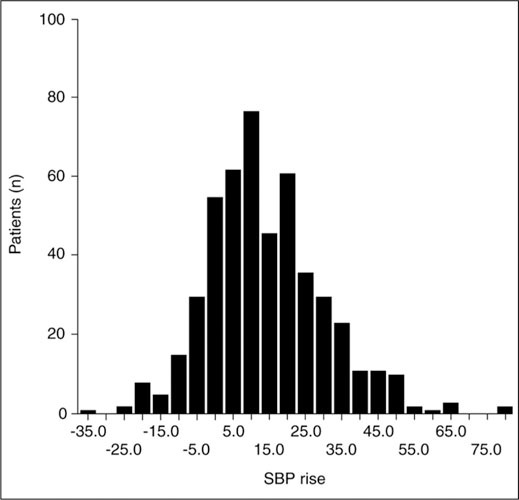
Alterations in the circadian rhythm of blood pressure, whether a loss of the nighttime dip or an exaggeration of the early morning increase that occurs upon rising, indicate increased cardiovascular risk. Estimates of the magnitude of the blood pressure surge on rising vary depending on technique and population, but it is usually around 10-30 mm Hg systolic and 7-23 mm Hg diastolic. The magnitude of the surge increases with age, alcohol consumption, and smoking and is greater in whites. Blood pressure variations and morning plasma aldosterone are closely correlated. A high morning surge is linked to increased target organ damage as well as strokes and other cardiovascular complications. Therapeutic options exist to reduce the magnitude of the morning blood pressure surge-notably, the use of drugs with a long duration of action, the use of medications that specifically antagonize the morning surge (such as alpha blockers), and the administration of drugs upon awakening but before rising.
Figures

References
-
- Richardson DW, Honour AJ, Fenton GW, et al. Variation in arterial pressure throughout the day and night. Clin Sci. 1964;26:445–460. - PubMed
-
- Bevan AT, Honour AJ, Stott FH. Direct arterial pressure recording in unrestricted man. Clin Sci. 1969;36:329–344. - PubMed
-
- Goldberg AD, Raftery EB, Green HL. The Oxford continuous blood‐pressure recorder—technical and clinical evaluation. Postgrad Med J. 1976;52(suppl 7):104–109. - PubMed
-
- Millar‐Craig MW, Bishop CN, Raftery EB. Circadian variation of blood‐pressure. Lancet. 1978;1:795–797. - PubMed
-
- Floras JS, Jones JV, Johnston JA, et al. Arousal and the circadian rhythm of blood pressure. Clin Sci Mol Med Suppl. 1978;4:395s–397s. - PubMed
Publication types
MeSH terms
LinkOut - more resources
Full Text Sources
