Review
. 2007 Apr;27(4):655-68.
doi: 10.1038/sj.jcbfm.9600380. Epub 2006 Aug 9.

Killer proteases and little strokes--how the things that do not kill you make you stronger

Affiliations
Review

Killer proteases and little strokes--how the things that do not kill you make you stronger

Anne E O'Duffy et al. J Cereb Blood Flow Metab. 2007 Apr.

Abstract

The phenomenon of ischemic preconditioning was initially observed over 20 years ago. The basic tenant is that if stimuli are applied at a subtoxic level, cells upregulate endogenous protective mechanisms to block injury induced by subsequent stress. Since this discovery, many conserved signaling mechanisms that contribute to activation of this potent protective program have been identified in the brain. A clinical correlate of this basic research finding can be found in patients with a history of transient ischemic attack (TIA), who have a decreased morbidity after stroke. In spite of multidisciplinary efforts to design safer, more effective stroke therapies, we have thus far failed to translate our understanding of endogenous protective pathways to treatments for neurodegeneration. This review is designed to provide clinicians and basic scientists with an overview of stress biology after TIA and preconditioning, discuss new therapeutic strategies to target the protein dysfunction that follows ischemic injury, and propose enhanced biochemical profiling to identify individuals at risk of stroke after TIA. We pay particular attention to the unanticipated consequences of overly aggressive intervention after TIA in which we have found that traditional cytotoxic agents such as free radicals and apoptosis associated proteases is essential for neuroprotection and communication in the stressed brain. These data emphasize the importance of understanding the complex interplay between chaperones, apoptotic proteases including caspases, and the proteolytic degradation machinery in adaptation to neurological injury.


Conflict of interest statement

Conflict of Interest

The authors do not have any commercial or other associations that might pose a conflict of interest in connection with the submitted article.

Figures
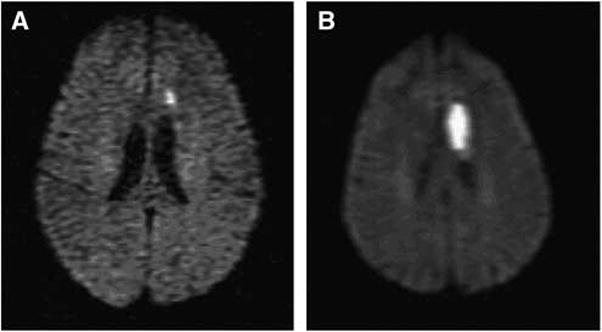
Figure 1
Figure 1
Diffusion weighted imaging of patient with TIA (A) who returned to ED 4 days later with stroke. (B) A 61-year-old woman with history of hypertension and prior basal ganglia lacunar stroke, presented initially with mild expressive aphasia and unsteadiness. Symptoms improved, she was discharged on antiplatelet agent, adjusted antihypertensive regimen, but returned 4 days later with worsened aphasia, right hemiparesis, and slow unsteady gait. Diffusion magnetic resonance imaging initially showed small left frontal subcortical infarction, and repeat scan shows significant extension of stroke in this region.
Figure 2
Figure 2
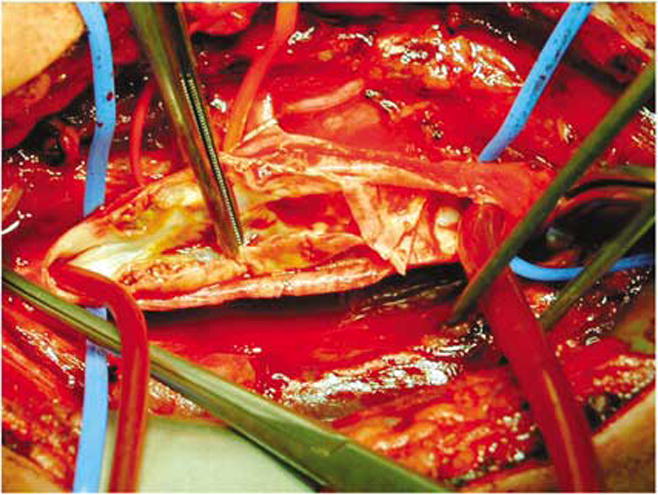
Carotid endarterectomy offers a prime opportunity to deliver pharmacological therapies to increase angiogenesis, retard cell death, and decrease inflammation as well as understand neuroadaptation to stress. Pictured is the surgical removal of plaque from the carotid artery performed to increase blood flow to the brain and prevent strokes. Image shows the exposed common carotid artery and its branches. A cleavage plane is achieved between the plaque and the healthier remaining parts of the artery. The plaque, a pale yellow sheath which is in the grip of the forceps is removed. Plastic tubing bridges between the internal and common carotid artery to provide a detour for blood and provide blood flow to the brain while the operation is preformed. As evidenced in this figure, the CNS access granted by a relatively minimally invasive procedure has proved to be the most useful means of surgical stroke prevention and offers an outstanding opportunity to assess neurochemical, physiological, and molecular changes that accompany impaired blood flow to the human brain. Image courtesy of the Vascular Disease Centre, Vascular Surgery, University of Hong Kong.
Figure 3
Figure 3
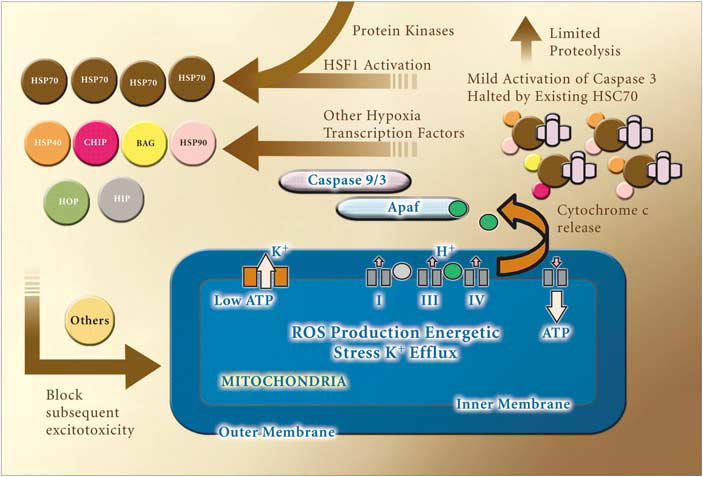
Model of neuronal ischemic preconditioning. Based on our observations that preconditioning elicits caspase cleavage and ROS generation, which are required for expression of protection and that this protection requires new protein synthesis, we propose the following pathway mediates protection. We hypothesize that the initial energetic stress put on cells generates ROS and activation of mitochondrial KATP channels. These events likely contribute to limited cytochrome c redistribution and caspase 3 activation. Cleaved caspases are likely held in check by preexisting proteins such as HSC 70. When these proteins are depleted, this results in the activation of a positive feedback cycle leading to increased production of HSPs and other neuroprotective proteins. Signal transduction cascades such as protein kinases of the MAPK family and PKC family as well as others, are likely critical components of this protective pathway. The upregulation of HSP 70 is able to block normally lethal exposure to subsequent injuries. Many of the kinases, proteases, chaperones and transcription factors in this pathway could be exploited for development of neurotherapeutics to recapitulate endogenous neuroprotection.
Figure 4
Figure 4
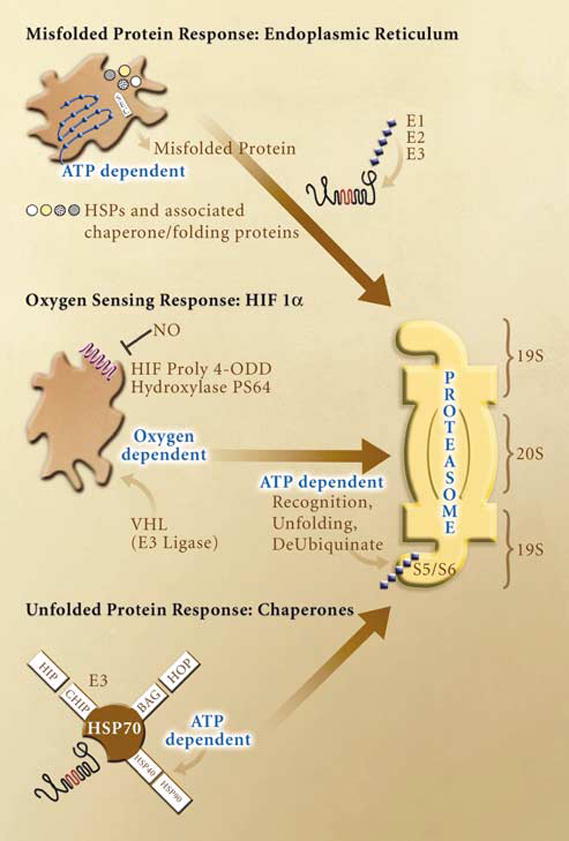
The UPS is essential to the cellular response to ischemic stress. Multiple energy and oxygen dependent pathways converge on the proteasome to remove damaged proteins and activate transcription factors with roles in increasing oxygenation, vascularization and survival. Examples of these pathways are shown for the unfolded protein response in the ER, the stabilization of hypoxia inducible factor 1α (HIF1α) and the chaperone triage system. Protein trafficking and assembly in the endoplasmic reticulum is responsive to multiple energetic and ionic perturbations including calcium buffering, redox regulation, caspase activation, and post-translation modification of proteins. These functions are dependent on ATP content and redox sensitive proteins including the Sec ATPases. Misfolded proteins are targeted to the proteasome thru ubiquitination (E1, E2, and E3 enzymes). Oxygen sensitivity is showed in the HIF1α subunit of the HIF transcription factor. Under normoxia, HIF hydroxylases modify proline residues within the oxygen dependent domain (ODD) of HIF allowing for rapid ubiquitination by the von Hippel–Lindau (vHL) E3 ligase. Anerobic conditions block these modifications leading to enhance HIF 1a expression and transcriptional activity. Finally, chaperones play an essential role in the stress response to ischemia. Some of the interactions of the stress inducible chaperone HSP 70 are depicted in this figure. Competition for HSP 70 binding leads to altered chaperone activity in which the protein moves from a primary role in refolding to one of targeting proteins to the proteasome to be degraded. Again, the function of this protein is dependent on ATPase activity of interacting chaperones.

References

    1. Adrain C, Creagh EM, Cullen SP, Martin SJ. Caspase-dependent inactivation of proteasome function during programmed cell death in Drosophila and man. J Biol Chem. 2004;279:36923–30. - PubMed
    1. Albers GW, Caplan LR, Easton JD, Fayad PB, Mohr JP, Saver JL, Sherman DG the TIAWG. Transient ischemic attack—proposal for a new definition. N Engl J Med. 2002;347:1713–6. - PubMed
    1. Albers GW, Goldstein LB, Hall D, Lesko LM for the Aptiganel Acute Stroke I. Aptiganel hydrochloride in acute ischemic stroke: a randomized controlled trial. JAMA. 2001;286:2673–82. - PubMed
    1. Al-Senani FM, Shirzadi A, Strong R, Elliott P, Grotta JC, Aronowski J. Inhibition of proteasome reduces iNOS expression and behavioral dysfunction after intracerebral hemorrhage in rat. Neurology. 2001;56:A368.
    1. Aoki M, Abe K, Kawagoe J, Nakamura S, Kogure K. Acceleration of HSP70 and HSC70 heat shock gene expression following transient ischemia in the preconditioned gerbil hippocampus. J Cereb Blood Flow Metab. 1993;13:781–8. - PubMed

Publication types

MeSH terms