


Drug use and medication adherence among HIV-1 infected individuals
- PMID: 16897351
- PMCID: PMC2867605
- DOI: 10.1007/s10461-006-9152-0
Drug use and medication adherence among HIV-1 infected individuals
Abstract
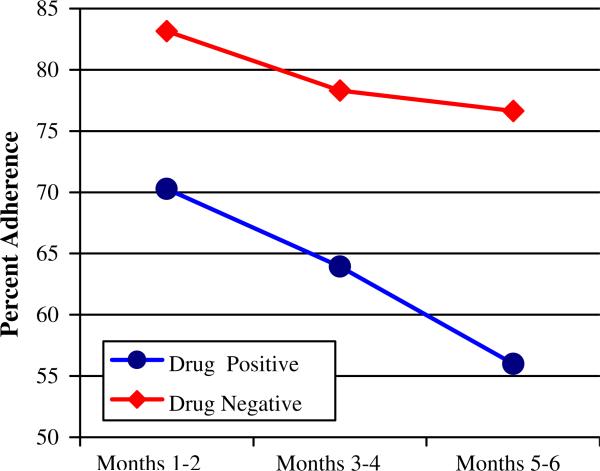
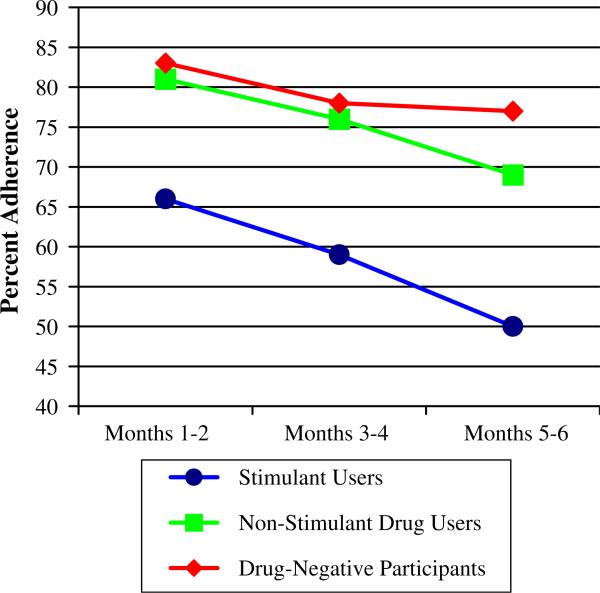
This longitudinal study examined the impact of drug use and abuse on medication adherence among 150 HIV-infected individuals, 102 who tested urinalysis positive for recent illicit drug use. Medication adherence was tracked over a 6-month period using an electronic monitoring device (MEMS caps). Over the 6-month study drug-positive participants demonstrated significantly worse medication adherence than did drug-negative participants (63 vs. 79%, respectively). Logistic regression revealed that drug use was associated with over a fourfold greater risk of adherence failure. Stimulant users were at greatest risk for poor adherence. Based upon within-participants analyses comparing 3-day adherence rates when actively using versus not using drugs, this appears to be more a function of state rather than trait. These data suggest that it is the acute effects of intoxication, rather than stable features that may be characteristic of the drug-using populace, which leads to difficulties with medication adherence.
Figures
References
-
- Bangsberg DR, Bronstone A, Hofmann R. A computer based assessment detects regimen misunderstandings and nonadherence for patients on HIV antiretroviral therapy. AIDS Care. 2002;14(1):3–15. - PubMed
-
- Bangsberg DR, Hecht FM, Charlebois ED, Zolopa AR, Holodniy M, Sheiner L, et al. Adherence to protease inhibitors, HIV-1 viral load, and development of drug resistance in an indigent population. AIDS. 2000;14(4):357–366. - PubMed
Publication types
MeSH terms
Substances
Grants and funding
LinkOut - more resources
Full Text Sources
Medical
Miscellaneous
