


doi: 10.1136/gut.2005.090514.
Proton pump inhibitors and gastric neoplasia
Affiliations
- PMID: 16905689
- PMCID: PMC1860013
- DOI: 10.1136/gut.2005.090514
Item in Clipboard
Proton pump inhibitors and gastric neoplasia
Gut.
2006 Sep.
Abstract
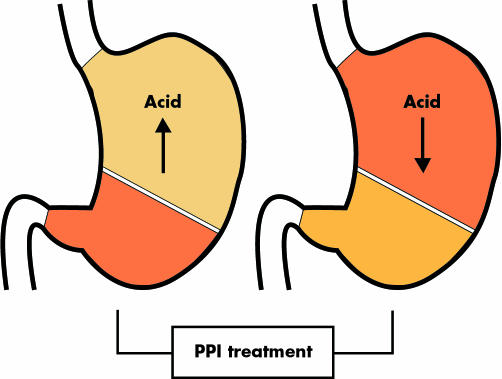
Proton pump inhibitors (PPIs) are very effective in maintaining symptomatic and endoscopic remission of acid peptic disorders, such as gastro-oesophageal reflux disease. Side effects with respect to function and morphology of the gastric mucosa are common. Helicobacter pylori eradication can partially prevent and reverse these effects without impairing PPI therapy for gastro-oesophageal reflux disease. This makes long term PPI treatment a safe therapy for patients with acid peptic disorders. The potential side effects of such therapy are discussed here.
Comment in
-
Fundic gland polyps and PPI: the Mozart effect of gastrointestinal pathology?Pol J Pathol. 2006;57(4):181-2. Pol J Pathol. 2006. PMID: 17285759 No abstract available.
-
Proton pump inhibitors and gastric neoplasia.Gut. 2007 Jul;56(7):1019-20; author reply 1020. doi: 10.1136/gut.2006.116434. Gut. 2007. PMID: 17566032 Free PMC article. No abstract available.
References
-
- Thomson A B, Barkun A N, Armstrong D.et al The prevalence of clinically significant endoscopic findings in primary care patients with uninvestigated dyspepsia: the Canadian Adult Dyspepsia Empiric Treatment‐Prompt Endoscopy (CADET‐PE) study. Aliment Pharmacol Ther 2003171481–1491. - PubMed
-
- van Soest E M, Siersema P D, Dieleman J P.et al Persistence and adherence to proton pump inhibitors in daily clinical practice. Aliment Pharmacol Ther 2006. (in press) - PubMed
-
- Abraham N S, El‐Serag H B, Johnson M L.et al National adherence to evidence‐based guidelines for the prescription of nonsteroidal anti‐inflammatory drugs. Gastroenterology 20051291171–1178. - PubMed
-
- Sturkenboom M C, Burke T A, Dieleman J P.et al Underutilization of preventive strategies in patients receiving NSAIDs. Rheumatology (Oxford) 200342(suppl 3)iii23–iii31. - PubMed
MeSH terms
Substances
LinkOut - more resources
Full Text Sources
Medical
