


Comparison of RCAS1 and metallothionein expression and the presence and activity of immune cells in human ovarian and abdominal wall endometriomas
- PMID: 16907986
- PMCID: PMC1574328
- DOI: 10.1186/1477-7827-4-41
Comparison of RCAS1 and metallothionein expression and the presence and activity of immune cells in human ovarian and abdominal wall endometriomas
Abstract
Background: The coexistence of endometrial and immune cells during decidualization is preserved by the ability of endometrial cells to regulate the cytotoxic immune activity and their capability to be resistant to immune-mediated apoptosis. These phenomena enable the survival of endometrial ectopic cells. RCAS1 is responsible for regulation of cytotoxic activity. Metallothionein expression seems to protect endometrial cells against apoptosis. The aim of the present study was to evaluate RCAS1 and metallothionein expression in human ovarian and scar endometriomas in relation to the presence of immune cells and their activity.
Methods: Metallothionein, RCAS1, CD25, CD69, CD56, CD16, CD68 antigen expression was assessed by immunohistochemistry in ovarian and scar endometriomas tissue samples which were obtained from 33 patients. The secretory endometrium was used as a control group (15 patients).
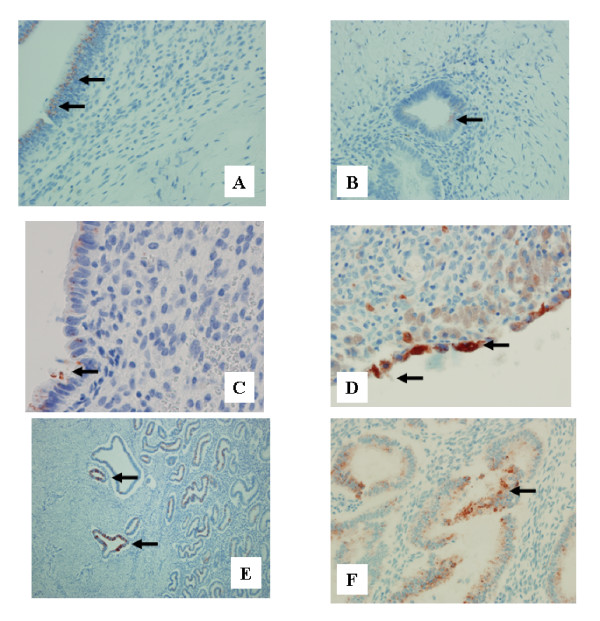
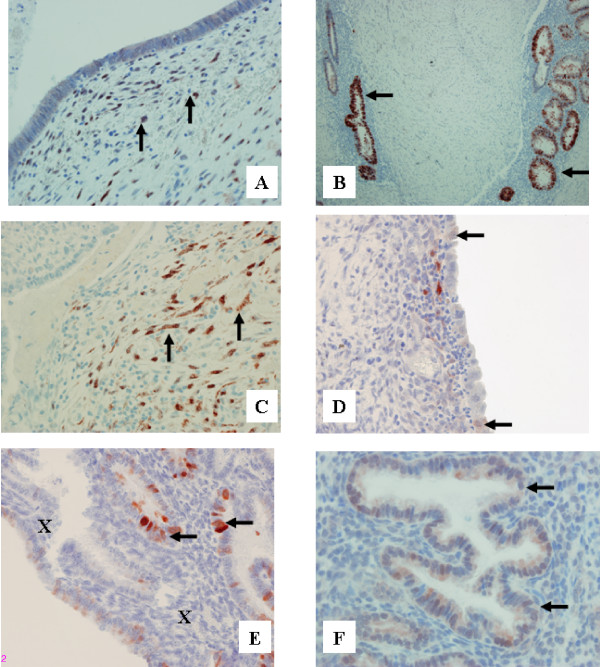
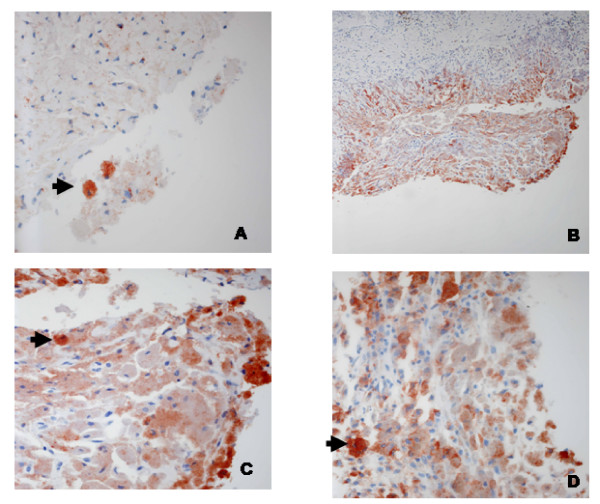
Results: The lowest metallothionein expression was revealed in ovarian endometriomas in comparison to scar endometriomas and to the control group. RCAS1 expression was at the highest level in the secretory endometrium and it was at comparable levels in ovarian and scar endometriomas. Similarly, the number of CD56-positive cells was lower in scar and ovarian endometriomas than in the secretory endometrium. The highest number of macrophages was found in ovarian endometriomas. RCAS1-positive macrophages were observed only in ovarian endometriomas. CD25 and CD69 antigen expression was higher in scar and ovarian endometriomas than in the control group.
Conclusion: The expression of RCAS1 and metallothionein by endometrial cells may favor the persistence of these cells in ectopic localization both in scar following cesarean section and in ovarian endometriosis.
Figures
References
-
- Scott RB, Telinde RW. Clinical external endometriosis: probable viability of menstrually shed fragments of endometrium. Obstet Gynecol. 1954;4:502–510. - PubMed
-
- Sampson JA. Endometrial carcinoma of the ovary, arising in endometrial tissue of that organ. Arch Surg. 1925;10:1–72.
-
- Fazleabas AT. A baboon model for inducing endometriosis. Methods Mol Med. 2006;121:95–99. - PubMed
-
- Nishida M, Nasu K, Fukuda J, Kawano Y, Narahara H, Miyakawa I. Down-regulation of Interleukin-1 receptor type 1 expression causes the dysregulated expression of CXC chemokines in endometriotic stromal cells: a possible mechanism for altered immunological functions in endometriosis. J Clin Endocrinol Metab. 2004;89:5094–5100. doi: 10.1210/jc.2004-0354. - DOI - PubMed
Publication types
MeSH terms
Substances
LinkOut - more resources
Full Text Sources
Medical
Research Materials
