


Isoform-specific ras activation and oncogene dependence during MYC- and Wnt-induced mammary tumorigenesis
- PMID: 16908535
- PMCID: PMC1636749
- DOI: 10.1128/MCB.00404-06
Isoform-specific ras activation and oncogene dependence during MYC- and Wnt-induced mammary tumorigenesis
Abstract
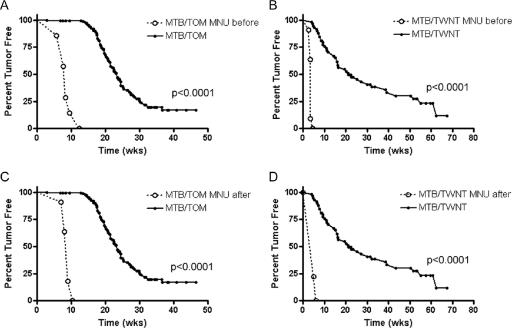
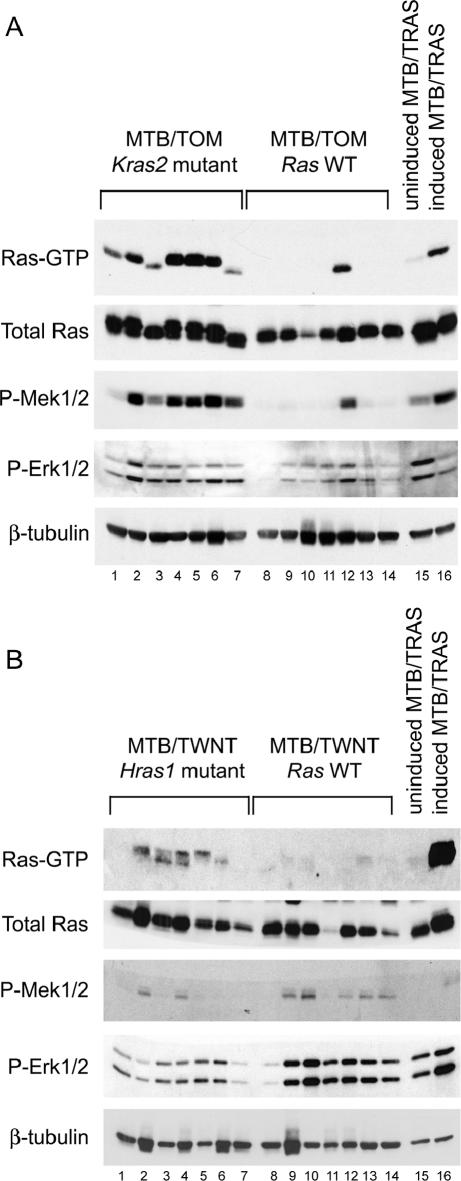
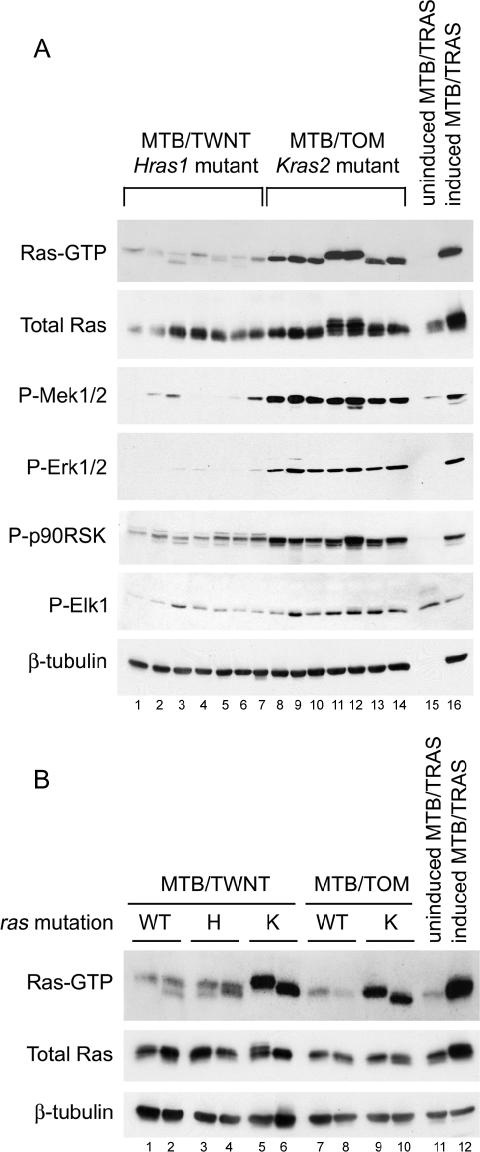
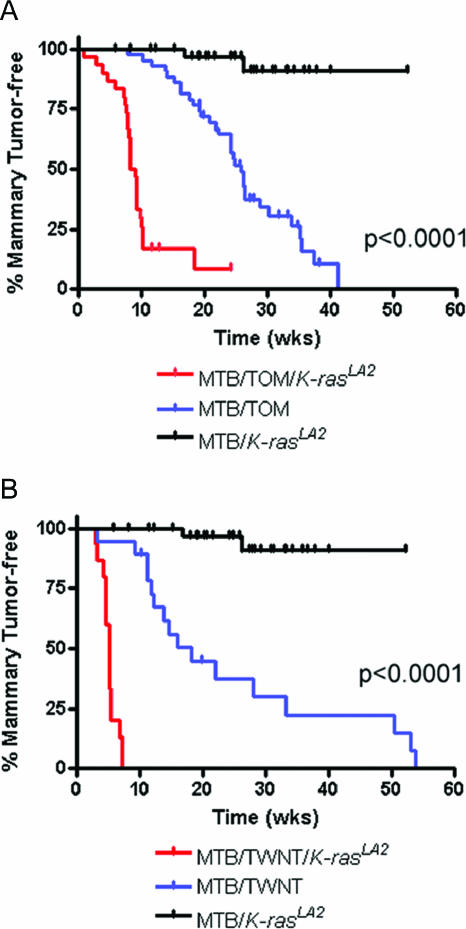
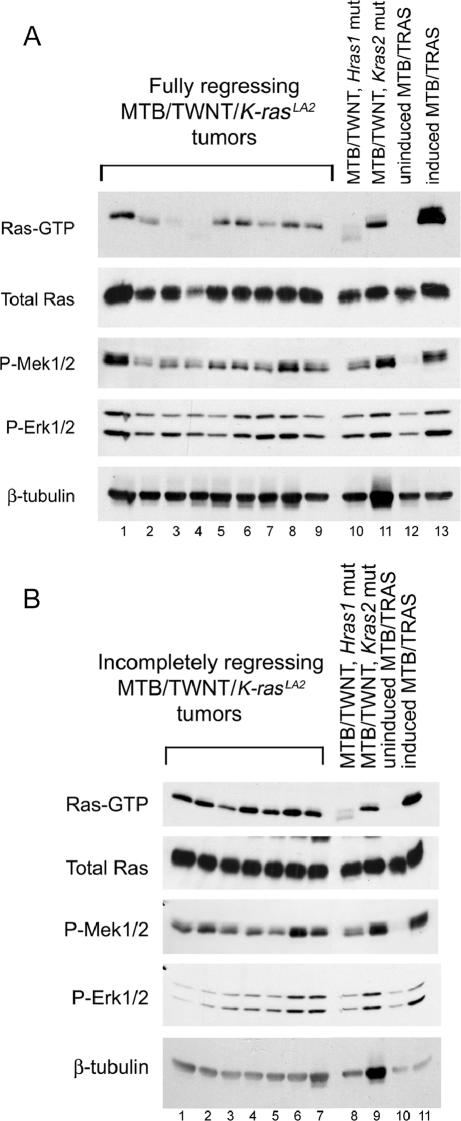
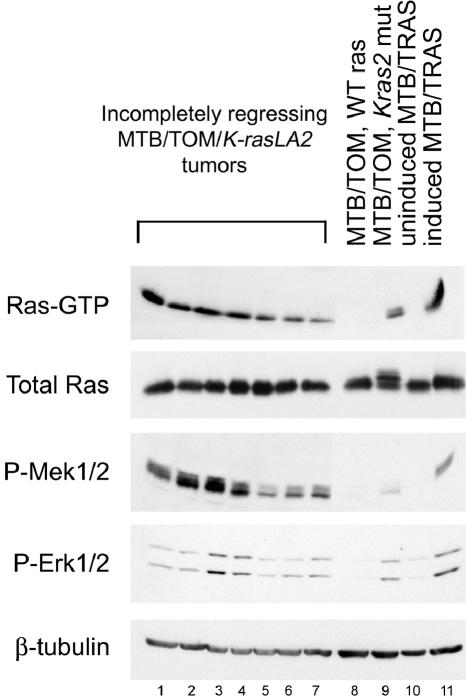
We have previously shown that c-MYC-induced mammary tumorigenesis in mice proceeds via a preferred secondary pathway involving spontaneous activating mutations in Kras2 (C. M. D'Cruz, E. J. Gunther, R. B. Boxer, J. L. Hartman, L. Sintasath, S. E. Moody, J. D. Cox, S. I. Ha, G. K. Belka, A. Golant, R. D. Cardiff, and L. A. Chodosh, Nat. Med. 7:235-239, 2001). In contrast, we now demonstrate that Wnt1-induced mammary tumorigenesis proceeds via a pathway that preferentially activates Hras1. In addition, we find that expression of oncogenic forms of Kras2 and Hras1 from their endogenous promoters has markedly different consequences for the progression of tumors to oncogene independence. Spontaneous activating Kras2 mutations occurring in either MYC- or Wnt1-induced tumors were strongly associated with oncogene-independent tumor growth following MYC or Wnt1 downregulation. In contrast, Hras1-mutant Wnt1-induced tumors consistently remained oncogene dependent. Additionally, Kras2-mutant tumors exhibited substantially higher levels of ras-GTP, phospho-Erk1/2, and phospho-Mek1/2 compared to Hras1-mutant tumors, suggesting the involvement of the ras/mitogen-activated protein kinase (MAPK) pathway in the acquisition of oncogene independence. Consistent with this, by use of carcinogen-induced ras mutations as well as knock-in mice harboring a latent activated Kras2 allele, we demonstrate that Kras2 activation strongly synergizes with both c-MYC and Wnt1 in mammary tumorigenesis and promotes the progression of tumors to oncogene independence. Together, our findings support a model for tumorigenesis in which c-MYC and Wnt1 select for the outgrowth of cells harboring mutations in specific ras isoforms and that these secondary mutations, in turn, determine the extent of ras/MAPK pathway activation and the potential for oncogene-independent growth.
Figures
References
-
- Berger, M. S., G. W. Locher, S. Saurer, W. J. Gullick, M. D. Waterfield, B. Groner, and N. E. Hynes. 1988. Correlation of c-erbB-2 gene amplification and protein expression in human breast carcinoma with nodal status and nuclear grading. Cancer Res. 48:1238-1243. - PubMed
-
- Boxer, R. B., J. W. Jang, L. Sintasath, and L. A. Chodosh. 2004. Lack of sustained regression of c-MYC-induced mammary adenocarcinomas following brief or prolonged MYC inactivation. Cancer Cell 6:577-586. - PubMed
Publication types
MeSH terms
Substances
Grants and funding
LinkOut - more resources
Full Text Sources
Other Literature Sources
Molecular Biology Databases
Research Materials
Miscellaneous
