


Review
doi: 10.1111/j.1574-6976.2006.00032.x.
Human coronavirus NL63, a new respiratory virus
Affiliations
- PMID: 16911043
- PMCID: PMC7109777
- DOI: 10.1111/j.1574-6976.2006.00032.x
Item in Clipboard
Review
Human coronavirus NL63, a new respiratory virus
FEMS Microbiol Rev.
2006 Sep.
Abstract
From the mid-1960s onwards, it was believed that only two human coronavirus species infect humans: HCoV-229E and HCoV-OC43. Then, in 2003, a novel member of the coronavirus family was introduced into the human population: SARS-CoV, causing an aggressive lung disease. Fortunately, this virus was soon expelled from the human population, but it quickly became clear that the human coronavirus group contains more members then previously assumed, with HCoV-NL63 identified in 2004. Despite its recent discovery, ample results from HCoV-NL63 research have been described. We present an overview of the publications on this novel coronavirus.
Figures
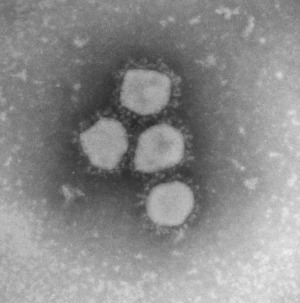
Negatively stained electron micrograph of HCoV‐NL63. Courtesy of Dr Bermingham and Dr Hoschler and the EM unit of the Health Protection Agency, Colindale, London.

Genome organization of HCoV‐NL63 and other group I coronaviruses.
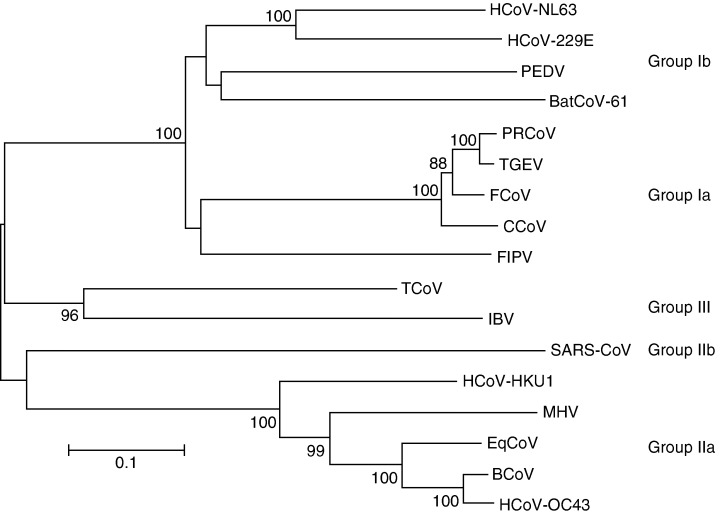
Phylogenetic analysis of coronaviruses. Analysis was carried out with the nucleotide sequences of a part of the spike gene (HCoV‐NL63 position 22854–24319) using the neighbour‐joining method of the mega program. Bootstrap resampling (1000 replicates) was employed to place approximate confidence limits on individual branches; bootstrap values above 80 are shown. The GenBank accession number of the sequences used in this phylogenetic analysis are HCoV‐229E: n; CCoV (canine coronavirus) n; FIPV (feline infectious peritonitis virus) n; PEDV (porcine epidemic diarrhea virus) n; TGEV (transmissible gastroenteritis virus): n; PRCoV (porcine respiratory coronavirus) n; MHV (mouse hepatitis virus) n; BCoV (bovine coronavirus) n; HCoV‐OC43: n; SARS‐CoV: n; IBV (avian infectious bronchitis virus) n; TCoV (turkey coronavirus) n; BatCoV strain61: n and HCoV‐HKU1: n.

Nucleotide distance between HCoV‐NL63 isolate Amsterdam 1 and isolate NL. Each point plotted as the percentage genetic distance between the two isolates along the genome with a sliding window of 200 nt wide and a step size of 20 nt.

Phylogenetic analysis of partial 1a and partial spike gene sequences of HCoV‐NL63 isolates. HCoV‐229E was used to root the tree for the 1a gene sequences. The neighbour‐joining method of the mega program was used with bootstrap resampling (1000 replicates) to place approximate confidence limits on individual branches; only bootstrap values above 80 are shown. GenBank numbers: n–n–n–n–n–n–n–n. CAN, Canada; Q, Australia; NL, the Netherlands; BE, Belgium; KR, Korea. NL63‐Amst1 is the prototype sequence of HCoV‐NL63. Red and blue indicate the strains that cluster for the 1a region and for which spike sequences are also available.
References
-
- Blau DM & Holmes KV (2001) Human coronavirus HCoV‐229E enters susceptible cells via the endocytic pathway. Adv Exp Med Biol 494: 193–198. - PubMed
Publication types
MeSH terms
LinkOut - more resources
Full Text Sources
Other Literature Sources
Miscellaneous
