


Nociceptors in cardiovascular functions: complex interplay as a result of cyclooxygenase inhibition
- PMID: 16916451
- PMCID: PMC1563450
- DOI: 10.1186/1744-8069-2-26
Nociceptors in cardiovascular functions: complex interplay as a result of cyclooxygenase inhibition
Abstract
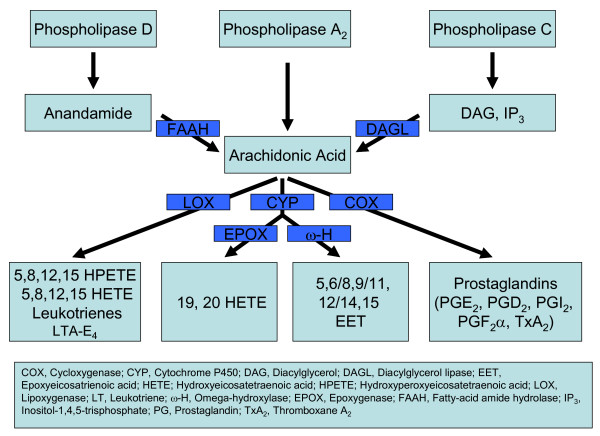
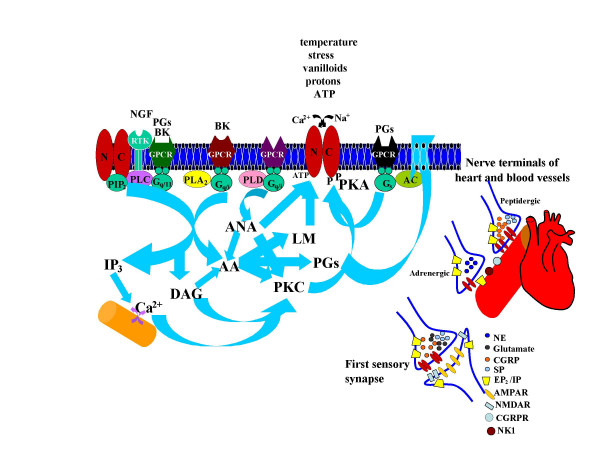
Prostaglandins (PGs) are requisite components of inflammatory pain as indicated by the efficacy of cyclooxygenase 1/2 (COX1/2) inhibitors. PGs do not activate nociceptive ion channels directly, but sensitize them by downstream mechanisms linked to G-protein coupled receptors. Antiinflammatory effects are purported to arise from inhibition of synthesis and/or release of proinflammatory agents. Release of these agents from peripheral and central terminals of sensory neurons modulates nociceptive input from the periphery and synaptic transmission at the first sensory synapse, respectively. Heart and blood vessels are densely innervated by sensory nerve endings that express chemo-, mechano-, and thermo-sensitive receptors. Activation of these receptors mediates synthesis and/or release of vasoactive agents by virtue of their Ca2+permeability. In this article, we discuss that inhibition of COX2 reduces PG synthesis and renders beneficial effects by preventing sensitization of nociceptors, but at the same time, it might contribute to deleterious cardiovascular effects by compromising the synthesis and/or release of vasoactive agents.
Figures
References
-
- Burnstock G. P2X receptors in sensory neurons. Br J Anaesth. 2000;84:476–488. - PubMed
Publication types
MeSH terms
Substances
Grants and funding
LinkOut - more resources
Full Text Sources
Other Literature Sources
Research Materials
Miscellaneous
