


CFTR Expression in human neutrophils and the phagolysosomal chlorination defect in cystic fibrosis
- PMID: 16922501
- PMCID: PMC2931333
- DOI: 10.1021/bi060490t
CFTR Expression in human neutrophils and the phagolysosomal chlorination defect in cystic fibrosis
Abstract
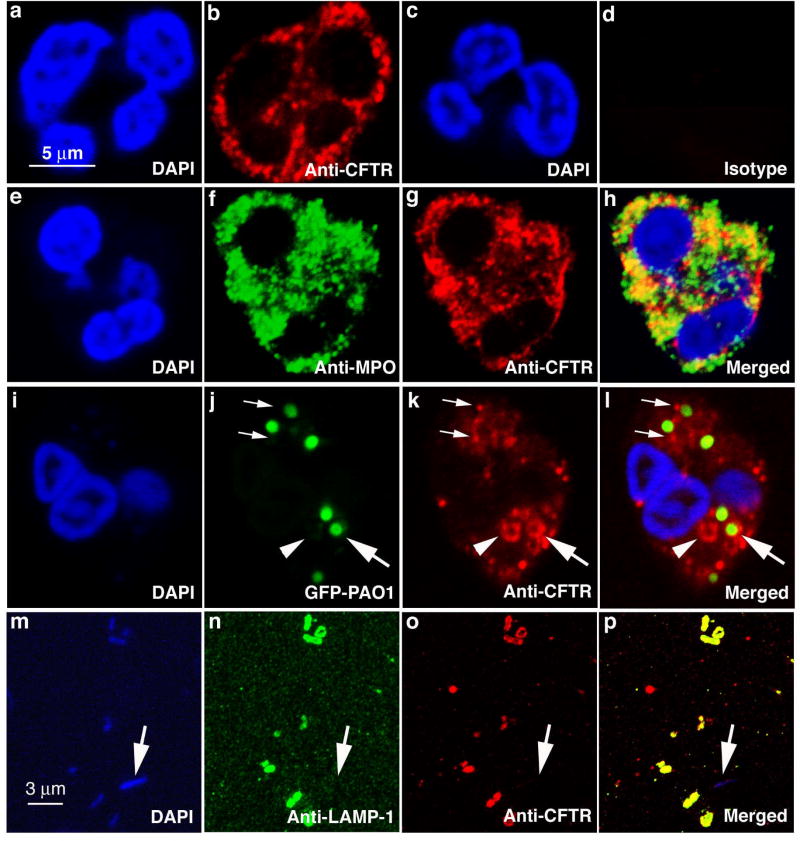
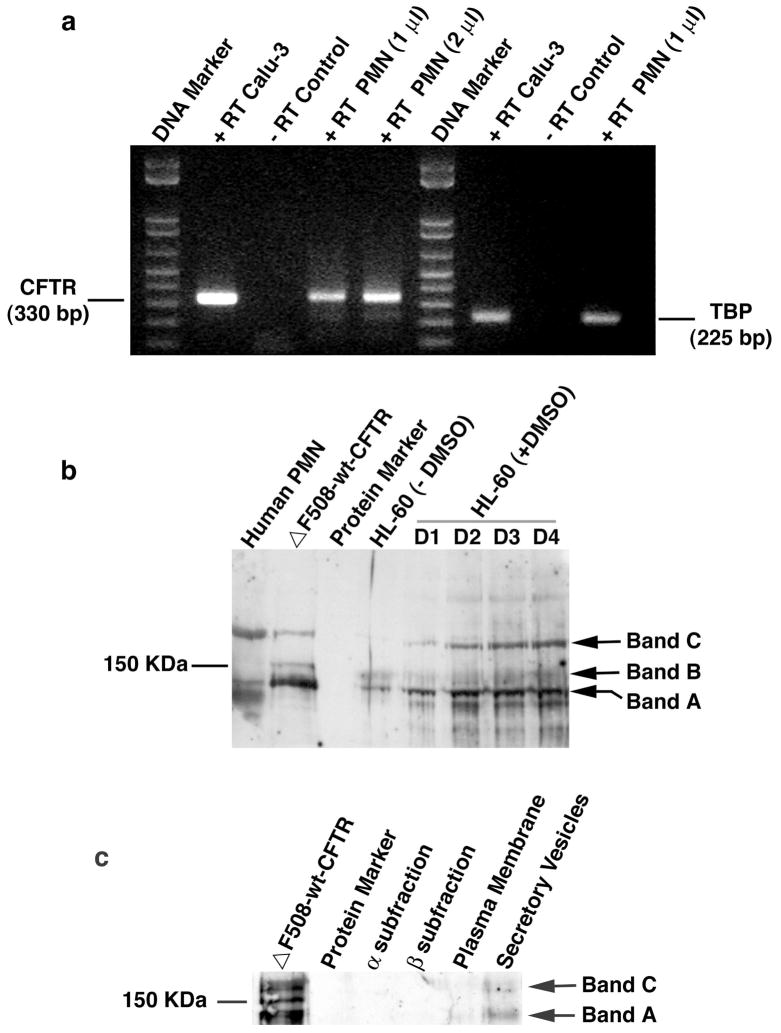
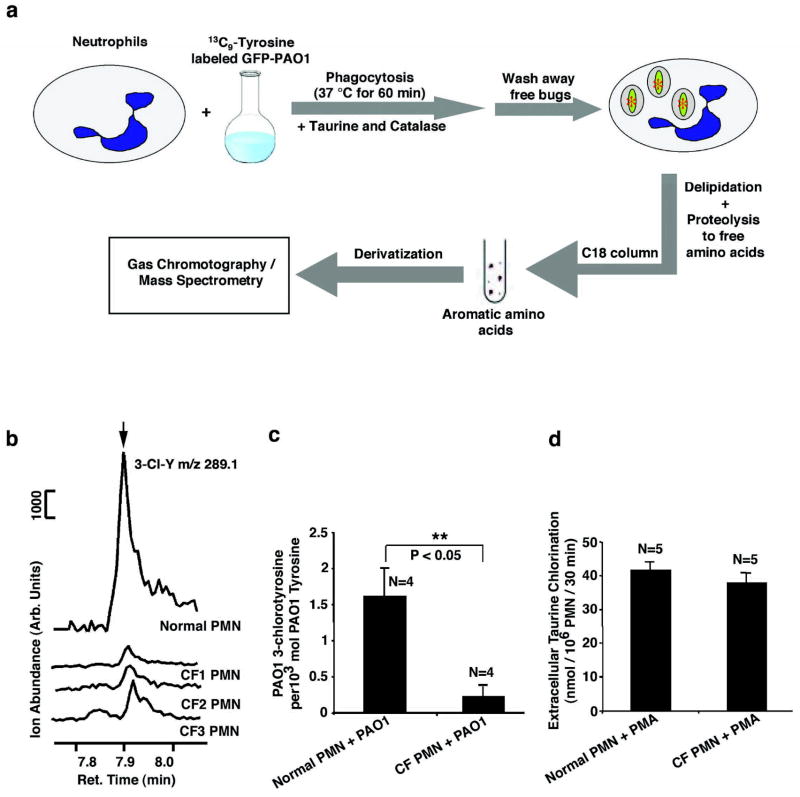
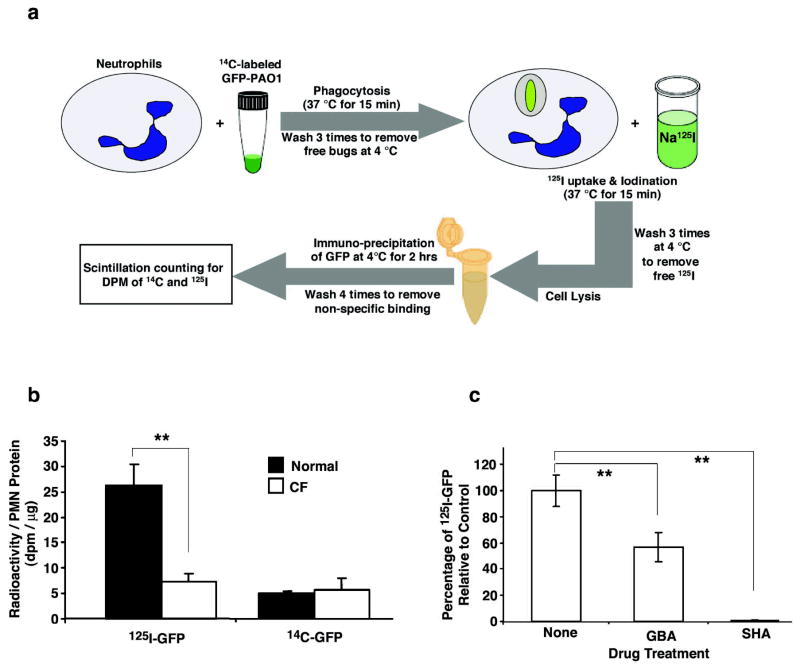
Production of hypochlorous acid (HOCl) in neutrophils, a critical oxidant involved in bacterial killing, requires chloride anions. Because the primary defect of cystic fibrosis (CF) is the loss of chloride transport function of the CF transmembrane conductance regulator (CFTR), we hypothesized that CF neutrophils may be deficient in chlorination of bacterial components due to a limited chloride supply to the phagolysosomal compartment. Multiple approaches, including RT-PCR, immunofluorescence staining, and immunoblotting, were used to demonstrate that CFTR is expressed in resting neutrophils at the mRNA and protein levels. Probing fractions of resting neutrophils isolated by Percoll gradient fractionation and free flow electrophoresis for CFTR revealed its presence exclusively in secretory vesicles. The CFTR chloride channel was also detected in phagolysosomes, a special organelle formed after phagocytosis. Interestingly, HL-60 cells, a human promyelocytic leukemia cell line, upregulated CFTR expresssion when induced to differentiate into neutrophils with DMSO, strongly suggesting its potential role in mature neutrophil function. Analyses by gas chromatography and mass spectrometry (GC-MS) revealed that neutrophils from CF patients had a defect in their ability to chlorinate bacterial proteins from Pseudomonas aeruginosa metabolically prelabeled with [(13)C]-l-tyrosine, unveiling defective intraphagolysosomal HOCl production. In contrast, both normal and CF neutrophils exhibited normal extracellular production of HOCl when stimulated with phorbol ester, indicating that CF neutrophils had the normal ability to produce this oxidant in the extracellular medium. This report provides evidence which suggests that CFTR channel expression in neutrophils and its dysfunction affect neutrophil chlorination of phagocytosed bacteria.
Figures
References
-
- Rommens JM, Iannuzzi MC, Kerem B, Drumm ML, Melmer G, Dean M, Rozmahel R, Cole JL, Kennedy D, Hidaka N, et al. Identification of the cystic fibrosis gene: chromosome walking and jumping. Science. 1989;245:1059–1065. - PubMed
-
- Riordan JR, Rommens JM, Kerem B, Alon N, Rozmahel R, Grzelczak Z, Zielenski J, Lok S, Plavsic N, Chou JL, et al. Identification of the cystic fibrosis gene: cloning and characterization of complementary DNA. Science. 1989;245:1066–1073. - PubMed
-
- Welsh MJ, Ramsey BW, Accurso F, Cutting G. Cystic Fibrosis. In: Scriver CR, editor. Metabolic and Molecular Basis of Interited Disease. New York: McGraw-Hill; 2001. pp. 5121–5188.
-
- Baldridge C, Gerard R. The extra respiration of phagocytosis. Am J Physiol. 1933;103:235–236.
-
- Sbarra AJ, Karnovsky ML. The biochemical basis of phagocytosis. I. Metabolic changes during the ingestion of particles by polymorphonuclear leukocytes. J Biol Chem. 1959;234:1355–1362. - PubMed
Publication types
MeSH terms
Substances
Grants and funding
LinkOut - more resources
Full Text Sources
Other Literature Sources
Medical
Miscellaneous
