


Dental plaque as a biofilm and a microbial community - implications for health and disease
- PMID: 16934115
- PMCID: PMC2147593
- DOI: 10.1186/1472-6831-6-S1-S14
Dental plaque as a biofilm and a microbial community - implications for health and disease
Abstract
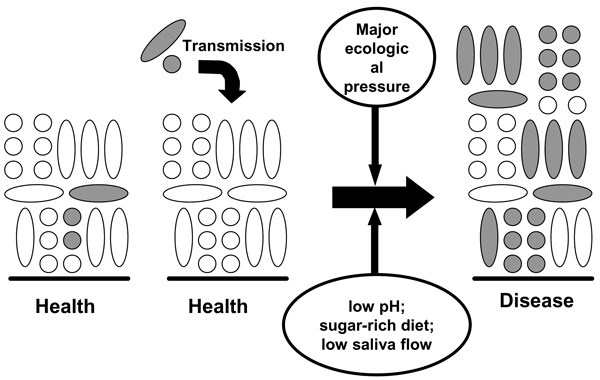
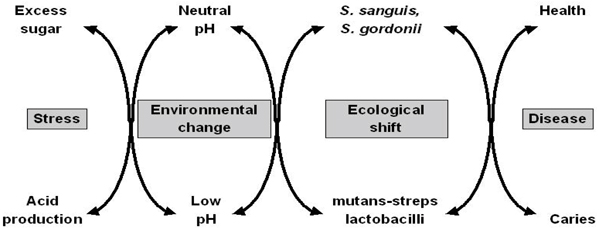
Dental plaque is a structurally- and functionally-organized biofilm. Plaque forms in an ordered way and has a diverse microbial composition that, in health, remains relatively stable over time (microbial homeostasis). The predominant species from diseased sites are different from those found in healthy sites, although the putative pathogens can often be detected in low numbers at normal sites. In dental caries, there is a shift toward community dominance by acidogenic and acid-tolerating species such as mutans streptococci and lactobacilli, although other species with relevant traits may be involved. Strategies to control caries could include inhibition of biofilm development (e.g. prevention of attachment of cariogenic bacteria, manipulation of cell signaling mechanisms, delivery of effective antimicrobials, etc.), or enhancement of the host defenses. Additionally, these more conventional approaches could be augmented by interference with the factors that enable the cariogenic bacteria to escape from the normal homeostatic mechanisms that restrict their growth in plaque and out compete the organisms associated with health. Evidence suggests that regular conditions of low pH in plaque select for mutans streptococci and lactobacilli. Therefore, the suppression of sugar catabolism and acid production by the use of metabolic inhibitors and non-fermentable artificial sweeteners in snacks, or the stimulation of saliva flow, could assist in the maintenance of homeostasis in plaque. Arguments will be presented that an appreciation of ecological principles will enable a more holistic approach to be taken in caries control.
Figures
References
-
- Socransky SS, Haffajee AD. Dental biofilms: difficult therapeutic targets. Periodontology. 2002;28:12–55. - PubMed
-
- Marsh PD. Dental plaque as a microbial biofilm. Caries Res. 2004;38:204–211. - PubMed
-
- van Steenbergen TJM, van Winkelhoff AJ, de Graaff J. Pathogenic synergy: mixed infections in the oral cavity. Antonie van Leeuwenhoek. 1984;50:789–798. - PubMed
-
- Gilbert P, Maira-Litran T, McBain AJ, Rickard AH, Whyte FW. The physiology and collective recalcitrance of microbial biofilm communities. Adv Microb Physiol. 2002;46:203–255. - PubMed
-
- Marsh PD. Role of the oral microflora in health. Microb Ecol Health Dis. 2000;12:130–137.
LinkOut - more resources
Full Text Sources
Other Literature Sources
Medical
