


Interaction of a neurotropic strain of Borrelia turicatae with the cerebral microcirculation system
- PMID: 16940140
- PMCID: PMC1695479
- DOI: 10.1128/IAI.00538-06
Interaction of a neurotropic strain of Borrelia turicatae with the cerebral microcirculation system
Abstract
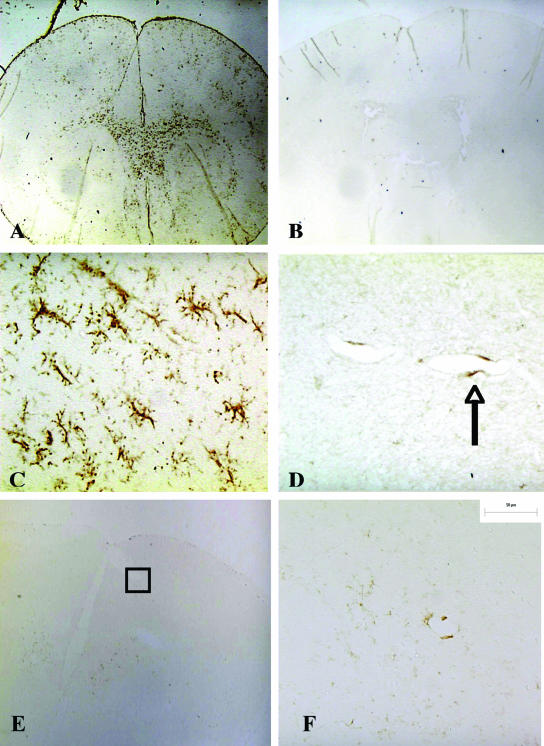
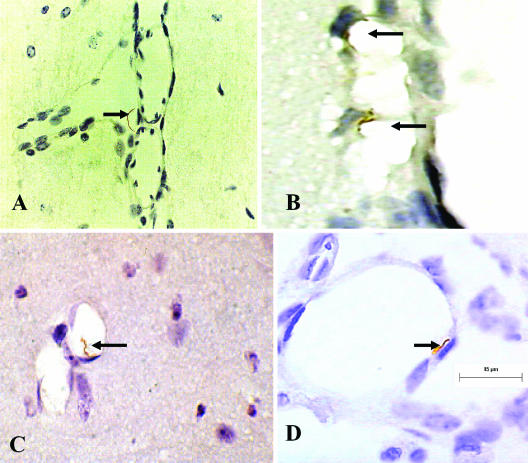
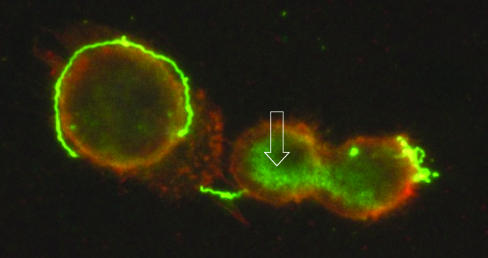
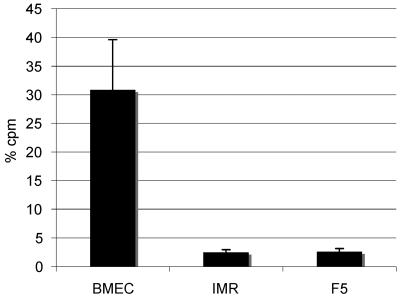
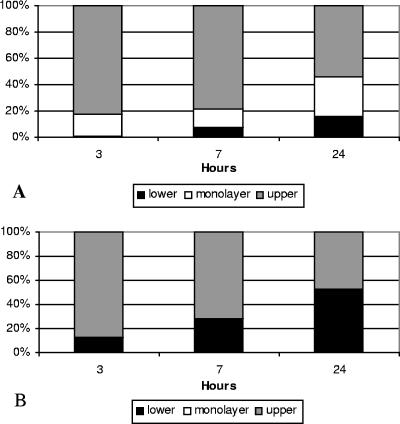
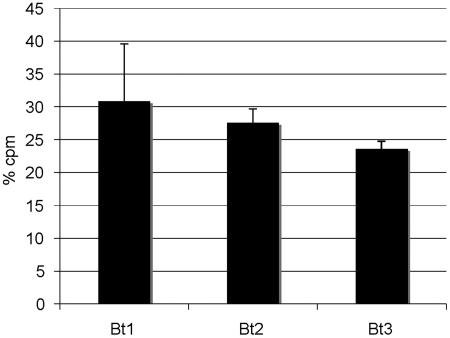
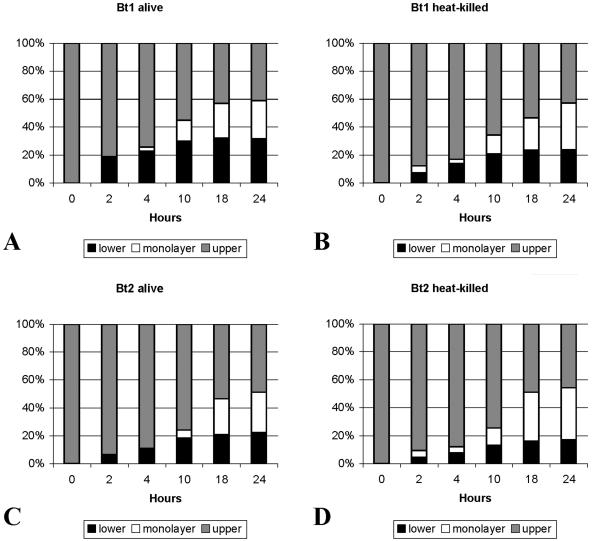
Relapsing fever (RF) is a spirochetal infection characterized by relapses of a febrile illness and spirochetemia due to the sequential appearance and disappearance of isogenic serotypes in the blood. The only difference between isogenic serotypes is the variable major outer membrane lipoprotein. In the absence of specific antibody, established serotypes cause persistent infection. Studies in our laboratory indicate that another consequence of serotype switching in RF is a change in neuroinvasiveness. As the next step to elucidate this phenomenon, we studied the interaction of the neurotropic Oz1 strain of the RF agent Borrelia turicatae with the cerebral microcirculation. During persistent infection of antibody-deficient mice, we found that serotype 1 entered the brain in larger numbers and caused more severe cerebral microgliosis than isogenic serotype 2. Microscopic examination revealed binding of B. turicatae to brain microvascular endothelial cells in vivo. In vitro we found that B. turicatae associated with brain microvascular endothelial cells (BMEC) significantly more than with fibroblasts or arachnoidal cells. The binding was completely eliminated by pretreatment of BMEC with proteinase K. Using transwell chambers with BMEC barriers, we found that serotype 1 crossed into the lower compartment significantly better than serotype 2. Heat killing significantly reduced BMEC crossing but not binding. We concluded that the interaction of B. turicatae with the cerebral microcirculation involves both binding and crossing brain microvascular endothelial cells, with significant differences among isogenic serotypes.
Figures
References
-
- Alugupalli, K. R., R. M. Gerstein, J. Chen, E. Szomolanyi-Tsuda, R. T. Woodland, and J. M. Leong. 2003. The resolution of relapsing fever borreliosis requires IgM and is concurrent with expansion of B1b lymphocytes. J. Immunol. 170:3819-3827. - PubMed
-
- Bai, Y., K. Narayan, D. Dail, M. Sondey, E. Hodzic, S. W. Barthold, A. R. Pachner, and D. Cadavid. 2004. Spinal cord involvement in the nonhuman primate model of Lyme disease. Lab. Investig. 84:160-172. - PubMed
Publication types
MeSH terms
LinkOut - more resources
Full Text Sources
Research Materials
