


EB virus-encoded RNAs are recognized by RIG-I and activate signaling to induce type I IFN
- PMID: 16946700
- PMCID: PMC1570431
- DOI: 10.1038/sj.emboj.7601314
EB virus-encoded RNAs are recognized by RIG-I and activate signaling to induce type I IFN
Abstract
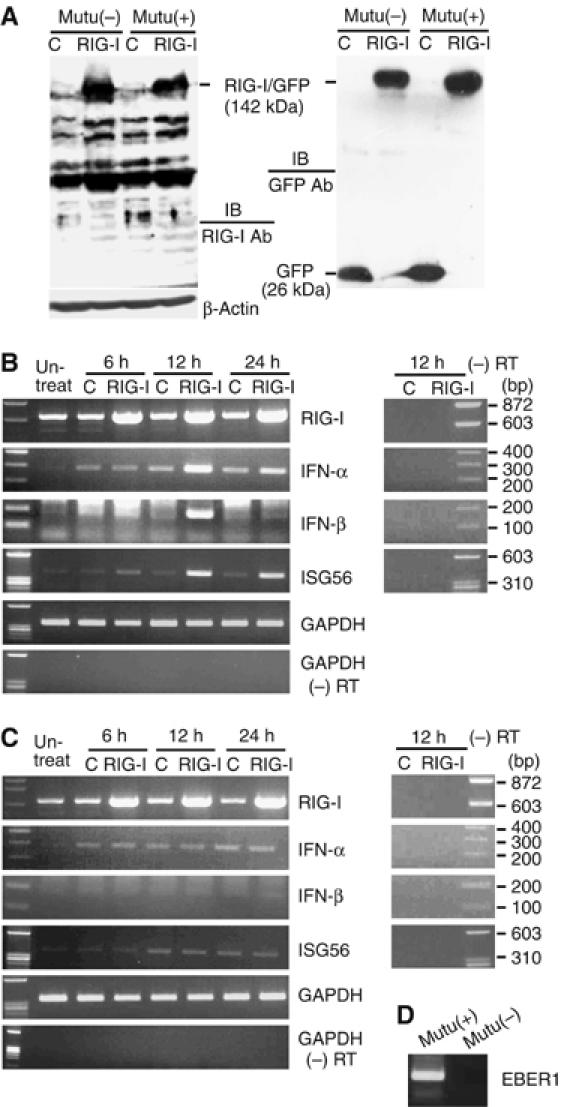
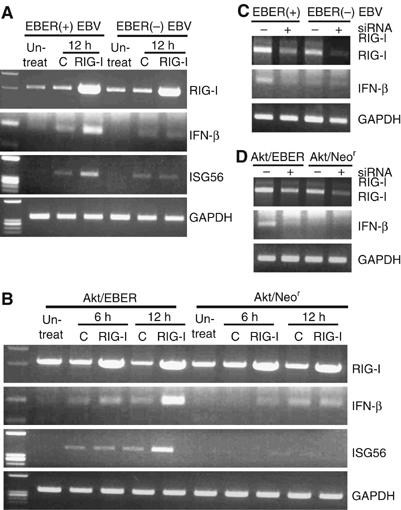
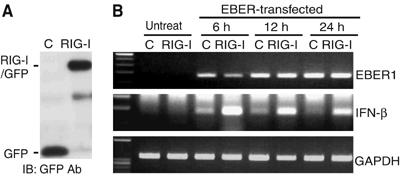
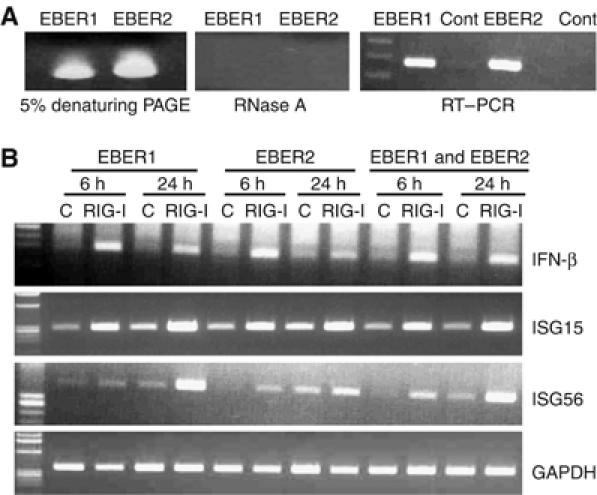
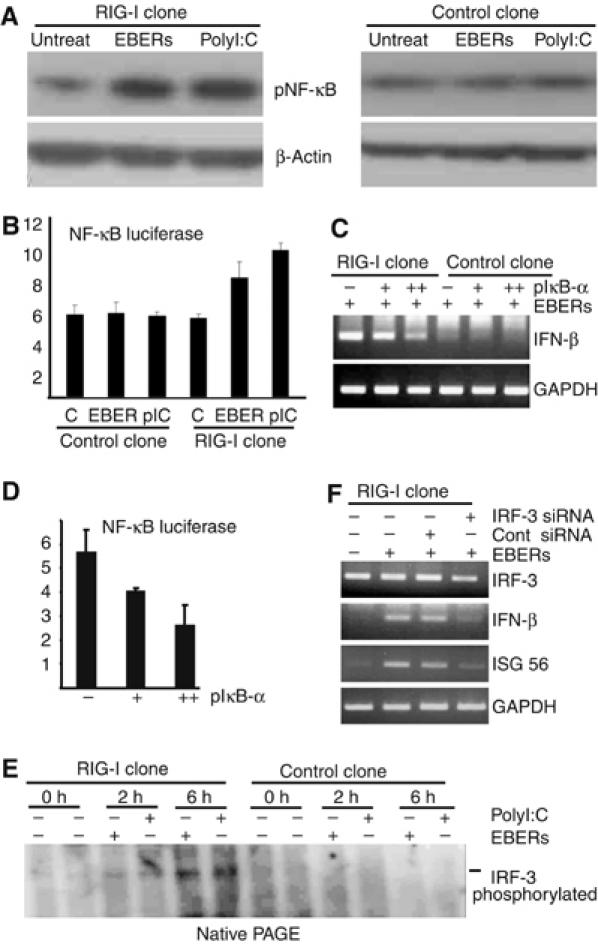
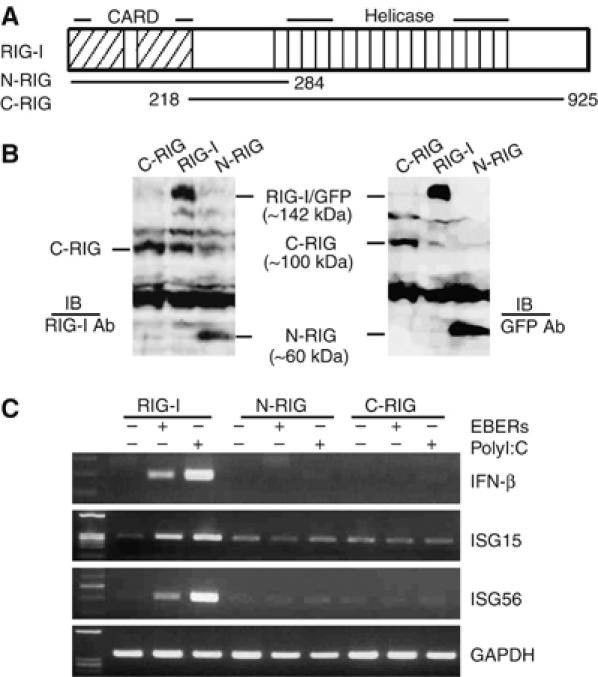
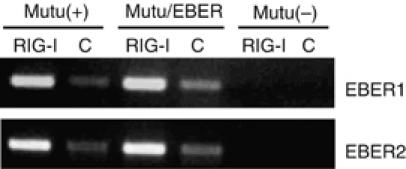
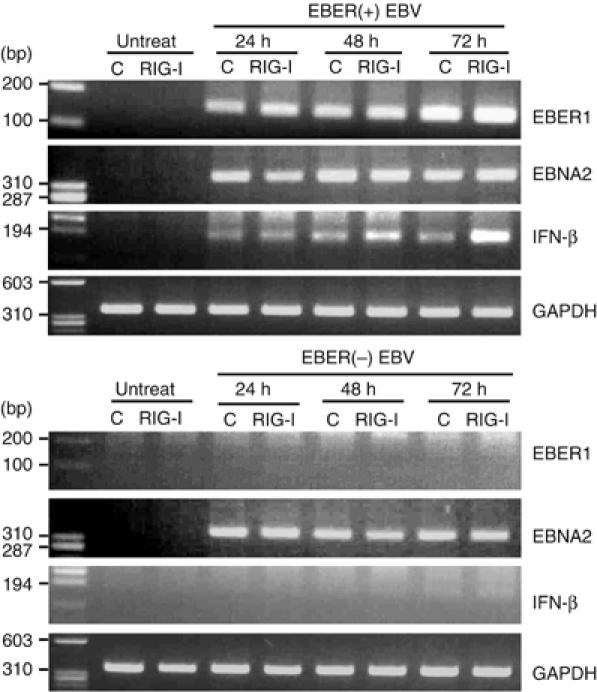
Epstein-Barr virus (EBV)-encoded small RNAs (EBERs) are nonpolyadenylated, untranslated RNAs, exist most abundantly in latently EBV-infected cells, and are expected to show secondary structures with many short stem-loops. Retinoic acid-inducible gene I (RIG-I) is a cytosolic protein that detects viral double-stranded RNA (dsRNA) inside the cell and initiates signaling pathways leading to the induction of protective cellular genes, including type I interferons (IFNs). We investigated whether EBERs were recognized by RIG-I as dsRNA. Transfection of RIG-I plasmid induced IFNs and IFN-stimulated genes (ISGs) in EBV-positive Burkitt's lymphoma (BL) cells, but not in their EBV-negative counterparts or EBER-knockout EBV-infected BL cells. Transfection of EBER plasmid or in vitro-synthesized EBERs induced expression of type I IFNs and ISGs in RIG-I-expressing, EBV-negative BL cells, but not in RIG-I-minus counterparts. EBERs activated RIG-I's substrates, NF-kappaB and IFN regulatory factor 3, which were necessary for type I IFN activation. It was also shown that EBERs co-precipitated with RIG-I. These results indicate that EBERs are recognized by RIG-I and activate signaling to induce type I IFN in EBV-infected cells.
Figures
References
-
- Gregory CD, Rowe M, Rickinson AB (1990) Different Epstein–Barr virus-B cell interactions in phenotypically distinct clones of a Burkitt's lymphoma cell line. J Gen Virol 71: 1481–1495 - PubMed
Publication types
MeSH terms
Substances
LinkOut - more resources
Full Text Sources
Other Literature Sources
