


Implementing chlamydia screening: what do women think? A systematic review of the literature
- PMID: 16948838
- PMCID: PMC1569845
- DOI: 10.1186/1471-2458-6-221
Implementing chlamydia screening: what do women think? A systematic review of the literature
Abstract
Background: Chlamydia trachomatis is a common sexually transmitted infection that can have serious consequences. It is universally agreed that screening for chlamydia infection should be offered to sexually active young women. We undertook a literature review to document the views, attitudes and opinions of women about being screened, tested and diagnosed with Chlamydia trachomatis.
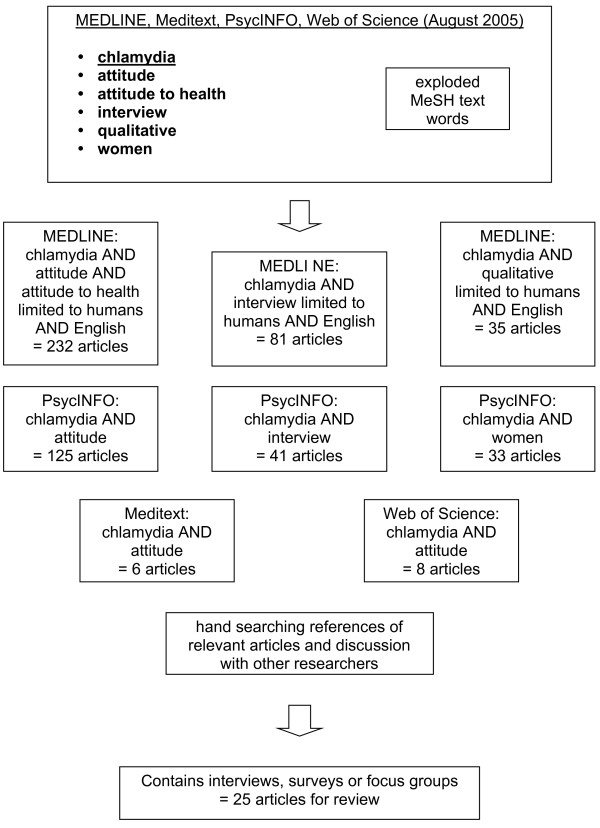
Methods: Online databases (MEDLINE, Meditext, PsycINFO, Web of Science) and reference lists searched up to August 2005. Search terms: chlamydia, attitude, attitude to health, interview, qualitative, women.
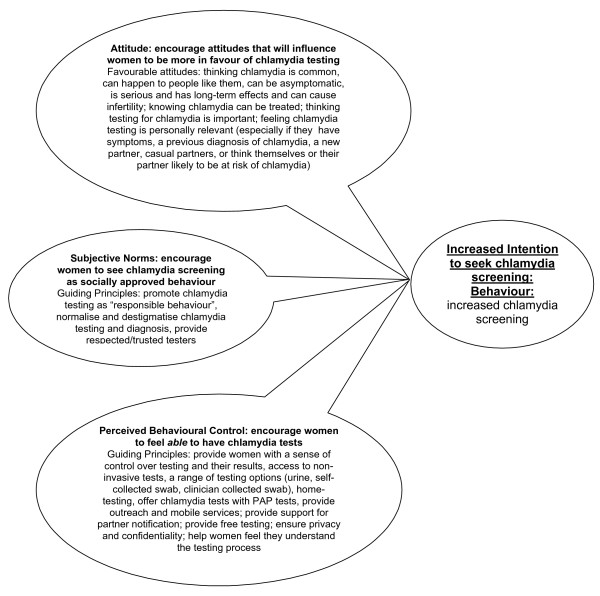
Eligibility criteria: about chlamydia, included women, involved interviews/surveys/focus groups, looked at women's views/opinions/attitudes, published in English. Thematic analysis identified the main and recurrent themes emerging from the literature. We compared our thematic analysis with the Theory of Planned Behaviour to provide a model that could assist in planning chlamydia screening programs.
Results: From 561 identified articles, 25 fulfilled inclusion criteria and were reviewed. 22: USA, UK; 3: Holland, Sweden, Australia. Major themes identified: need for knowledge and information, choice and support; concerns about confidentiality, cost, fear, anxiety and stigma. Women are more likely to find chlamydia screening/testing acceptable if they think chlamydia is a serious, common condition which can cause infertility and if they understand that chlamydia infection can be asymptomatic. Women want a range of options for chlamydia testing including urine tests, self-administered swabs, pelvic exams and clinician-collected swabs, home-testing and community-based testing. Tests should be free, easy and quick. Women want support for dealing with the implications of a chlamydia diagnosis, they feel chlamydia diagnoses need to be normalised and destigmatised and they want assistance with partner notification. Women need to know that their confidentiality will be maintained.
Conclusion: Our review found that women from various countries and ethnic backgrounds share similar views regarding chlamydia screening, testing and diagnosis. The acknowledged importance of women's views in planning an effective chlamydia screening program is expanded in this review which details the nature and complexity of such views and considers their likely impact.
Figures
References
-
- Herrmann B, Egger M. Genital Chlamydia trachomatis Infections in Uppsala County, Sweden, 1985-1993: Declining Rates for How Much Longer? Sexually Transmitted Diseases. 1995;22:253–260. - PubMed
-
- Morbidity and Mortality Weekly Report. Vol. 53 , Centres for Disease Control and Prevention; 2004. Chlamydia Screening Among Sexually Active Young Female Enrollees of Health Plans - United States, 1999-2001; pp. 983–985. - PubMed
-
- Addiss DG, Vaughn ML, Ludka D, Pfister J, Davis JP. Decreased Prevalence of Chlamydia trachomatis Infection Associated With a Selective Screening Program in Family Planning Clinics in Wisconsin. Sexually Transmitted Diseases. 1993;20:28–35. - PubMed
Publication types
MeSH terms
LinkOut - more resources
Full Text Sources
Medical
