


A functional magnetic resonance imaging study of the long-term influences of early indomethacin exposure on language processing in the brains of prematurely born children
- PMID: 16950986
- PMCID: PMC2364718
- DOI: 10.1542/peds.2005-2870
A functional magnetic resonance imaging study of the long-term influences of early indomethacin exposure on language processing in the brains of prematurely born children
Abstract
Background: Previous studies have demonstrated that indomethacin lowers the incidence and decreases the severity of intraventricular hemorrhage, as well as improves the cognitive outcome, in prematurely born male infants.
Objective: The purpose of this work was to use functional magnetic resonance imaging to test the hypothesis that neonatal indomethacin treatment would differentially affect brain activation across genders in school-aged, prematurely born children during performance of a language task.
Methods: Forty-seven prematurely born children (600-1250-g birth weight) and 24 matched term control subjects were evaluated using a functional magnetic resonance imaging passive language task and neurodevelopmental assessments that included the Wechsler Intelligence Scale for Children-III and the Peabody Picture Vocabulary Test-Revised. Neural activity was assessed during both phonologic and semantic processing in the functional magnetic resonance imaging protocol.
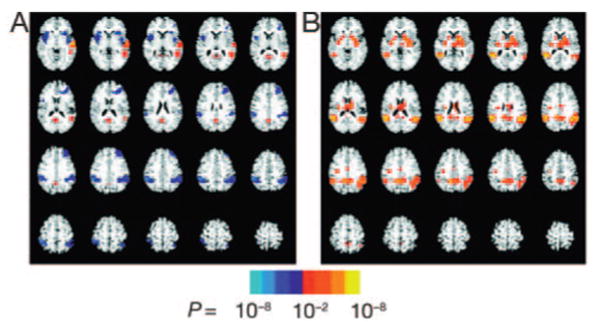
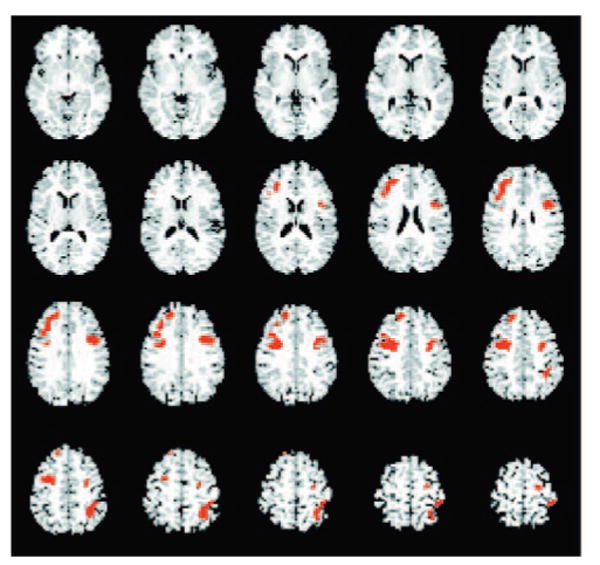
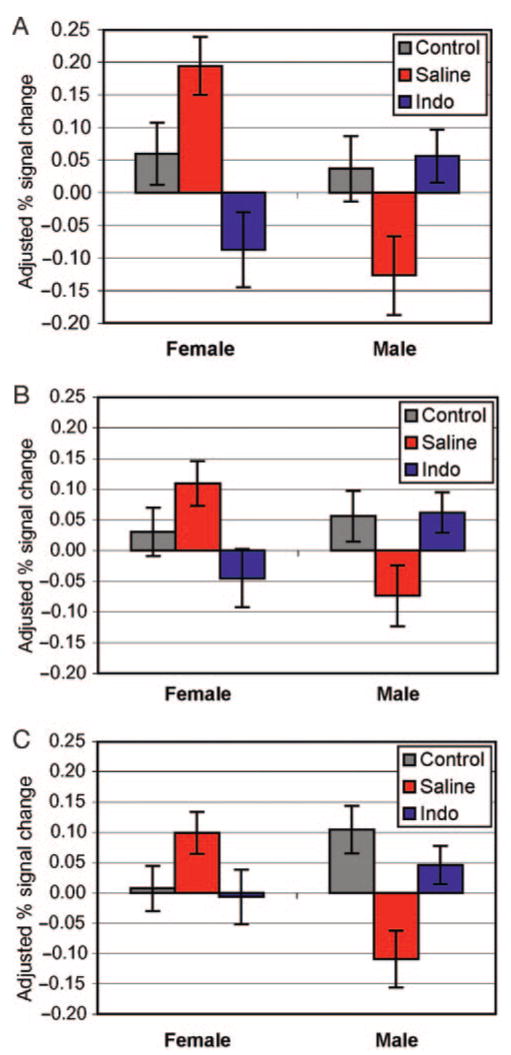
Results: Neurodevelopmental assessments demonstrated significant differences in full-scale, verbal, and performance intelligence quotient, as well as Peabody Picture Vocabulary Test scores, between the preterm and term control subjects. Rates of perinatal complications did not differ significantly across preterm treatment groups, but male preterm subjects randomly assigned to saline tended to have lower Peabody Picture Vocabulary Test-Revised scores than did all of the other preterm groups. During phonological processing, a significant treatment-by-gender effect was demonstrated in 3 brain regions: the left inferior parietal lobule, the left inferior frontal gyrus (Broca's area), and the right dorsolateral prefrontal cortex.
Conclusions: These data demonstrate a differential effect of indomethacin administration early in postnatal life on the subsequent development of neural systems that subserve language functioning in these male and female preterm infants.
Figures
References
-
- Schmidt B, David P. Long-term effects of indomethacin prophylaxis in extremely-low-birth-weight infants. N Engl J Med. 2001;344:1966–1972. - PubMed
-
- Ment LR, Oh W, Ehrenkranz RA, Philip AGS, et al. Low dose indomethacin and prevention of intraventicular hemorrhage: a multicenter randomized trial. Pediatrics. 1994;93:543–550. - PubMed
-
- Bada HS, Green RS, Pourcyrous M, et al. Indomethacin reduced the risk of severe intraventricular hemorrhage. J Pediatr. 1989;115:631–637. - PubMed
-
- Banstra ES, Montalvo BM, Goldberg RN, et al. Prophylactic indomethacin for prevention of intraventricular hemorrhage in premature infants. Pediatrics. 1988;82:533–542. - PubMed
-
- Leffler CW, Busija DW, Fletcher AM, Beasley DG, Hessler JG, Green RS. Effects of indomethacin upon cerebral hemodynamics of newborn pigs. Pediatr Res. 1985;19:1160–1164. - PubMed
Publication types
MeSH terms
Substances
Grants and funding
- R01 DA017820/DA/NIDA NIH HHS/United States
- R01 NS038467/NS/NINDS NIH HHS/United States
- MO1-RR06022/RR/NCRR NIH HHS/United States
- R01 EB000473/EB/NIBIB NIH HHS/United States
- NS 27116/NS/NINDS NIH HHS/United States
- K02-74677/PHS HHS/United States
- K02 MH074677/MH/NIMH NIH HHS/United States
- NS38467/NS/NINDS NIH HHS/United States
- P01 NS035476/NS/NINDS NIH HHS/United States
- DA017820/DA/NIDA NIH HHS/United States
- R01 NS027116/NS/NINDS NIH HHS/United States
- R01 MH068318/MH/NIMH NIH HHS/United States
- MO1-RR00125/RR/NCRR NIH HHS/United States
- EB00473/EB/NIBIB NIH HHS/United States
- NS 35476/NS/NINDS NIH HHS/United States
- M01 RR000125/RR/NCRR NIH HHS/United States
- M01 RR006022/RR/NCRR NIH HHS/United States
LinkOut - more resources
Full Text Sources
Medical
