Organic cation transporters are determinants of oxaliplatin cytotoxicity
- PMID: 16951202
- PMCID: PMC2775093
- DOI: 10.1158/0008-5472.CAN-06-0769
Organic cation transporters are determinants of oxaliplatin cytotoxicity
Abstract
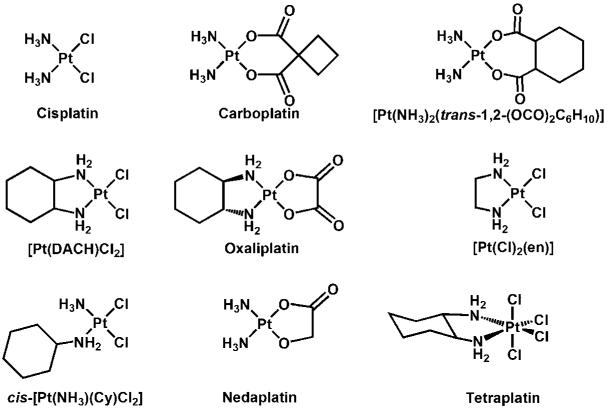
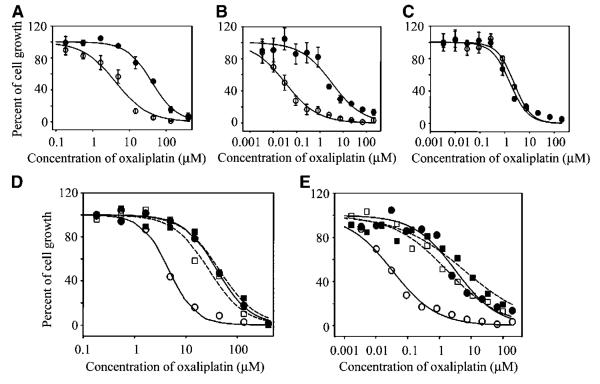
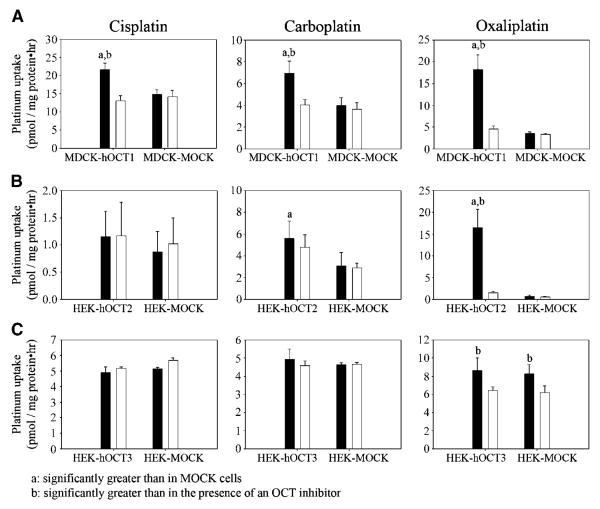
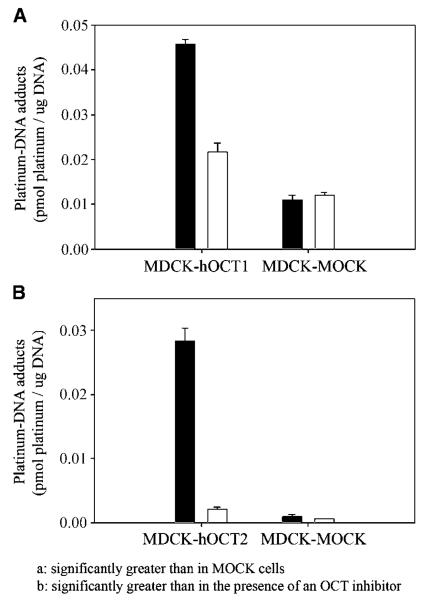
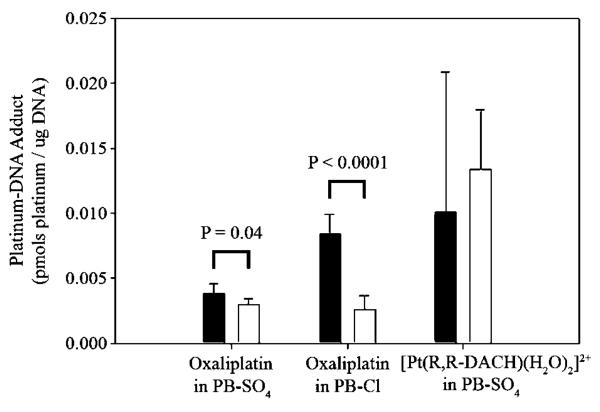
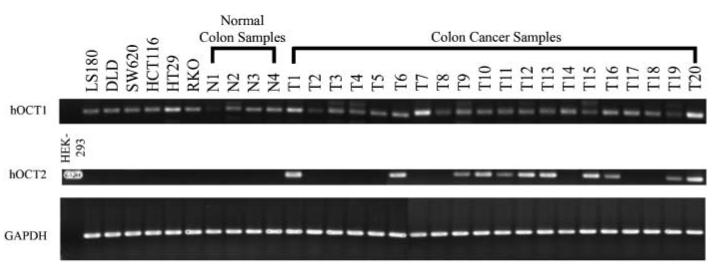
Although the platinum-based anticancer drugs cisplatin, carboplatin, and oxaliplatin have similar DNA-binding properties, only oxaliplatin is active against colorectal tumors. The mechanisms for this tumor specificity of platinum-based compounds are poorly understood but could be related to differences in uptake. This study shows that the human organic cation transporters (OCT) 1 and 2 (SLC22A1 and SLC22A2) markedly increase oxaliplatin, but not cisplatin or carboplatin, accumulation and cytotoxicity in transfected cells, indicating that oxaliplatin is an excellent substrate of these transporters. The cytotoxicity of oxaliplatin was greater than that of cisplatin in six colon cancer cell lines [mean +/- SE of IC(50) in the six cell lines, 3.9 +/- 1.4 micromol/L (oxaliplatin) versus 11 +/- 2.0 micromol/L (cisplatin)] but was reduced by an OCT inhibitor, cimetidine, to a level similar to, or even lower than that of, cisplatin (29 +/- 11 micromol/L for oxaliplatin versus 19 +/- 4.3 micromol/L for cisplatin). Structure-activity studies indicated that organic functionalities on nonleaving groups coordinated to platinum are critical for selective uptake by OCTs. These results indicate that OCT1 and OCT2 are major determinants of the anticancer activity of oxaliplatin and may contribute to its antitumor specificity. They also strongly suggest that expression of OCTs in tumors should be investigated as markers for selecting specific platinum-based therapies in individual patients. The development of new anticancer drugs, specifically targeted to OCTs, represents a novel strategy for targeted drug therapy. The results of the present structure-activity studies indicate specific tactics for realizing this goal.
Figures
References
-
- Wong E, Giandomenico CM. Current status of platinum-based antitumor drugs. Chem Rev. 1999;99:2451–66. - PubMed
-
- Weiss RB, Christian MC. New cisplatin analogues in development. A review. Drugs. 1993;46:360–77. - PubMed
-
- Rixe O, Ortuzar W, Alvarez M, et al. Oxaliplatin, tetraplatin, cisplatin, and carboplatin: spectrum of activity in drug-resistant cell lines and in the cell lines of the National Cancer Institute's Anticancer Drug Screen panel. Biochem Pharmacol. 1996;52:1855–65. - PubMed
-
- Raymond E, Chaney SG, Taamma A, Cvitkovic E. Oxaliplatin: a review of preclinical and clinical studies. Ann Oncol. 1998;10:1053–71. - PubMed
-
- Misset JL, Bleiberg H, Sutherland W, Bekradda M, Cvitkovic E. Oxaliplatin clinical activity: a review. Crit Rev Oncol Hematol. 2000;35:75–93. - PubMed
Publication types
MeSH terms
Substances
Grants and funding
LinkOut - more resources
Full Text Sources
Other Literature Sources
Molecular Biology Databases