


Sleep problems, comorbid mental disorders, and role functioning in the national comorbidity survey replication
- PMID: 16952333
- PMCID: PMC1894656
- DOI: 10.1016/j.biopsych.2006.05.039
Sleep problems, comorbid mental disorders, and role functioning in the national comorbidity survey replication
Abstract
Background: Little is known about the population prevalence of sleep problems or whether the associations of sleep problems with role impairment are due to comorbid mental disorders.
Methods: The associations of four 12-month sleep problems (difficulty initiating or maintaining sleep, early morning awakening, nonrestorative sleep) with role impairment were analyzed in the National Comorbidity Survey Replication controlling 12-month DSM-IV anxiety, mood, impulse-control, and substance disorders. The WHO Composite International Diagnostic Interview was used to assess sleep problems and DSM-IV disorders. The WHO Disability Schedule-II (WHO-DAS) was used to assess role impairment.
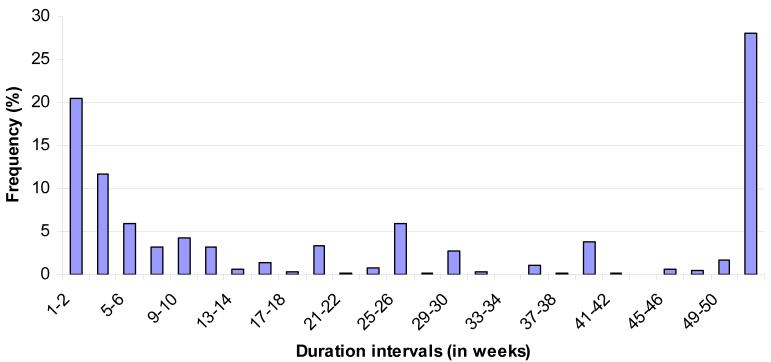
Results: Prevalence estimates of the separate sleep problems were in the range 16.4-25.0%, with 36.3% reporting at least one of the four. Mean 12-month duration was 24.4 weeks. All four problems were significantly comorbid with all the 12-month DMS-IV disorders assessed in the survey (median OR: 3.4; 25(th)-75(th) percentile: 2.8-3.9) and significantly related to role impairment. Relationships with role impairment generally remained significant after controlling comorbid mental disorders. Nonrestorative sleep was more strongly and consistently related to role impairment than were the other sleep problems.
Conclusions: The four sleep problems considered here are of public health significance because of their high prevalence and significant associations with role impairment.
Figures
References
-
- Ancoli-Israel S, Roth T. Characteristics of insomnia in the United States: results of the 1991 National Sleep Foundation Survey. I. Sleep. 1999;22(Suppl 2):S347–S353. - PubMed
-
- Breslau N, Roth T, Rosenthal L, Andreski P. Sleep disturbance and psychiatric disorders: a longitudinal epidemiological study of young adults. Biol Psychiatry. 1996;39:411–418. - PubMed
-
- Chwastiak LA, Von Korff M. Disability in depression and back pain: evaluation of the World Health Organization Disability Assessment Schedule (WHO DAS II) in a primary care setting. J Clin Epidemiol. 2003;56:507–514. - PubMed
-
- Cirignotta F, Mondini S, Zucconi M, Lenzi PL, Lugaresi E. Insomnia: an epidemiological survey. Clin Neuropharmacol. 1985;8(Suppl 1):S49–S54. - PubMed
-
- Costa e Silva JA, Chase M, Sartorius N, Roth T. Special report from a symposium held by the World Health Organization and the World Federation of Sleep Research Societies: an overview of insomnias and related disorders--recognition, epidemiology, and rational management. Sleep. 1996;19:412–416. - PubMed
Publication types
MeSH terms
Grants and funding
LinkOut - more resources
Full Text Sources
Medical
