


Genomic features of Bordetella parapertussis clades with distinct host species specificity
- PMID: 16956413
- PMCID: PMC1794550
- DOI: 10.1186/gb-2006-7-9-r81
Genomic features of Bordetella parapertussis clades with distinct host species specificity
Abstract
Background: The respiratory pathogen Bordetella parapertussis is a valuable model in which to study the complex phenotype of host specificity because of its unique two-species host range. One subset of strains, including the sequenced representative, causes whooping cough in humans, while other strains infect only sheep. The disease process in sheep is not well understood, nor are the genetic and transcriptional differences that might provide the basis for host specificity among ovine and human strains.
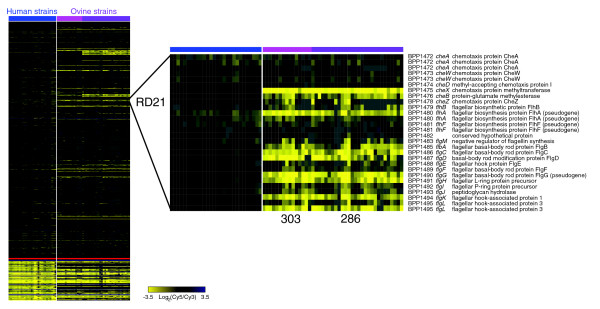
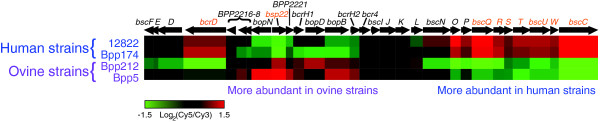
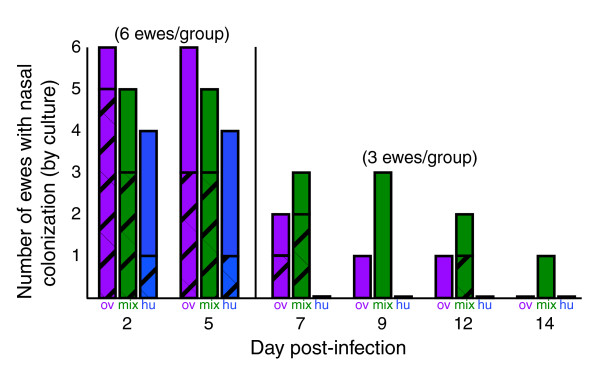
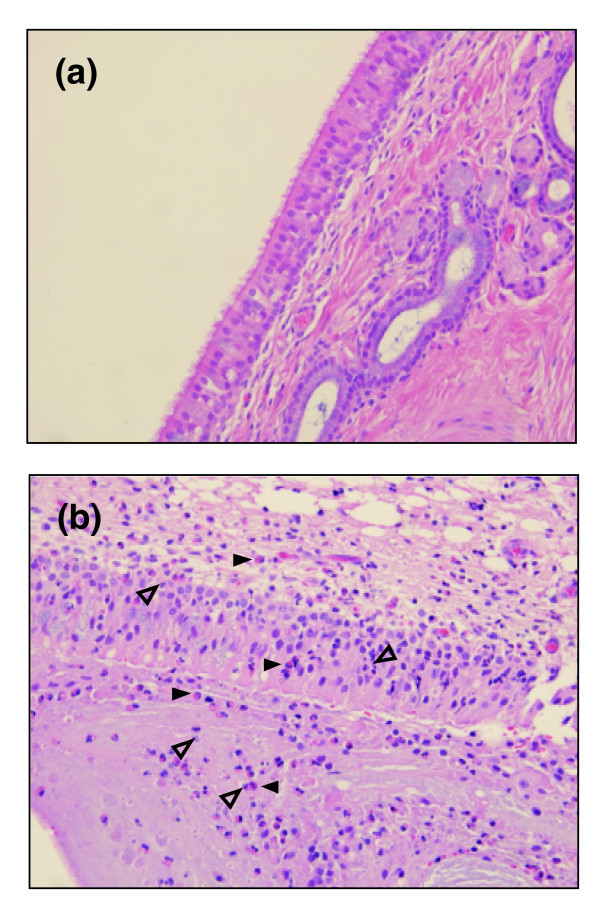
Results: We found 40 previously unknown genomic regions in an ovine strain of B. parapertussis using subtractive hybridization, including unique lipopolysaccharide genes. A microarray survey of the gene contents of 71 human and ovine strains revealed further differences, with 47 regions of difference distinguishing the host-restricted subgroups. In addition, sheep and human strains displayed distinct whole-genome transcript abundance profiles. We developed an animal model in which sheep were inoculated with a sheep strain, human strain, or mixture of the two. We found that the ovine strain persisted in the nasal cavity for 12 to 14 days, while the human strain colonized at lower levels and was no longer detected by 7 days post-inoculation. The ovine strain induced less granulocyte infiltration of the nasal mucosa.
Conclusion: Several factors may play a role in determining host range of B. parapertussis. Human- and ovine-associated strains have differences in content and sequence of genes encoding proteins that mediate host-pathogen contact, such as lipopolysaccharide and fimbriae, as well as variation in regulation of toxins, type III secretion genes, and other virulence-associated genes.
Figures
References
-
- Holmes WH. Whooping cough, or pertussis. In: Holmes WH, editor. Bacillary and Rickettsial Infections: Acute and Chronic, Black Death to White Plague. New York: Macmillan; 1940. pp. 395–414.
-
- Heininger U, Stehr K, Schmitt-Grohe S, Lorenz C, Rost R, Christenson PD, Uberall M, Cherry JD. Clinical characteristics of illness caused by Bordetella parapertussis compared with illness caused by Bordetella pertussis. Pediatr Infect Dis J. 1994;13:306–309. - PubMed
-
- Stehr K, Cherry JD, Heininger U, Schmitt-Grohe S, uberall M, Laussucq S, Eckhardt T, Meyer M, Engelhardt R, Christenson P. A comparative efficacy trial in Germany in infants who received either the Lederle/Takeda acellular pertussis component DTP (DTaP) vaccine, the Lederle whole-cell component DTP vaccine, or DT vaccine. Pediatrics. 1998;101:1–11. doi: 10.1542/peds.101.1.1. - DOI - PubMed
Publication types
MeSH terms
Substances
Grants and funding
LinkOut - more resources
Full Text Sources
Molecular Biology Databases
