. 2006 Sep;72(9):6345-54.
doi: 10.1128/AEM.00988-06.

Multiple contributions of peroxisomal metabolic function to fungal pathogenicity in Colletotrichum lagenarium

Affiliations

Multiple contributions of peroxisomal metabolic function to fungal pathogenicity in Colletotrichum lagenarium

Makoto Asakura et al. Appl Environ Microbiol. 2006 Sep.

Abstract

In Colletotrichum lagenarium, which is the causal agent of cucumber anthracnose, PEX6 is required for peroxisome biogenesis and appressorium-mediated infection. To verify the roles of peroxisome-associated metabolism in fungal pathogenicity, we isolated and functionally characterized ICL1 of C. lagenarium, which encodes isocitrate lyase involved in the glyoxylate cycle in peroxisomes. The icl1 mutants failed to utilize fatty acids and acetate for growth. Although Icl1 has no typical peroxisomal targeting signals, expression analysis of the GFP-Icl1 fusion protein indicated that Icl1 localizes in peroxisomes. These results indicate that the glyoxylate cycle that occurs inside the peroxisome is required for fatty acid and acetate metabolism for growth. Importantly, in contrast with the pex6 mutants that form nonmelanized appressoria, the icl1 mutants formed appressoria that were highly pigmented with melanin, suggesting that the glyoxylate cycle is not essential for melanin biosynthesis in appressoria. However, the icl1 mutants exhibited a severe reduction in virulence. Appressoria of the icl1 mutants failed to develop penetration hyphae in the host plant, suggesting that ICL1 is involved in host invasion. The addition of glucose partially restored virulence of the icl1 mutant. Heat shock treatment of the host plant also enabled the icl1 mutants to develop lesions, implying that the infection defect of the icl1 mutant is associated with plant defense. Together with the requirement of PEX6 for appressorial melanization, our findings suggest that peroxisomal metabolic pathways play functional roles in appressorial melanization and subsequent host invasion steps, and the latter step requires the glyoxylate cycle.


Figures
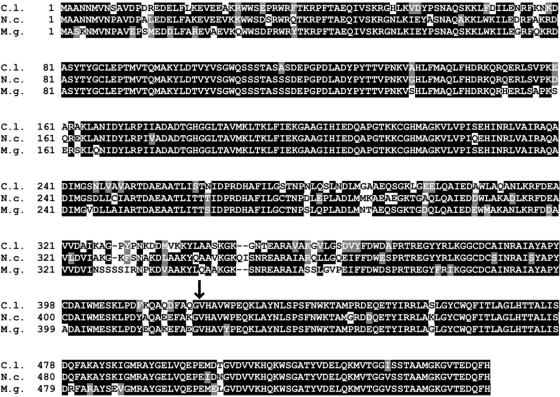
FIG. 1.
FIG. 1.
The C. lagenarium ICL1 gene, which encodes isocitrate lyase. Sequence alignment of C. lagenarium (C.l.) isocitrate lyase with that of N. crassa (N.c.) and M. grisea (M.g.). Amino acid sequences were aligned using the Clustal W program (31). Identical amino acids are indicated as white letters on black background, similar residues are indicated on gray background, and gaps introduced for alignments are indicated by hyphens. The GPS-HYG insertion site is indicated by an arrow.
FIG. 2.
FIG. 2.
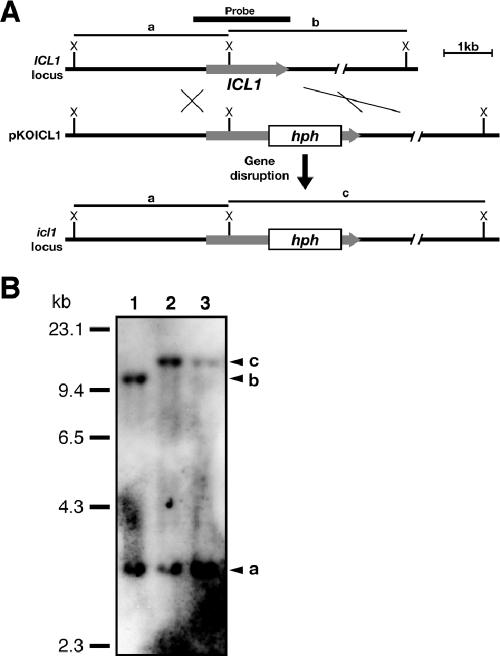
Gene disruption of ICL1. (A) ICL1 locus and the ICL1 gene disruption vector pKOICL1. pKOICL1 was generated by insertion of the GPS-HYG transposon carrying a hygromycin phosphotransferase (hph) gene into ICL1 in the genomic clone pD4SNF1 containing ICL1. (B) DNA gel blot analysis of the icl1 mutant. Genomic DNAs were isolated from the wild-type strain 104-T (lane 1) and the icl1 mutant strains DIC1 and DIC2 (lanes 2 and 3). Genomic DNAs were digested with XhoI. The blot was hybridized with a 2.0-kb fragment containing ICL1, indicated by the black bar in panel A.
FIG. 3.
FIG. 3.
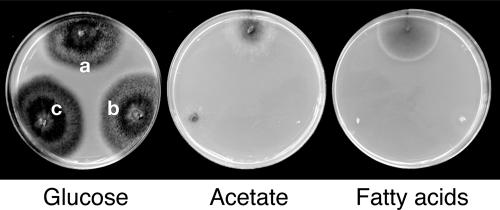
The icl1 mutant is unable to utilize acetate or fatty acids as the sole carbon source for growth. Growth abilities of the wild-type strain, 104-T, the icl1 strain, DIC1, and the pex6 strain, DPE1, were assessed on glucose, acetate, and fatty acid media as sole carbon sources. The tested strains were incubated for 24 days. a, 104-T; b, DIC1; c, DPE1.
FIG. 4.
FIG. 4.
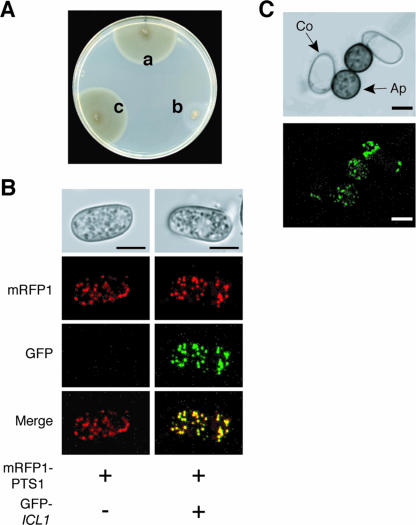
ICL1-encoded isocitrate lyase localizes in the peroxisomes of C. lagenarium. (A) The GFP-ICL1 fusion gene complemented growth of the icl1 mutant on fatty acids. The GFP-ICL1 fusion gene was introduced into the icl1 mutant DIC, and the transformant GIC possessing the fusion gene was isolated. The tested strains were grown on fatty acid medium for 25 days. a, the wild-type strain, 104-T; b, the icl1 mutant, DIC1; c, the complemented strain, GIC1, with the GFP-ICL1 gene. (B) Subcellular localization of GFP-Icl1 in conidia. The GFP-ICL1 fusion gene was introduced into the MRPTS1 strain, which expresses mRFP1-PTS1. mRFP1 and GFP fluorescence was investigated in preincubated conidia of the MRPTS1 strain (left panels) and the GFP-ICL1-introduced transformant of MRPTS1 (right panels). The GFP-Icl1 fusion protein colocalized with mRFP1-PTS1. Bars = 5 μm. (C) Localization of GFP-Icl1 in appressoria. For induction of appressorium formation, conidia of GIC1 were incubated on glass. The fluorescence of GFP-Icl1 was investigated after 6 h of incubation when conidia formed melanized appressoria. Ap, appressorium; Co, conidium. Bars = 5 μm.
FIG. 5.
FIG. 5.
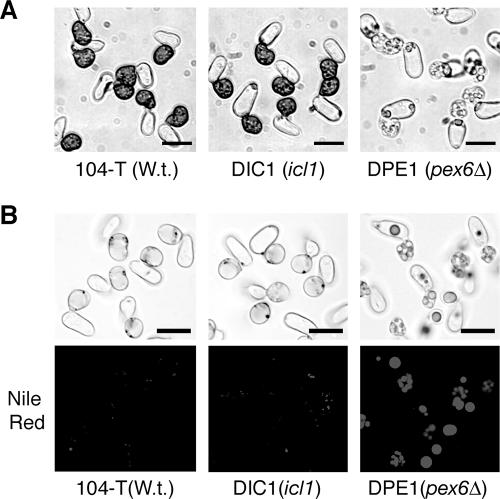
ICL1 is not essential for appressorial melanization and lipolysis. (A) Appressoria formed by the icl1 and pex6 mutants. Conidial suspensions from the wild-type strain, 104-T, the icl1 strain, DIC1, and the pex6 strain, DPE1, were spotted on glass and incubated at 24°C for 16 h. Bars = 10 μm. (B) Lipid bodies in appressoria of the wild-type strain, icl1 mutants, and pex6 mutants. Conidia of each strain were incubated on glass with the melanin biosynthesis inhibitor, carpropamid, for 24 h, and lipid bodies were stained with Nile red. 104-T, wild-type (W.t.) strain; DIC1, icl1 strain; DPE1, pex6 strain. Bars = 10 μm.
FIG. 6.
FIG. 6.
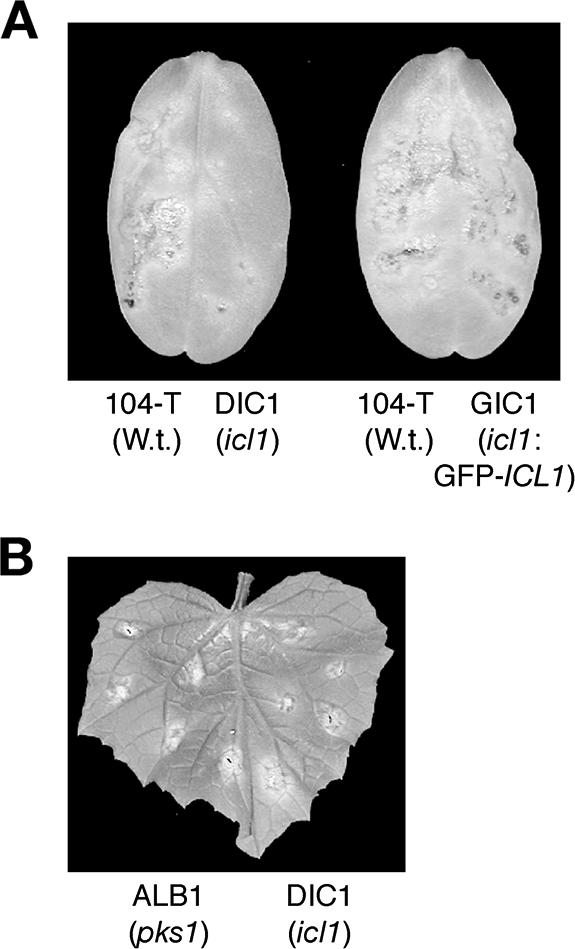
ICL1 is required for fungal virulence of C. lagenarium. (A) Pathogenicity test of the icl1 mutants. Conidial suspensions of tested strains were spotted onto detached cucumber cotyledons. On the left half of the cotyledons, the wild-type (W.t.) strain 104-T was inoculated as a positive control. On the right half, the icl1 mutant DIC1 (the left cotyledon) or the complemented strain GIC1 carrying GFP-ICL1 (the right cotyledon) was inoculated. Inoculated plants were incubated at 25°C for 8 days. (B) Inoculation assay of a wounded cucumber leaf. Conidial suspensions of DIC1 were inoculated on the right half of the cucumber leaf. The albino mutant ALB1 (pks1) was inoculated as a control on the left half of the cucumber leaf. The inoculated plant was incubated at 25°C for 6 days.
FIG. 7.
FIG. 7.
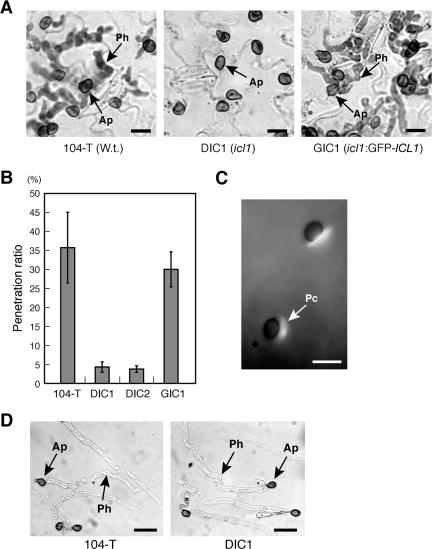
The icl1 mutants have a defect in appressorium-mediated host invasion. (A) The icl1 mutants failed to generate intracellular penetration hyphae into cucumber cotyledons. Conidial suspensions of each strain were inoculated on the lower surface of cucumber cotyledons, and cotyledons were incubated for 4 days. Bars = 10 μm. Ap, appressorium; Ph, penetration hypha. (B) Results of a quantitative assay for appressorial penetration. In each experiment, at least 100 appressoria were examined and counted to calculate the percentage of penetration hyphae formed. Means and standard deviations were calculated from three independent experiments. (C) Deposition of papillary callose under appressoria formed by the icl1 mutant. The icl1 mutant was inoculated on the nonhost plant, A. thaliana. At 1 dpi, callose deposits in papillae were stained with aniline blue. Bar = 10 μm. Pc, papillary callose. (D) Results of an appressorial penetration assay with nitrocellulose membranes. A conidial suspension of each strain was inoculated on nitrocellulose membranes and incubated for 2 days. Ap, appressorium; Ph, penetration hypha. Bars = 20 μm.
FIG. 8.
FIG. 8.
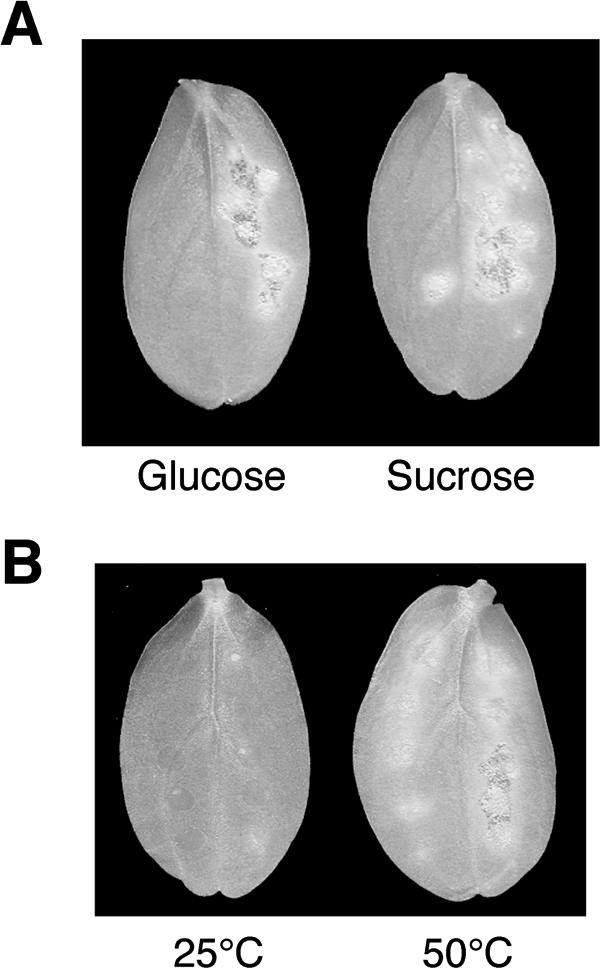
Restoration of virulence in icl1 mutants. (A) Pathogenicity of the icl1 mutants was partially remedied by the addition of saccharides. Conidia of the icl1 mutant DIC1 suspended in 1 mM glucose or sucrose solution were drop inoculated on the right half of cucumber cotyledons. The left halves of cucumber cotyledons were inoculated with conidia of DIC1 suspended in water. Inoculated plants were incubated at 25°C for 8 days. (B) Heat shock treatment of the host plant enabled the icl1 mutant to infect. Cucumber cotyledons pretreated at 50°C for 30 s were inoculated with conidial suspensions of the icl11 mutant. Inoculated plants were incubated at 25°C for 6 days. As a control, cotyledons were treated at 25°C for 30 s before inoculation.

References

    1. Adam, L., and S. C. Somerville. 1996. Genetic characterization of five powdery mildew disease resistance loci in Arabidopsis thaliana. Plant J. 9:341-356. - PubMed
    1. Agrios, G. N. 2004. Plant pathology, 5th ed., p. 487-498. Academic Press, San Diego, Calif.
    1. Campbell, R. E., O. Tour, A. E. Palmer, P. A. Steinbach, G. S. Baird, D. A. Zacharias, and R. Y. Tsien. 2002. A monomeric red fluorescent protein. Proc. Natl. Acad. Sci. USA 99:7877-7882. - PMC - PubMed
    1. Emmett, R. W., and D. G. Parbery. 1975. Appressoria. Annu. Rev. Phytopathol. 13:147-167.
    1. Fujii, I., Y. Mori, A. Watanabe, Y. Kubo, G. Tsuji, and Y. Ebizuka. 2000. Enzymatic synthesis of 1,3,6,8-tetrahydroxynaphthalene solely from malonyl coenzyme A by a fungal iterative type I polyketide synthase PKS1. Biochemistry 39:8853-8858. - PubMed

Publication types

Associated data

LinkOut - more resources