


The role of clathrin-dependent endocytosis in bacterial internalization
- PMID: 16962776
- PMCID: PMC7126422
- DOI: 10.1016/j.tcb.2006.08.005
The role of clathrin-dependent endocytosis in bacterial internalization
Abstract
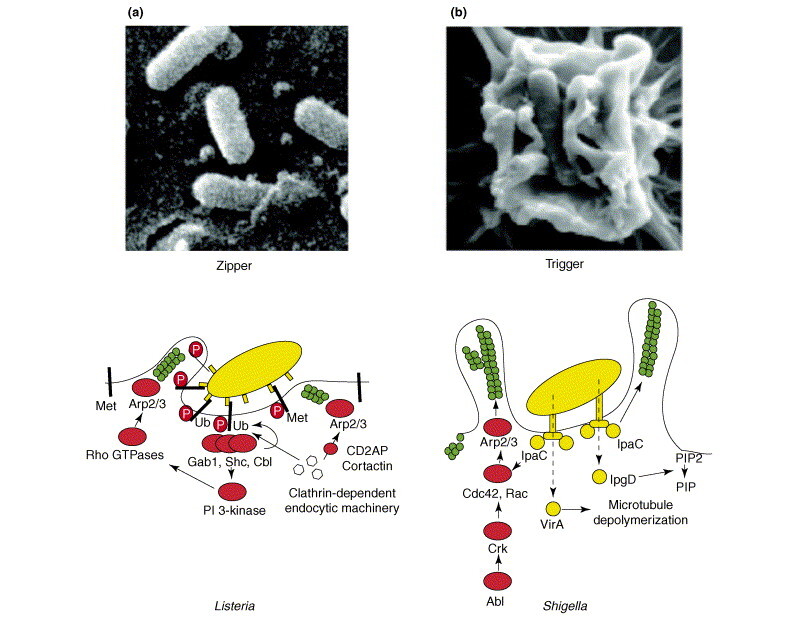
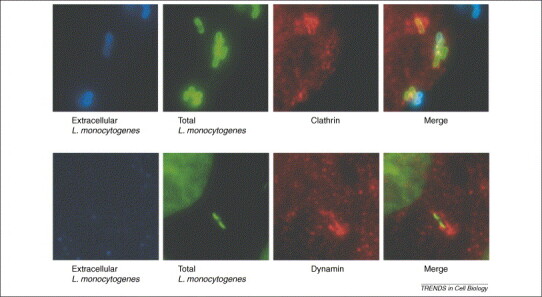
Internalization of bacteria into mammalian host cells has been studied extensively in the past two decades. These studies have highlighted the amazingly diverse strategies used by bacterial pathogens to induce their entry in non-phagocytic cells. The roles of actin and of the whole cytoskeletal machinery have been investigated in great detail for several invasive organisms, such as Salmonella, Shigella, Yersinia and Listeria. Recent results using Listeria highlight a role for the endocytosis machinery in bacterial entry, suggesting that clathrin-dependent endocytic mechanisms are also involved in internalization of large particles. This contrasts with the generally accepted dogma but agrees with previous studies of bacterial and viral infections and also of phagocytosis.
Figures
References
-
- Conner S.D., Schmid S.L. Regulated portals of entry into the cell. Nature. 2003;422:37–44. - PubMed
-
- Dupre S., et al. Ubiquitin and endocytic internalization in yeast and animal cells. Biochim. Biophys. Acta. 2004;1695:89–111. - PubMed
-
- Engqvist-Goldstein A.E., Drubin D.G. Actin assembly and endocytosis: from yeast to mammals. Annu. Rev. Cell Dev. Biol. 2003;19:287–332. - PubMed
-
- Sorkin A. Cargo recognition during clathrin-mediated endocytosis: a team effort. Curr. Opin. Cell Biol. 2004;16:392–399. - PubMed
-
- Fotin A., et al. Structure of an auxilin-bound clathrin coat and its implications for the mechanism of uncoating. Nature. 2004;432:649–653. - PubMed
Publication types
MeSH terms
Substances
LinkOut - more resources
Full Text Sources
Other Literature Sources
Miscellaneous
