Escitalopram for major depression in Parkinson's disease: an open-label, flexible-dosage study
- PMID: 16963587
- PMCID: PMC1761053
- DOI: 10.1176/jnp.2006.18.3.377
Escitalopram for major depression in Parkinson's disease: an open-label, flexible-dosage study
Abstract
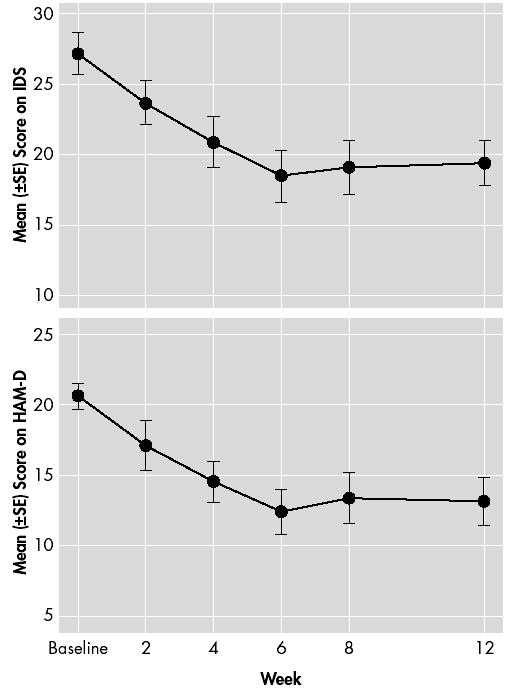
Depression and antidepressant use are common in Parkinson's disease, but the benefit of selective serotonin reuptake inhibitor (SSRI) treatment in this population has not been established. The authors treated 14 Parkinson's disease patients with major depression with escitalopram in an open-label study. Although treatment was well tolerated and correlated with a significant decrease in Inventory of Depressive Symptomatology score, response and remission rates were only 21% and 14%, respectively. However, half of the subjects met Clinical Global Impression-Improvement criteria for response. In Parkinson's disease, either SSRIs may have limited antidepressant effects, or the use of existing depression diagnostic and rating instruments may be problematic.
Figures
References
-
- Weintraub D. Diagnosing and treating depression in patients with Parkinson’s disease. Psychiatr Ann. 2004;34:299–304.
-
- Richard IH, Kurlan R Parkinson Study Group. A survey of anti-depressant use in Parkinson’s disease. Neurology. 1997;49:1168–1170. - PubMed
-
- Wermuth L, Sorensen PS, Timm S, et al. Depression in idiopathic Parkinson’s disease treated with citalopram: a placebo-controlled trial. Nord J Psychiatry. 1998;52:163–169.
-
- Leentjens AF, Vreeling FW, Luijckx GJ, et al. SSRIs in the treatment of depression in Parkinson’s disease. Int J Geriatr Psychiatry. 2003;18:552–554. - PubMed
-
- Dell’Agnello G, Ceravolo R, Nuti A, et al. SSRIs do not worsen Parkinson’s disease: evidence from an open-label, prospective study. Clin Neuropharmacol. 2001;24:221–227. - PubMed
Publication types
MeSH terms
Substances
Grants and funding
LinkOut - more resources
Full Text Sources
Medical
Miscellaneous