


Recoverable cognitive dysfunction at hospital admission in older persons during acute illness
- PMID: 16965558
- PMCID: PMC1924736
- DOI: 10.1111/j.1525-1497.2006.00613.x
Recoverable cognitive dysfunction at hospital admission in older persons during acute illness
Abstract
Background: While acute illness and hospitalization represent pivotal events for older persons, their contribution to recoverable cognitive dysfunction (RCD) has not been well examined.
Objective: Our goals were to estimate the frequency and degree of RCD in an older hospitalized cohort; to examine the relationship of RCD with delirium and dementia; and to determine 1-year cognitive outcomes.
Design: Prospective cohort study.
Participants: Four hundred and sixty patients aged > or =70 years drawn from consecutive admissions to an academic hospital.
Measurements: Patients underwent interviews daily during hospitalization and at 1 year. The primary outcome was RCD, defined as an admission Mini-Mental State Examination (MMSE) score that improved by 3 or more points by discharge.
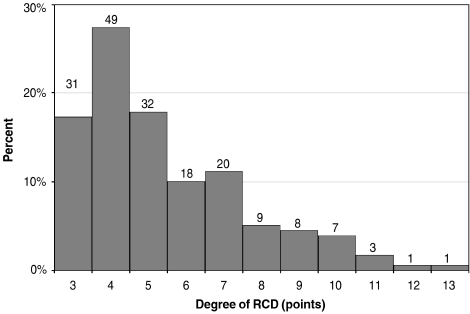
Results: Recoverable cognitive dysfunction occurred in 179 of 460 (39%) patients, with MMSE impairment at baseline ranging from 3 to 13 points (median=5.0 points). The majority of cases were not characteristic of either delirium or dementia, as 144 of 179 (80%) cases did not meet criteria for delirium, and 133 of 164 (81%) cases did not meet criteria for dementia at baseline. In multivariable analysis controlling for baseline MMSE level, 3 factors were predictive of RCD: higher educational level, preadmission functional impairment, and higher illness severity. At 1 year, further improvement in MMSE score occurred in 38 of 92 (41%) patients with RCD. Recoverable cognitive dysfunction was independently predictive of 1-year mortality with an adjusted odds ratio of 1.82 (95% confidence interval [95% CI] 1.03 to 3.20).
Conclusions: Acute illness is accompanied by a high rate of RCD that is neither characteristic of delirium or dementia. Our observations underscore the reversible nature of this cognitive dysfunction with continued improvement over the ensuing year, and highlight the potential clinical implications of this under-recognized phenomenon.
Figures
Comment in
-
Recoverable cognitive dysfunction in older persons.J Gen Intern Med. 2007 Jul;22(7):1061. doi: 10.1007/s11606-007-0221-5. J Gen Intern Med. 2007. PMID: 17458571 Free PMC article. No abstract available.
References
-
- Covinsky KE, Palmer RM, Fortinsky RH, et al. Loss of independence in activities of daily living in older adults hospitalized with medical illnesses: increased vulnerability with age. J Am Geriatr Soc. 2003;51:451–8. - PubMed
-
- Creditor MC. Hazards of hospitalization of the elderly. Ann Intern Med. 1993;118:219–23. - PubMed
-
- Brennan TA, Leape LL, Laird NM, et al. Incidence of adverse events and negligence in hospitalized patients: results of the Harvard Medical Practice Study I. N Engl J Med. 1991;324:370–6. - PubMed
-
- Inouye SK. Current concepts: delirium in older persons. N Engl J Med. 2006;354:1157–65. - PubMed
-
- Cole MG. Delirium in elderly patients. Am J Geriatr Psychiatry. 2004;12:7–21. - PubMed
Publication types
MeSH terms
Grants and funding
LinkOut - more resources
Full Text Sources