Review
. 2007 Apr;16(4):447-68.
doi: 10.1007/s00586-006-0220-y. Epub 2006 Sep 16.

Biological treatment strategies for disc degeneration: potentials and shortcomings

Affiliations
Review

Biological treatment strategies for disc degeneration: potentials and shortcomings

Günther Paesold et al. Eur Spine J. 2007 Apr.

Abstract

Recent advances in molecular biology, cell biology and material sciences have opened a new emerging field of techniques for the treatment of musculoskeletal disorders. These new treatment modalities aim for biological repair of the affected tissues by introducing cell-based tissue replacements, genetic modifications of resident cells or a combination thereof. So far, these techniques have been successfully applied to various tissues such as bone and cartilage. However, application of these treatment modalities to cure intervertebral disc degeneration is in its very early stages and mostly limited to experimental studies in vitro or in animal studies. We will discuss the potential and possible shortcomings of current approaches to biologically cure disc degeneration by gene therapy or tissue engineering. Despite the increasing number of studies examining the therapeutic potential of biological treatment strategies, a practicable solution to routinely cure disc degeneration might not be available in the near future. However, knowledge gained from these attempts might be applied in a foreseeable future to cure the low back pain that often accompanies disc degeneration and therefore be beneficial for the patient.


Figures
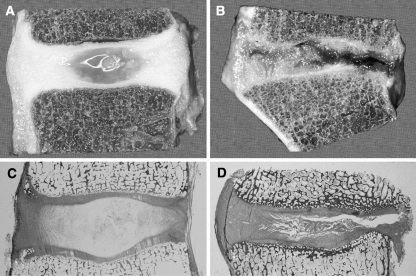
Fig. 1
Fig. 1
Degenerative changes of the intervertebral disc. Comparison of young and healthy (a, c) and severely degenerated (b, d) discs illustrates that alterations are observed in all anatomical regions of the disc and are obvious on macroscopical (a, b) and histological (c, d) level
Fig. 2
Fig. 2
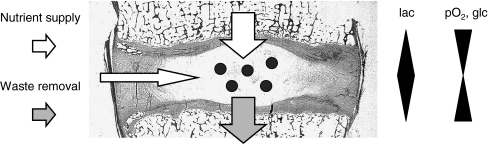
Limitations of the nutrient supply to cells of the nucleus pulposus. Due to the avascularity of the intervertebral disc nutrient supply and waste removal is entirely relying on diffusion through the cartilaginous endplates. This results in a gradient through the disc with a minimum of nutrients (pO2, glc glucose) and a maximum of waste products (lac lactate) in the middle of the disc
Fig. 3
Fig. 3
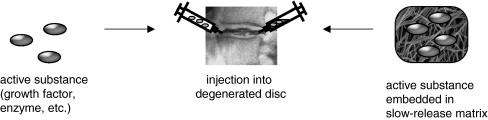
Direct injection of an active substance into the intervertebral disc matrix. Active substances, such as growth factors or anabolic enzymes can be injected directly into the disc matrix or can be injected embedded in a matrix that allows slow release of the substance into the environment
Fig. 4
Fig. 4
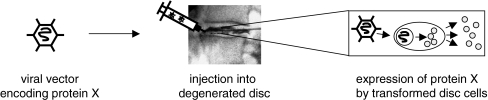
Direct gene therapy. Resident cells are genetically modified in situ in order to express beneficial genes. Modification is achieved using a carrier (for example gene engineered viral vectors). After transformation, the resident disc cells show sustained expression of the beneficial protein (protein X)
Fig. 5
Fig. 5
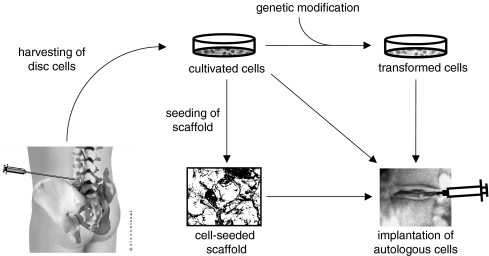
Augmentation of degenerated intervertebral discs by implantation of autologous cells. Cultivated cells could be implanted directly, genetically modified in vitro prior to implantation (indirect gene therapy), or seeded into a scaffold (tissue engineering)
Fig. 6
Fig. 6
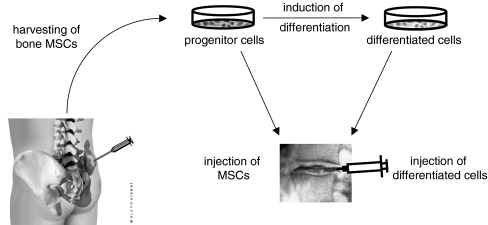
Augmentation of degenerated intervertebral discs by implantation of bone-derived mesenchymal stem cells (MSC). Harvested MSC can be cultivated as progenitor cells and injected directly into the disc matrix. Alternatively, the progenitor cells can be differentiated in vitro to a disc cell-like phenotype and then injected into the disc matrix

References

    1. Adachi N, Sato K, Usas A, Fu FH, Ochi M, Han CW, Niyibizi C, Huard J. Muscle derived, cell based ex vivo gene therapy for treatment of full thickness articular cartilage defects. J Rheumatol. 2002;29:1920–1930. - PubMed
    1. Adams MA, Dolan P. Spine biomechanics. J Biomech. 2005;38:1972–1983. - PubMed
    1. Adams MA, Freeman BJ, Morrison HP, Nelson IW, Dolan P. Mechanical initiation of intervertebral disc degeneration. Spine. 2000;25:1625–1636. - PubMed
    1. Ahn SH, Cho YW, Ahn MW, Jang SH, Sohn YK, Kim HS. mRNA expression of cytokines and chemokines in herniated lumbar intervertebral discs. Spine. 2002;27:911–917. - PubMed
    1. Akiyama H, Chaboissier MC, Martin JF, Schedl A, Crombrugghe B. The transcription factor Sox9 has essential roles in successive steps of the chondrocyte differentiation pathway and is required for expression of Sox5 and Sox6. Genes Dev. 2002;16:2813–2828. - PMC - PubMed

Publication types

MeSH terms