


Docetaxel for the treatment of hormone-refractory prostate cancer
- PMID: 16985945
- PMCID: PMC1502348
Docetaxel for the treatment of hormone-refractory prostate cancer
Abstract
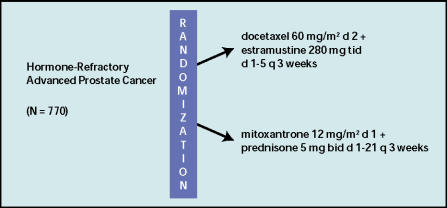
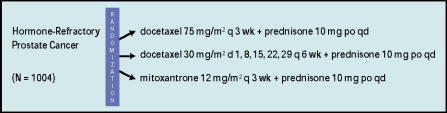
Chemotherapy has historically proven toxic and ineffective for the treatment of metastatic hormone-refractory prostate cancer (HRPC), a disease with substantial morbidity and mortality. Progress has been made in symptom relief, and the combination of mitoxantrone and prednisone is considered the palliative standard of care. The effects of a variety of chemotherapeutic agents, both alone and in combination, on prostate-specific antigen decline rates, measurable disease response, and survival have been examined in numerous phase I and II trials. Results suggest that combining vinblastine or paclitaxel with estramustine confers a survival advantage over either agent alone. In addition, docetaxel-based therapy has been found to be effective and well tolerated, and phase III trials will soon determine whether docetaxel-based therapy should replace mitoxantrone-based therapy as the standard of care for HRPC.
Figures
References
-
- Jemal A, Murray T, Samuels A, et al. Cancer statistics, 2003. CA Cancer J Clin. 2003;53:5–26. - PubMed
-
- Yagoda A, Petrylak D. Cytotoxic chemotherapy for advanced hormone-resistant prostate cancer. Cancer. 1993;71:1098–1109. - PubMed
-
- Tannock IF, Osoba D, Stockler MR, et al. Chemotherapy with mitoxantrone plus prednisone or prednisone alone for symptomatic hormone-resistant prostate cancer: a Canadian randomized trial with palliative endpoints. J Clin Oncol. 1996;14:1756–1764. - PubMed
-
- Kantoff PW, Halabi S, Conaway M, et al. Hydrocortisone with or without mitoxantrone in men with hormone-refractory prostate cancer: results of the Cancer and Leukemia Group B 9182 study. J Clin Oncol. 1999;17:2506–2513. - PubMed
-
- Berry W, Dakhil S, Modiano M, et al. Phase III study of mitoxantrone plus low dose prednisone versus low dose prednisone alone in patients with asymptomatic hormone refractory prostate cancer. J Urol. 2002;168:2439–2443. - PubMed
LinkOut - more resources
Full Text Sources
Other Literature Sources