


The prevalence of urinary incontinence
Abstract
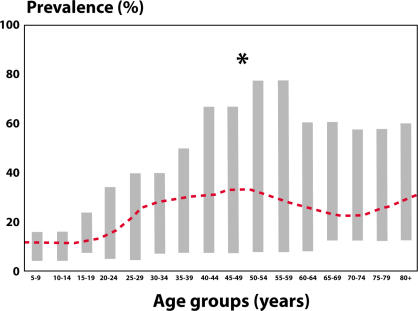
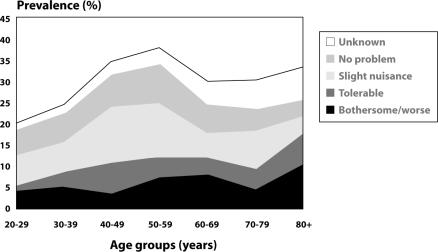
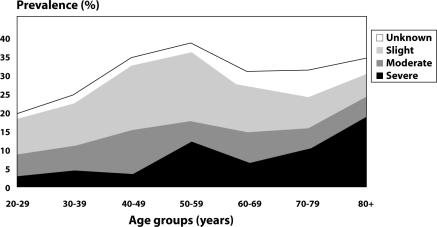
Urinary incontinence is a significant health problem with considerable social and economic impact. It is important to distinguish between prevalence and incidence with regard to incontinence, and prevalence-the probability of having incontinence within a defined population at a defined point in time-is the more important when considering its impact and the utilization of healthcare resources. There are large variations in the severity and impact of incontinence, and its severity, frequency, and predictability all need to be considered when evaluating its effects on patients, The degree of bother is particularly significant when determining who will need treatment. Incontinence may be a result of bladder dysfunction, sphincter dysfunction, or a combination of both, but large-scale studies are not designed to determine the etiology. In young women, the prevalence of incontinence is usually low, but prevalence peaks around menopause, with a steady rise there-after into later life. Although the prevalence of stress and mixed (stress and urge) incontinence is higher than urge incontinence, the latter is more likely to require treatment. In women, moderate and severe bother have a prevalence ranging from about 3% to 17%. Severe incontinence has a low prevalence in young women, but rapidly increases at ages 70 through 80. In men, the prevalence of incontinence is much lower than in women, about 3% to 11% overall, with urge incontinence accounting for 40% to 80% of all male patients. Stress incontinence accounts for less than 10% of cases and is attributable to prostate surgery, trauma, or neurological injury. Incontinence in men also increases with age, but severe incontinence in 70- to 80-year-old men is about half of that in women. The most effective therapy for incontinence will rely on targeting the correct populations to be treated, which depends on how data is collected on prevalence and severity.
Figures
References
-
- Sandvik H. Bergen, Norway: Department of Public Health and Primary Health Care, University of Bergen; 1995. Female urinary incontinence: studies of epidemiology and management in general practice [thesis]
-
- Iosef CS, Bedassy Z. Prevalence of genitourinary symptoms in the late menopause. Acta Obstet Gynecol Scand. 1984;63:257–260. - PubMed
-
- Hording U, Pedersen KH, Sidenius K, Hedegaard L. Urinary incontinence in 45-year-old women. An epidemiological survey. Scand J Urol Nephrol. 1986;20:183–186. - PubMed
-
- Elving LB, Foldspang A, Lam GW, Mommsen S. Descriptive epidemiology of urinary incontinence in 3,100 women age 30–59. Scand J Urol Nephrol Suppl. 1989;125:37–43. - PubMed
-
- Sommer P, Bauer T, Nielsen KK, et al. Voiding patterns and prevalence of incontinence in women. A questionnaire survey. Br J Urol. 1990;66:12–5. - PubMed
LinkOut - more resources
Full Text Sources
Other Literature Sources