Medial epicondylitis: is ultrasound guided autologous blood injection an effective treatment?
- PMID: 16990441
- PMCID: PMC2465032
- DOI: 10.1136/bjsm.2006.029983
Medial epicondylitis: is ultrasound guided autologous blood injection an effective treatment?
Abstract
Objective: To assess if ultrasound guided autologous blood injection is an effective treatment for medial epicondylitis.
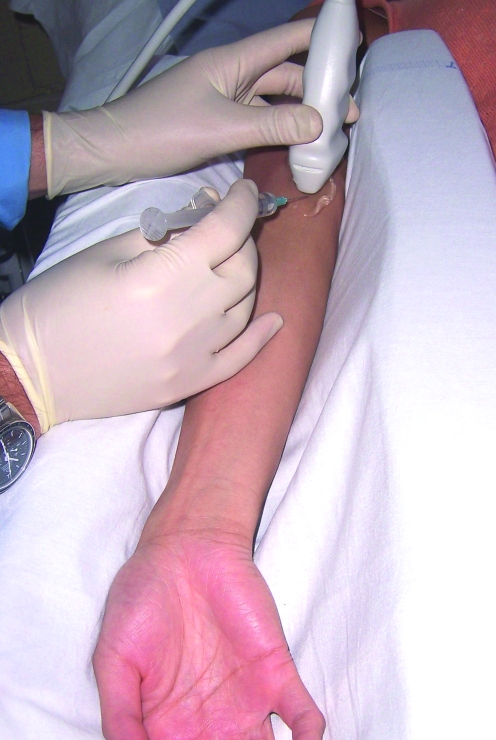
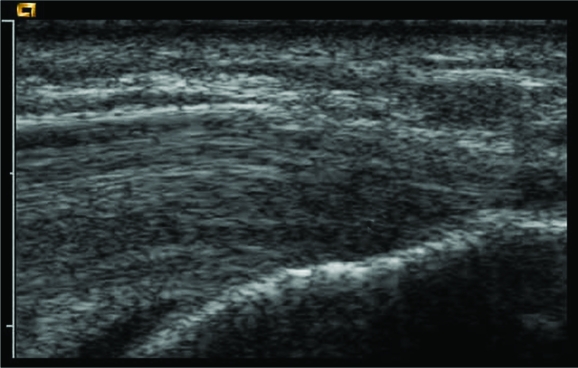
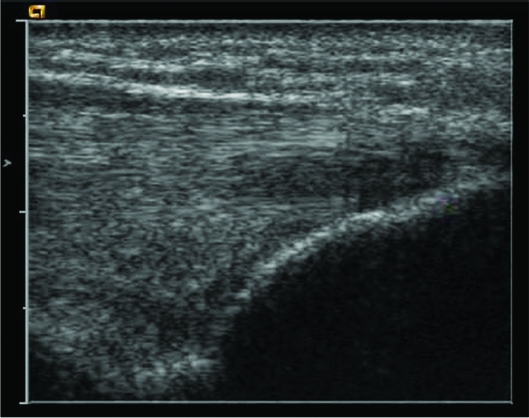
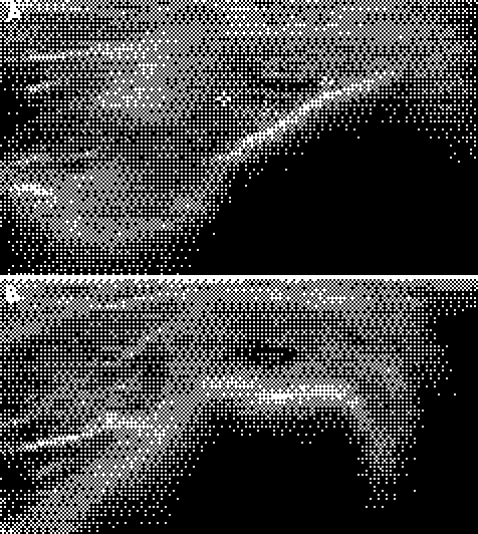
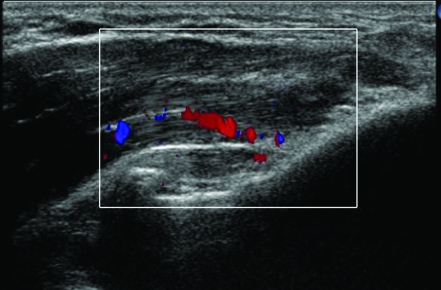
Methods: Twenty patients (13 men, 7 women) with refractory medial epicondylitis with symptom duration of 12 months underwent sonographic evaluation. Tendinosis was confirmed according to three sonographic criteria: echo texture, interstitial tears and neovascularity. The tendon was then dry needled and autologous blood was injected. Patients were reviewed at 4 weeks and at 10 months. VAS scores and modified Nirschl scores were assessed pre-procedure and post-procedure.
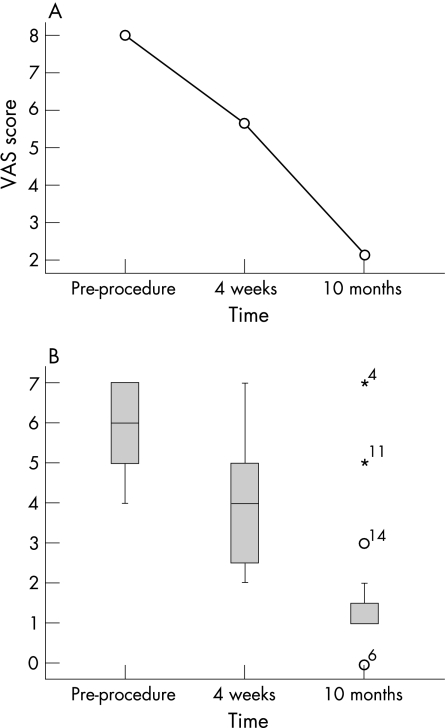
Results: There was significant reduction in VAS pain score between pre-procedure and 10 months post-procedure when it had a median (IQR) of 1.00 (1-1.75), range 0-7. The median (IQR) Nirschl score, which at pre-procedure was 6.00 (5-7), range 4-7, had decreased at 4 weeks to 4.00 (2.25-5), range 2-7, and at 10 months to 1.00 (1-1.75), range 0-7, revealing a significant decrease (z = 3.763, p<0.001). The hypo-echoic change in the flexor tendon significantly decreased between pre-procedure, when there was a mean (SD) of 6.45 (1.47), and at 10 months, when it was 3.85 (2.37) (p<0.001). Doppler ultrasound showed that neovascularity decreased between pre-procedure, when there was a mean (SD) of 6.10 (1.62), range 4-9, and at 10 months, when it was 3.60 (2.56), range 0-9 (p<0.001).
Discussion: The combined action of dry needling and autologous blood injection under ultrasound guidance appears to be an effective treatment for refractory medial epicondylitis as demonstrated by a significant decrease in VAS pain and a fall in the modified Nirschl scores.
Conflict of interest statement
Competing interests: None declared.
References
-
- Leach R E, Miller J K. Lateral and medial epicondylitis of the elbow. Clin Sports Med 1987659–72. - PubMed
-
- Ciccotti M C, Schwaetz M A, Ciccotti M G. Diagnosis and treatment of medial epicondylitis of the elbow. Clin Sports Med 200423693–705. - PubMed
-
- Vangsness C, Jobe F W. Surgical technique of medial epicondylitis: results in 35 elbows. J Bone Joint Surg Br 199173409–411. - PubMed
-
- Edwards S G, Calandruccio J H. Autologous blood injections for refractory lateral epicondylitis. J Hand Surg 200328A272–278. - PubMed
-
- Connell D A, Ali K E, Ahmad M.et al Ultrasound guided autologous blood injection for tennis elbow. Skeletal Radiol 200635(6)371–377. - PubMed
MeSH terms
LinkOut - more resources
Full Text Sources
Other Literature Sources
Medical