


Moderate exercise and chronic stress produce counteractive effects on different areas of the brain by acting through various neurotransmitter receptor subtypes: a hypothesis
- PMID: 16995950
- PMCID: PMC1592480
- DOI: 10.1186/1742-4682-3-33
Moderate exercise and chronic stress produce counteractive effects on different areas of the brain by acting through various neurotransmitter receptor subtypes: a hypothesis
Abstract
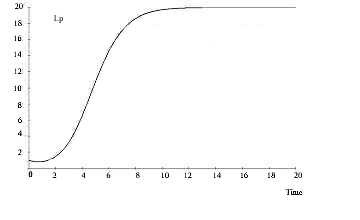
Background: Regular, "moderate", physical exercise is an established non-pharmacological form of treatment for depressive disorders. Brain lateralization has a significant role in the progress of depression. External stimuli such as various stressors or exercise influence the higher functions of the brain (cognition and affect). These effects often do not follow a linear course. Therefore, nonlinear dynamics seem best suited for modeling many of the phenomena, and putative global pathways in the brain, attributable to such external influences.
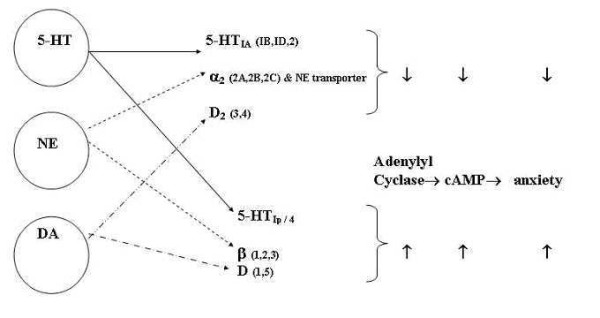
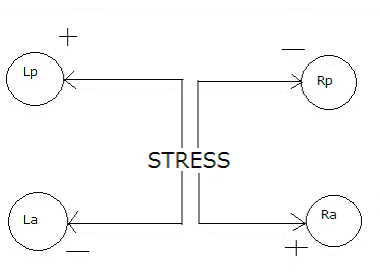
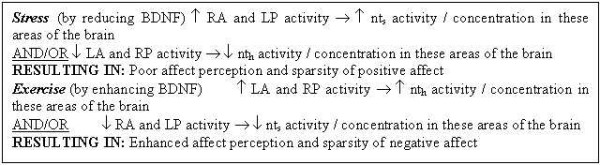
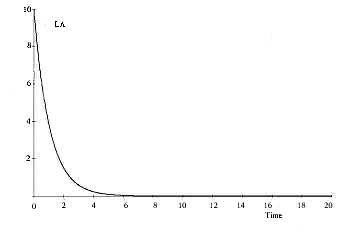
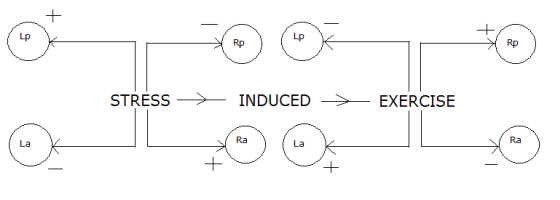
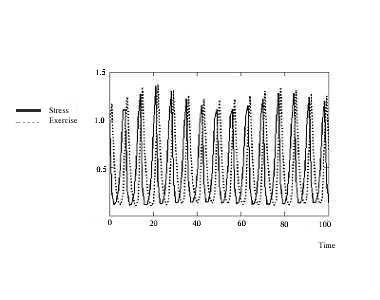
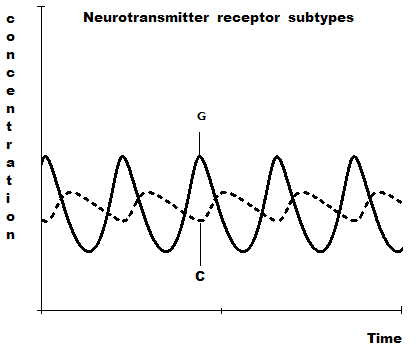
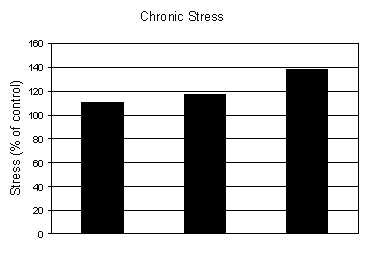
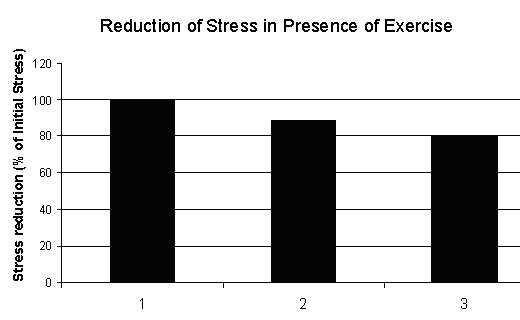
Hypothesis: The general hypothesis presented here considers only the nonlinear aspects of the effects produced by "moderate" exercise and "chronic" stressors, but does not preclude the possibility of linear responses. In reality, both linear and nonlinear mechanisms may be involved in the final outcomes. The well-known neurotransmitters serotonin (5-HT), dopamine (D) and norepinephrine (NE) all have various receptor subtypes. The article hypothesizes that 'Stress' increases the activity/concentration of some particular subtypes of receptors (designated nts) for each of the known (and unknown) neurotransmitters in the right anterior (RA) and left posterior (LP) regions (cortical and subcortical) of the brain, and has the converse effects on a different set of receptor subtypes (designated nth). In contrast, 'Exercise' increases nth activity/concentration and/or reduces nts activity/concentration in the LA and RP areas of the brain. These effects may be initiated by the activation of Brain Derived Neurotrophic Factor (BDNF) (among others) in exercise and its suppression in stress.
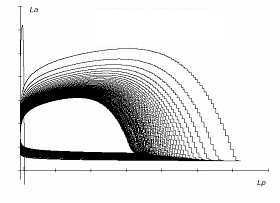
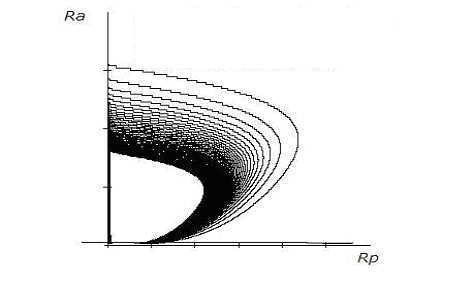
Conclusion: On the basis of this hypothesis, a better understanding of brain neurodynamics might be achieved by considering the oscillations caused by single neurotransmitters acting on their different receptor subtypes, and the temporal pattern of recruitment of these subtypes. Further, appropriately designed and planned experiments will not only corroborate such theoretical models, but also shed more light on the underlying brain dynamics.
Figures
References
-
- Sarbadhikari SN. PhD Thesis. Banaras Hindu University, Varanasi, India; 1995. Neural network aided analysis of electrophysiological signals from the brain of an animal model of depression subjected to chronic physical exercise.
-
- Mandal MK, Asthana H, Pandey R, Sarbadhikari S. Cerebral laterality in affect and affective illness: A review. Journal of Psychology. 1996;130:447–459. - PubMed
-
- Yurgelun-Todd DA, Ross AJ. Functional magnetic resonance imaging studies in bipolar disorder. CNS Spectrums. 2006;11:287–297. - PubMed
Publication types
MeSH terms
Substances
LinkOut - more resources
Full Text Sources
Medical
