


Pathology of the thyroid in severe acute respiratory syndrome
- PMID: 16996569
- PMCID: PMC7112059
- DOI: 10.1016/j.humpath.2006.06.011
Pathology of the thyroid in severe acute respiratory syndrome
Abstract
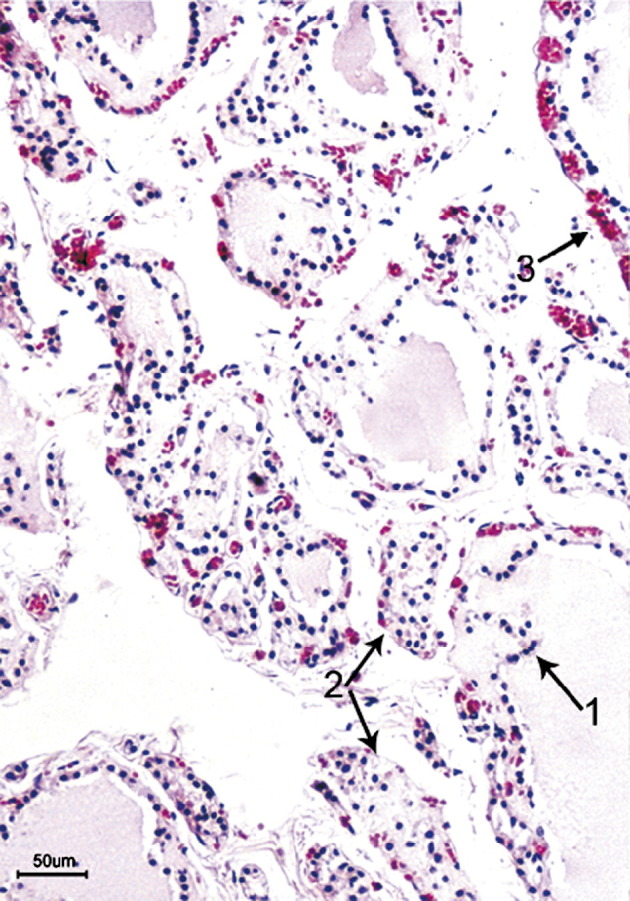
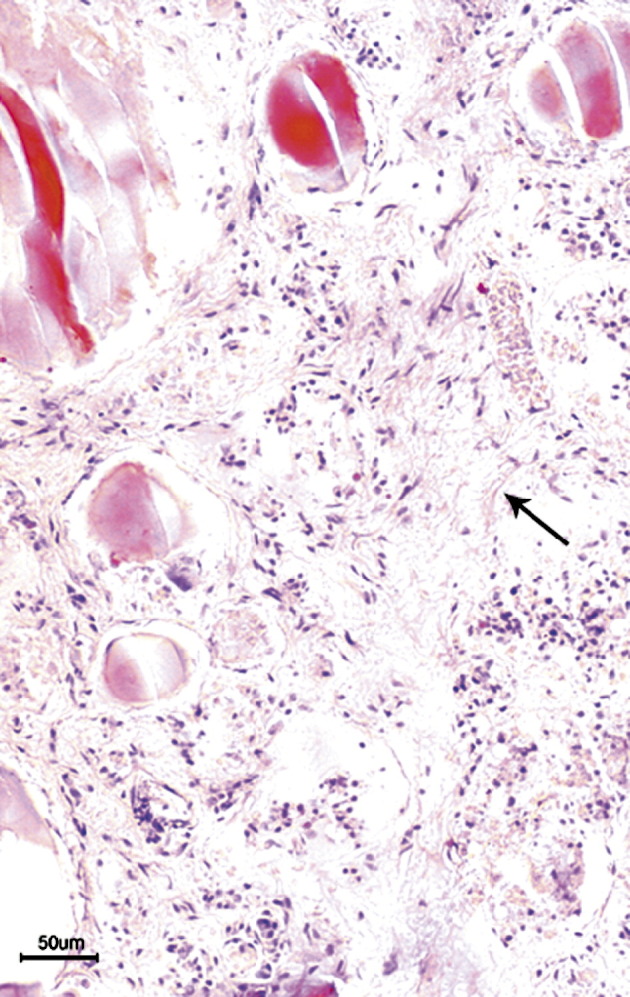
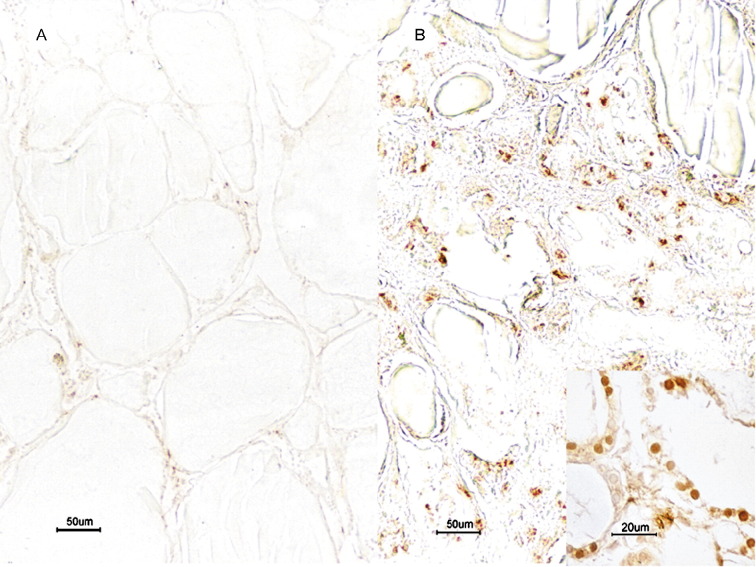
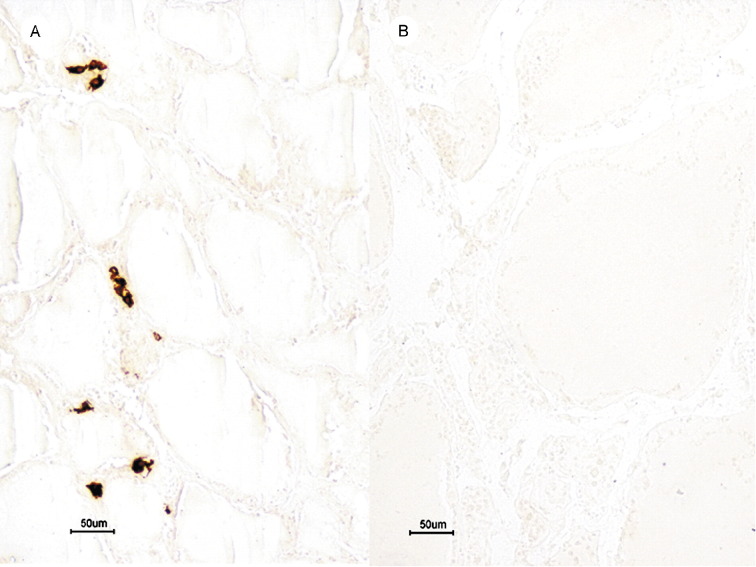
The severe acute respiratory syndrome (SARS) epidemic started in November 2002 and spread worldwide. The pathological changes in several human organs of patients with SARS have been extensively described. However, to date, little has been reported about the effects of this infection on the thyroid gland. Femoral head necrosis and low serum triiodothyronine and thyroxine levels, commonly found in patients with SARS, raise the possibility of thyroid dysfunction. We have undertaken this study to evaluate for any potential injury to the thyroid gland caused by SARS on tissue samples obtained from 5 SARS autopsies. The terminal deoxynucleotidyl transferase-mediated dUPT nick end-labeling assay was performed to identify apoptotic cells. The follicular epithelium was found to be damaged with large numbers of cells exfoliated into the follicle. The terminal deoxynucleotidyl transferase-mediated dUPT nick end-labeling assay demonstrated many cells undergoing apoptosis. Follicular architecture was altered and showed distortion, dilatation, and collapse. No distinct calcitonin-positive cells were detectable in the SARS thyroids. In conclusion, both parafollicular and follicular cells were injured. This may provide an explanation both for low serum triiodothyronine and thyroxine levels and the osteonecrosis of the femoral head associated with patients with SARS. Apoptosis may play a role in the pathogenesis of SARS associated coronavirus infection in the thyroid gland.
Figures
References
-
- Shi X., Gong E., Gao D. Severe acute respiratory syndrome associated coronavirus is detected in intestinal tissues of fatal cases. Am J Gastroenterol. 2005;100:169–176. - PubMed
Publication types
MeSH terms
Substances
LinkOut - more resources
Full Text Sources
Medical
Miscellaneous
