


A high-resolution HLA and SNP haplotype map for disease association studies in the extended human MHC
- PMID: 16998491
- PMCID: PMC2670196
- DOI: 10.1038/ng1885
A high-resolution HLA and SNP haplotype map for disease association studies in the extended human MHC
Abstract
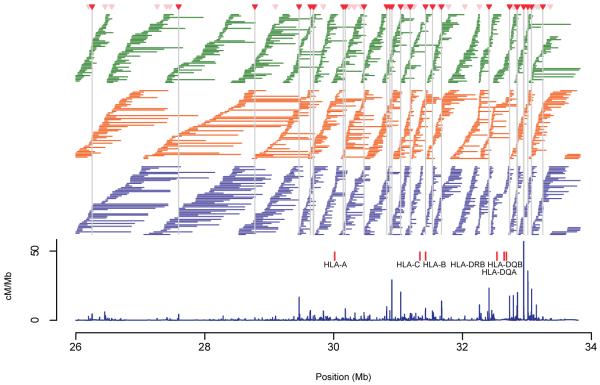
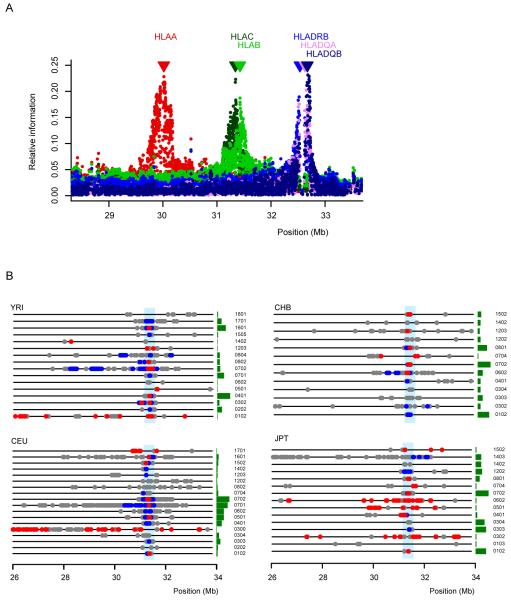
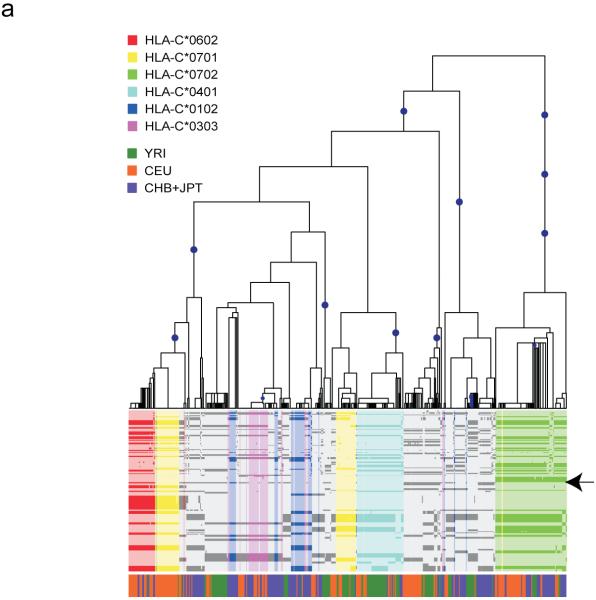
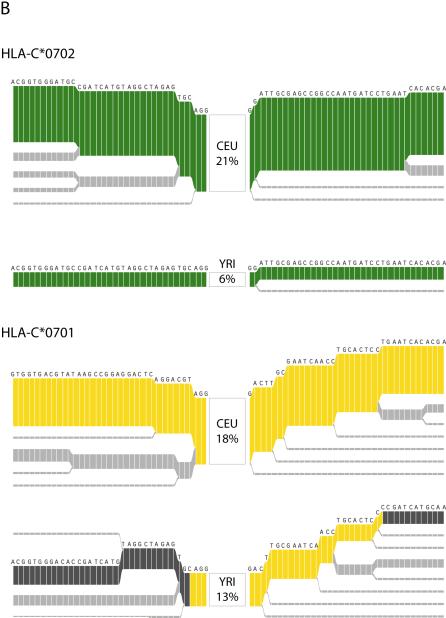
The proteins encoded by the classical HLA class I and class II genes in the major histocompatibility complex (MHC) are highly polymorphic and are essential in self versus non-self immune recognition. HLA variation is a crucial determinant of transplant rejection and susceptibility to a large number of infectious and autoimmune diseases. Yet identification of causal variants is problematic owing to linkage disequilibrium that extends across multiple HLA and non-HLA genes in the MHC. We therefore set out to characterize the linkage disequilibrium patterns between the highly polymorphic HLA genes and background variation by typing the classical HLA genes and >7,500 common SNPs and deletion-insertion polymorphisms across four population samples. The analysis provides informative tag SNPs that capture much of the common variation in the MHC region and that could be used in disease association studies, and it provides new insight into the evolutionary dynamics and ancestral origins of the HLA loci and their haplotypes.
Figures
References
-
- Dupont B, Svejgaard A. HLA and disease. Transplant Proc. 1977;9:1271–4. - PubMed
-
- Allcock RJ, et al. The MHC haplotype project: a resource for HLA-linked association studies. Tissue Antigens. 2002;59:520–1. - PubMed
-
- Horton R, et al. Gene map of the extended human MHC. Nat Rev Genet. 2004;5:889–99. - PubMed
Publication types
MeSH terms
Substances
Grants and funding
LinkOut - more resources
Full Text Sources
Other Literature Sources
Molecular Biology Databases
Research Materials
