Prolactin in man: a tale of two promoters
- PMID: 16998840
- PMCID: PMC1891148
- DOI: 10.1002/bies.20468
Prolactin in man: a tale of two promoters
Abstract
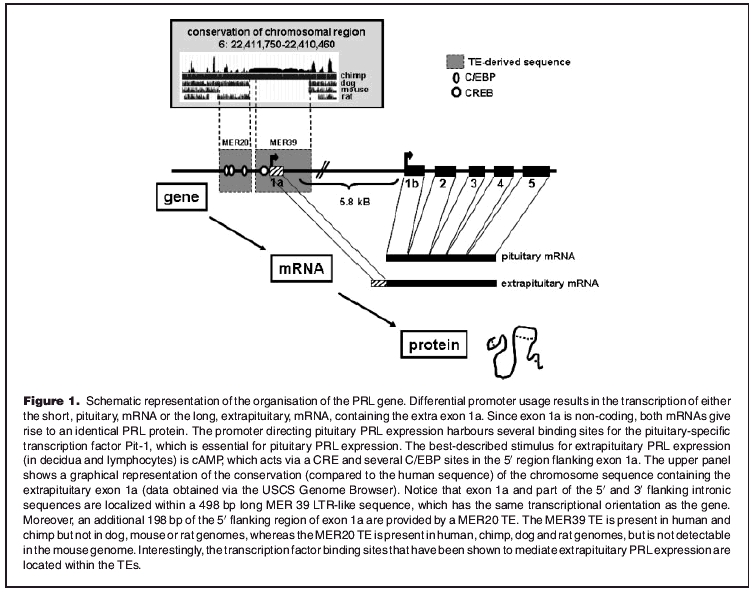
The pituitary hormone prolactin (PRL) is best known for its role in the regulation of lactation. Recent evidence furthermore indicates PRL is required for normal reproduction in rodents. Here, we report on the insertion of two transposon-like DNA sequences in the human prolactin gene, which together function as an alternative promoter directing extrapituitary PRL expression. Indeed, the transposable elements contain transcription factor binding sites that have been shown to mediate PRL transcription in human uterine decidualised endometrial cells and lymphocytes. We hypothesize that the transposon insertion event has resulted in divergent (pituitary versus extrapituitary) expression of prolactin in primates, and in differential actions of pituitary versus extrapituitary prolactin in lactation versus pregnancy respectively. Importantly, the TE insertion might provide a context for some of the conflicting results obtained in studies of PRL function in mice and man.
(c) 2006 Wiley Periodicals, Inc.
Figures
References
-
- Riddle O, Bates RW, Dykshorn SW. The preparation, identification and assay of prolactin- a hormone of the anterior pituitary. Am J Physiol. 1993;105:191–200.
-
- Ben Jonathan N, Mershon JL, Allen DL, Steinmetz RW. Extrapituitary prolactdistribution, regulation, functions, and clinical aspects. Endocr Rev. 1996;17:639–669. - PubMed
-
- DiMattia GE, Gellersen B, Bohnet HG, Friesen HG. A human B-lymphoblastoid cell line produces prolactin. Endocrinology. 1988;122:2508–2517. - PubMed
Publication types
MeSH terms
Substances
Grants and funding
LinkOut - more resources
Full Text Sources
Other Literature Sources