


Folding and misfolding mechanisms of the p53 DNA binding domain at physiological temperature
- PMID: 17001034
- PMCID: PMC2242404
- DOI: 10.1110/ps.062324206
Folding and misfolding mechanisms of the p53 DNA binding domain at physiological temperature
Abstract
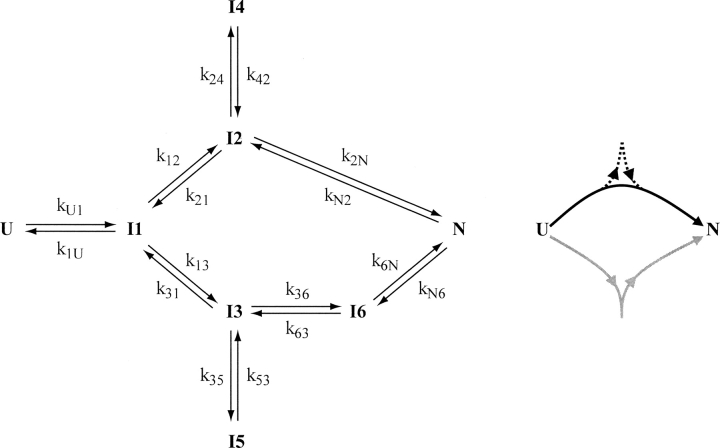
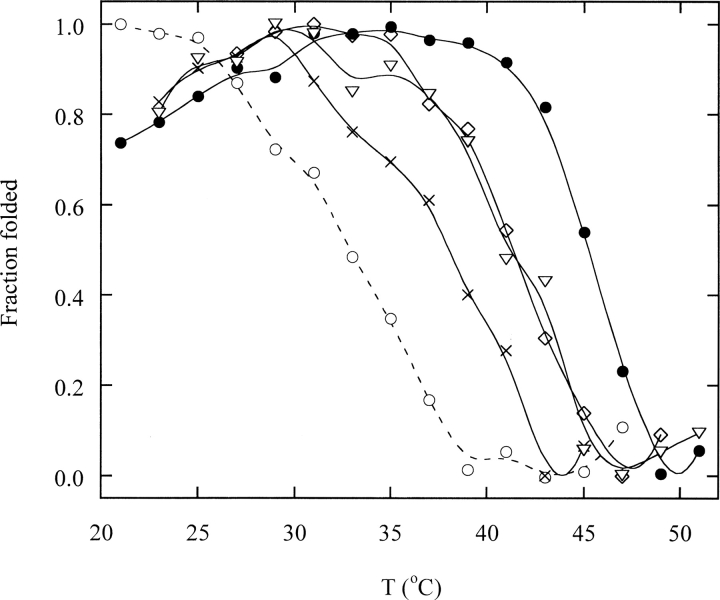
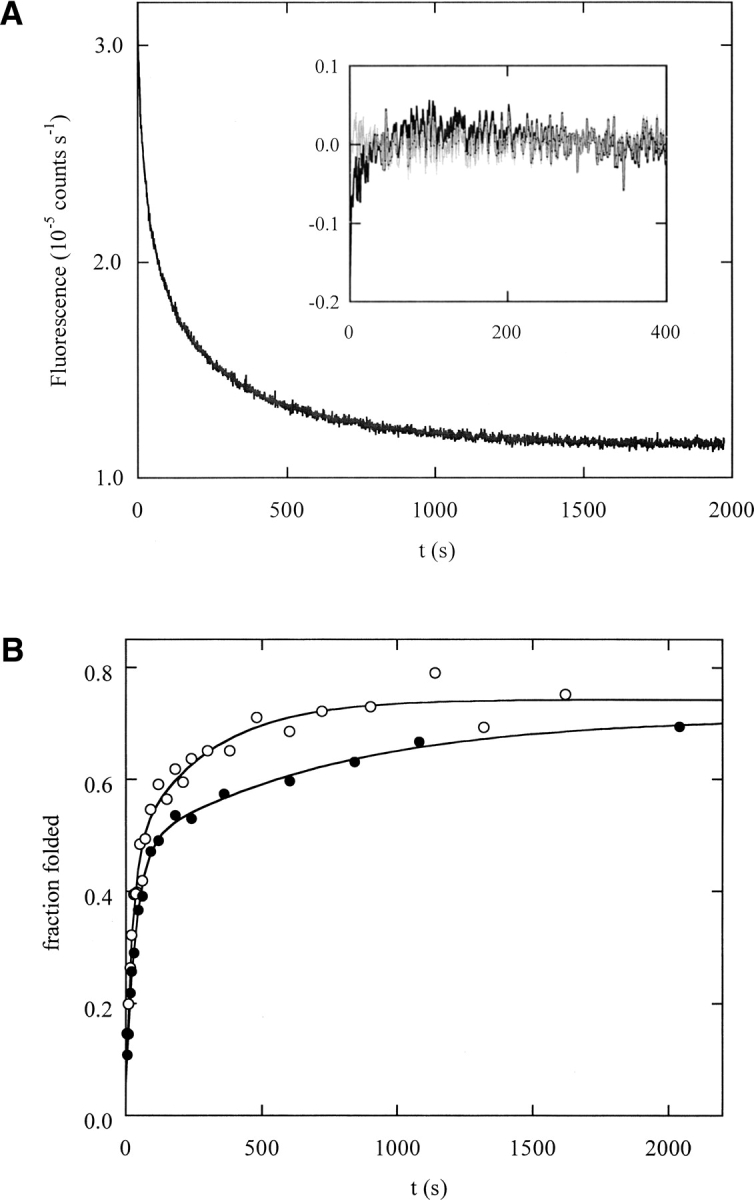
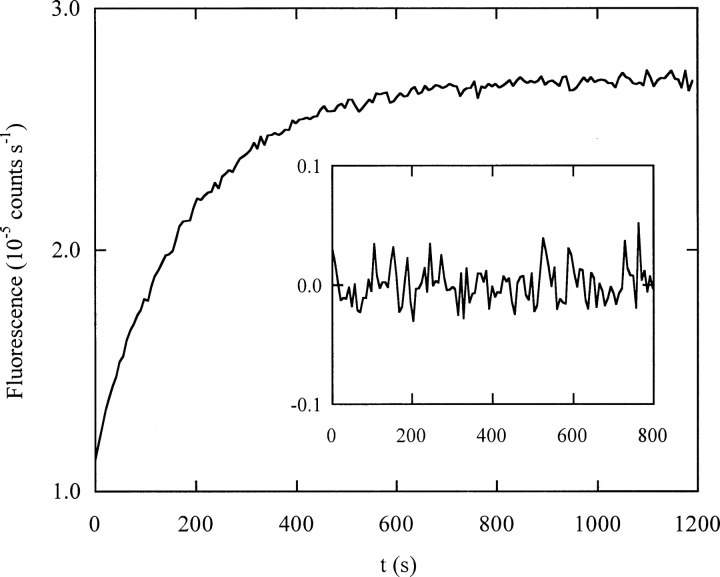
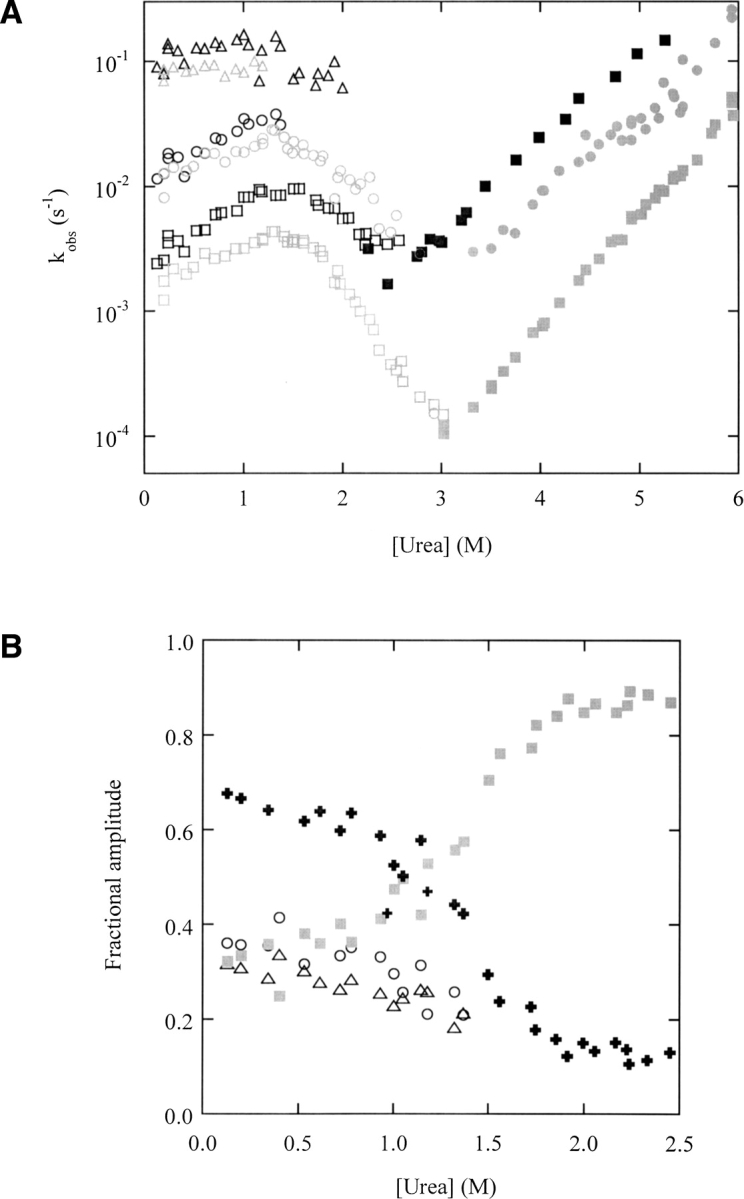
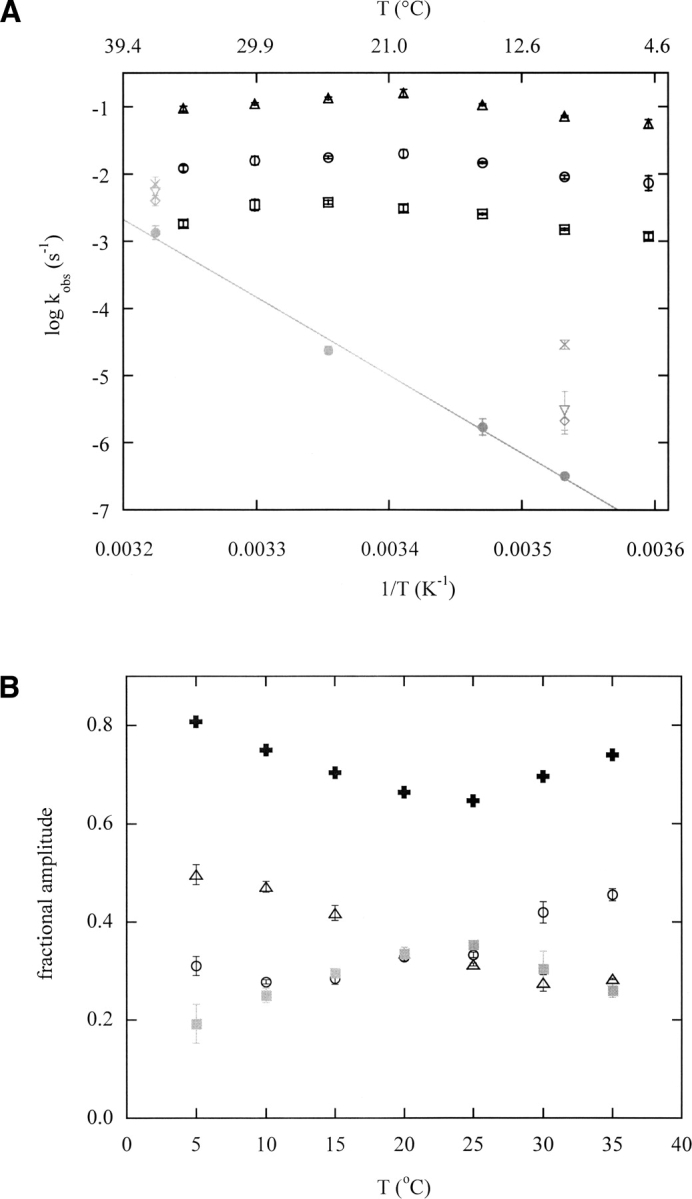
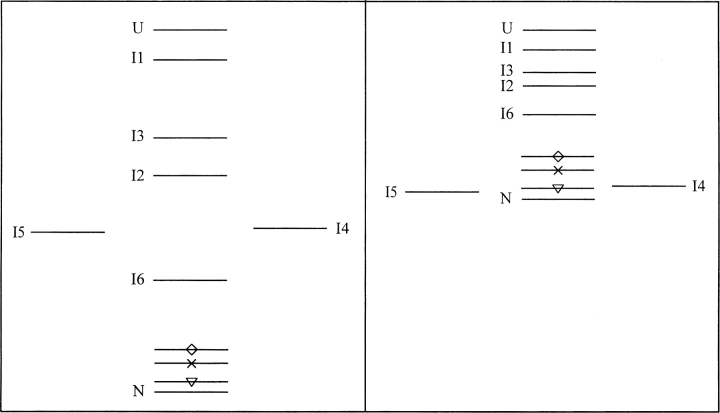
p53 modulates a large number of cellular response pathways and is critical for the prevention of cancer. Wild-type p53, as well as tumorigenic mutants, exhibits the singular property of spontaneously losing DNA binding activity at 37 degrees C. To understand the molecular basis for this effect, we examine the folding mechanism of the p53 DNA binding domain (DBD) at elevated temperatures. Folding kinetics do not change appreciably from 5 degrees C to 35 degrees C. DBD therefore folds by the same two-channel mechanism at physiological temperature as it does at 10 degrees C. Unfolding rates, however, accelerate by 10,000-fold. Elevated temperatures thus dramatically increase the frequency of cycling between folded and unfolded states. The results suggest that function is lost because a fraction of molecules become trapped in misfolded conformations with each folding-unfolding cycle. In addition, at 37 degrees C, the equilibrium stabilities of the off-pathway species are predicted to rival that of the native state, particularly in the case of destabilized mutants. We propose that it is the presence of these misfolded species, which can aggregate in vitro and may be degraded in the cell, that leads to p53 inactivation.
Figures
References
-
- Alexander, P., Orban, J., and Bryan, P. 1992. Kinetic analysis of folding and unfolding the 56 amino acid IgG-binding domain of streptococcal protein G. Biochemistry 31 7243–7248. - PubMed
-
- Bartek, J., Bartkova, J., Vojtesek, B., Staskova, Z., Lukas, J., Rejthar, A., Kovarik, J., Midgley, C.A., Gannon, J.V., and Lane, D.P. 1991. Aberrant expression of the p53 oncoprotein is a common feature of a wide spectrum of human malignancies. Oncogene 6 1699–1703. - PubMed
-
- Bell, S., Klein, C., Muller, L., Hansen, S., and Buchner, J. 2002. p53 contains large unstructured regions in its native state. J. Mol. Biol. 322 917–927. - PubMed
-
- Bullock, A.N., Henckel, J., and Fersht, A.R. 2000. Quantitative analysis of residual folding and DNA binding in mutant p53 core domain: Definition of mutant states for rescue in cancer therapy. Oncogene 19 1245–1256. - PubMed
MeSH terms
Substances
LinkOut - more resources
Full Text Sources
Research Materials
Miscellaneous
