


Clinical features of prostate cancer before diagnosis: a population-based, case-control study
- PMID: 17007705
- PMCID: PMC1920715
Clinical features of prostate cancer before diagnosis: a population-based, case-control study
Abstract
Background: Even in areas where screening is available, many prostate cancers are diagnosed after the symptoms begin. However, the risk posed by particular symptoms is largely unknown, especially in unselected populations such as primary care.
Aim: To identify and quantify the features of prostate cancer before diagnosis, both individually and in combination.
Design of study: Population-based case-control study.
Setting: All 21 general practices in Exeter, Devon, UK.
Methods: We studied all 217 prostate cancer patients diagnosed between 1998 and 2002, and 1080 male controls, matched by age and general practice. The full medical record for 2 years before diagnosis was coded, using the International Classification of Primary Care. We calculated odds ratios for variables independently associated with cancer, using conditional logistic regression, and calculated the positive predictive values for these, both individually and in combination.
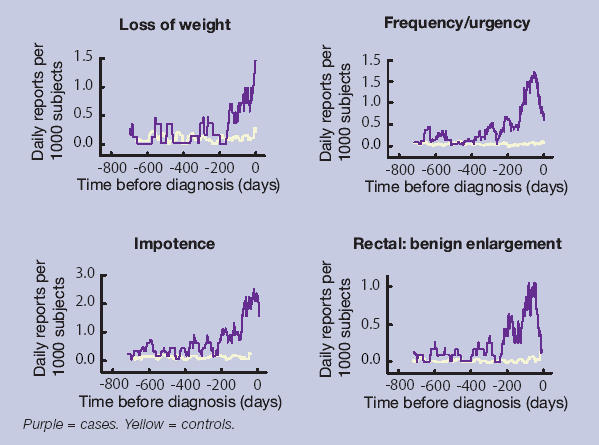
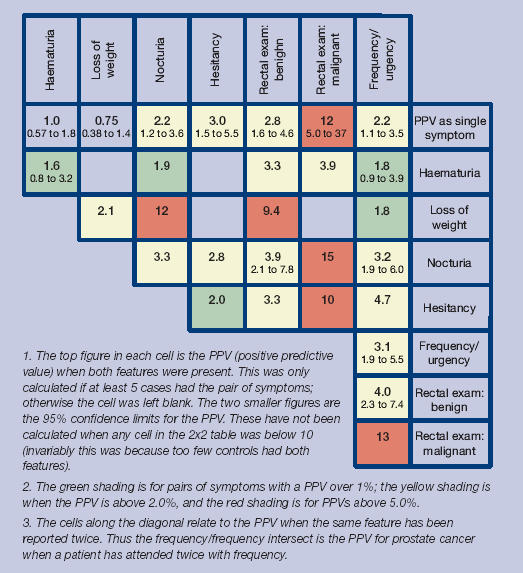
Results: Eight features were associated with prostate cancer before diagnosis. Their positive predictive values against a background risk of 0.35% were: urinary retention 3.1% (95% confidence interval [CI] = 1.5 to 6.0); impotence 3.0% (95% CI = 1.7 to 4.9); frequency 2.2% (95% CI = 1.3 to 3.5); hesitancy 3.0% (95% CI = 1.5 to 5.5); nocturia 2.2% (95% CI = 1.2 to 3.6); haematuria 1.0% (95% CI = 0.57 to 1.8); weight loss 0.75% (95% CI = 0.38 to 1.4); abnormal rectal examination, deemed benign 2.8% (95% CI = 1.6 to 4.6); abnormal rectal examination, deemed malignant 12% (95% CI = 5.0 to 37): all P <0.001, except for hesitancy P = 0.032, nocturia P = 0.004 and haematuria P = 0.009. Loss of weight, impotence, frequency and abnormal rectal examination remained associated with cancer after excluding the final 180 days from analysis.
Conclusion: Most men with prostate cancer present with symptoms. The predictive values for these symptoms will help guide GPs and patients about the value of further investigation.
Figures
References
-
- Cancer Research UK. CancerStats monograph 2004. London: Cancer Research UK; 2004.
-
- Frankel S, Smith GD, Donovan J, Neal D. Screening for prostate cancer. Lancet. 2003;361:1122–1128. - PubMed
-
- Bill-Axelson A, Holmberg L, Ruutu M, et al. Radical prostatectomy versus watchful waiting in early prostate cancer. N Engl J Med. 2005;352:1977–1984. - PubMed
-
- Walsh PC. Surgery and the reduction of mortality from prostate cancer. N Engl J Med. 2002;347:839–840. - PubMed
-
- Gjengsto P, Eide J, Frugard J, et al. The potentially curable prostate cancer patient and the pathways leading to diagnosis and treatment. Scand J Urol Nephrol. 2004;38:15–18. - PubMed
Publication types
MeSH terms
Substances
LinkOut - more resources
Full Text Sources
Other Literature Sources
Medical
Research Materials
