Impact of a social influence intervention on condom use and sexually transmitted infections among establishment-based female sex workers in the Philippines: a multilevel analysis
- PMID: 17014277
- PMCID: PMC2435363
- DOI: 10.1037/0278-6133.25.5.595
Impact of a social influence intervention on condom use and sexually transmitted infections among establishment-based female sex workers in the Philippines: a multilevel analysis
Abstract
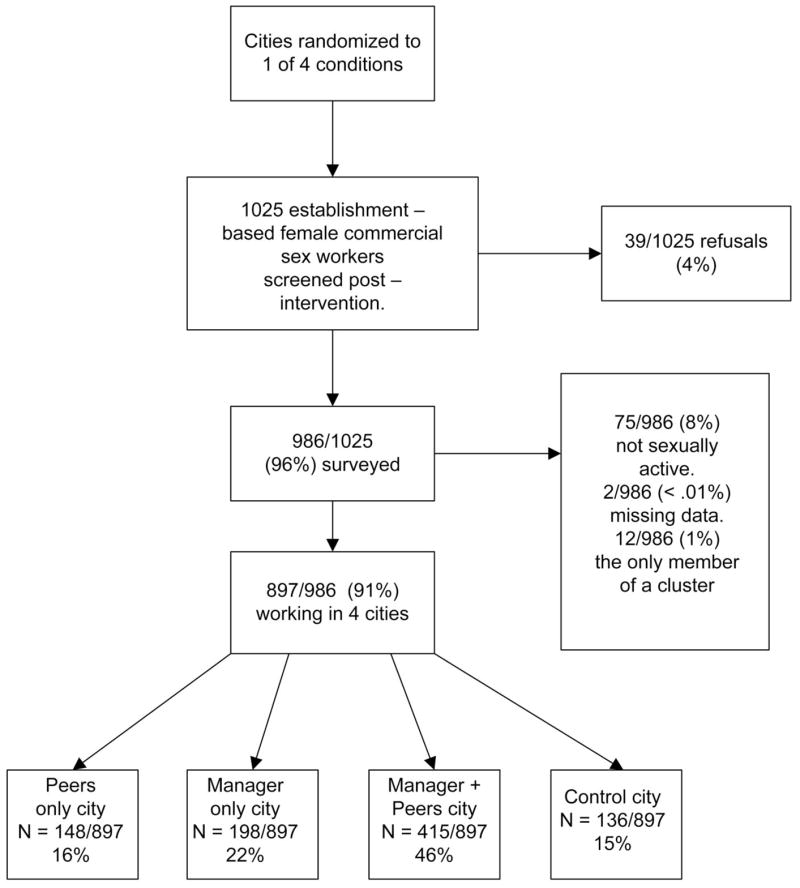
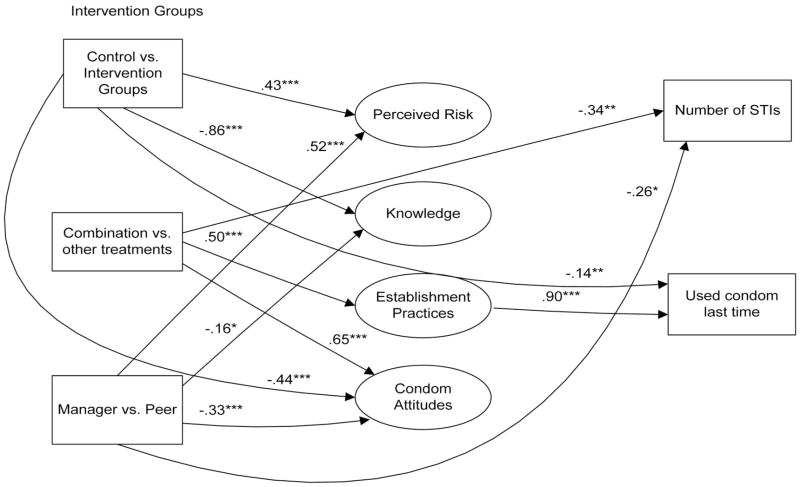
The authors assessed the relative impact of structural and social influence interventions on reducing sexually transmitted infections (STIs) and HIV risk behavior among female sex workers in the Philippines (N = 897). Four conditions included manager influence, peer influence, combined manager-peer influence, and control. Intervention effects were assessed at the establishment level in multilevel models because of statistical dependencies among women employed within the same establishments. Control group membership predicted greater perceived risk, less condom use, less HIV/AIDS knowledge, and more negative condom attitudes. Combination participants reported more positive condom attitudes, more establishment policies favoring condom use, and fewer STIs. Manager-only participants reported fewer STIs, lower condom attitudes, less knowledge, and higher perceived risk than peer-only participants. Because interventions were implemented at the city level, baseline and follow-up city differences were analyzed to rule out intervention effects due to preexisting differences.
Figures
References
-
- Bandura A. Self-efficacy mechanism in human agency. American Psychologist. 1982;37:122–147.
-
- Bandura A. Perceived self-efficacy in the exercise of control over AIDS infection; Paper presented at the National Institute of Mental Health Drug Abuse Research Conference on Women and AIDS; Bethesda, MD. 1987. Jul,
-
- Bandura A. Health promotion by social cognitive means. Health Education and Behavior. 2004;31:143–164. - PubMed
-
- Bentler PM. EQS 6 structural equations program manual. Encino, CA: Multivariate Software; 2005.