


Sensitivity of glycogen phosphorylase isoforms to indole site inhibitors is markedly dependent on the activation state of the enzyme
- PMID: 17016495
- PMCID: PMC2014651
- DOI: 10.1038/sj.bjp.0706925
Sensitivity of glycogen phosphorylase isoforms to indole site inhibitors is markedly dependent on the activation state of the enzyme
Abstract
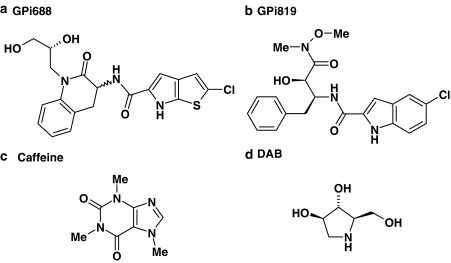
Background and purpose: Inhibition of hepatic glycogen phosphorylase is a potential treatment for glycaemic control in type 2 diabetes. Selective inhibition of the liver phosphorylase isoform could minimize adverse effects in other tissues. We investigated the potential selectivity of two indole site phosphorylase inhibitors, GPi688 and GPi819.
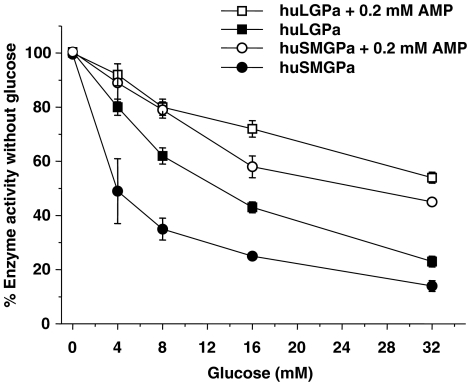
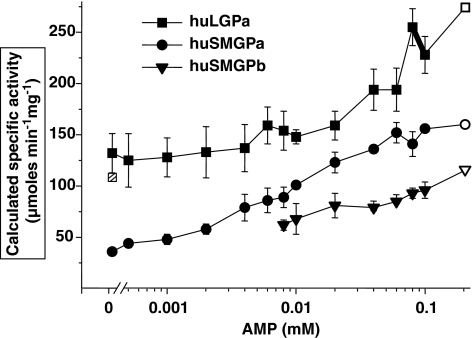
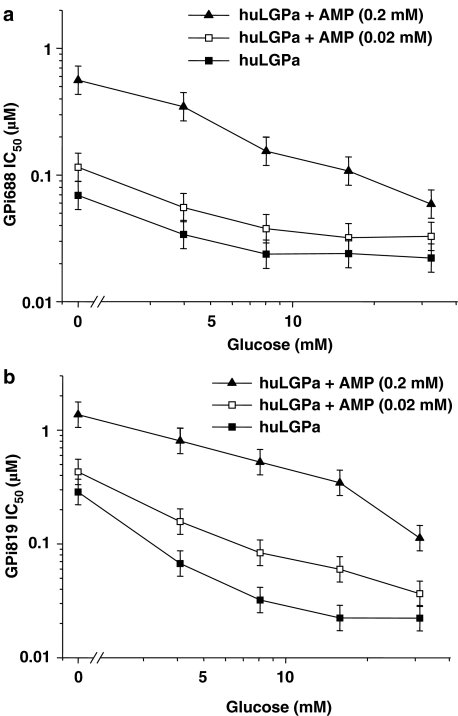
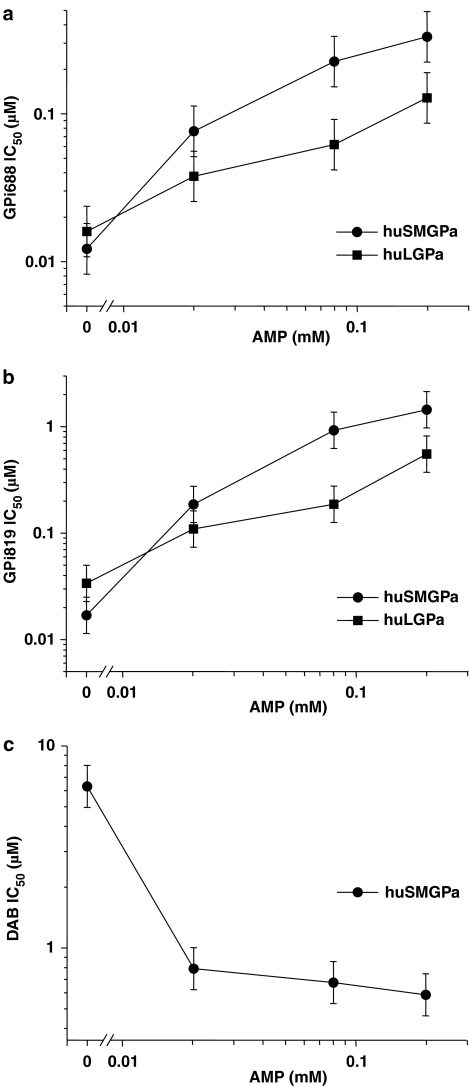
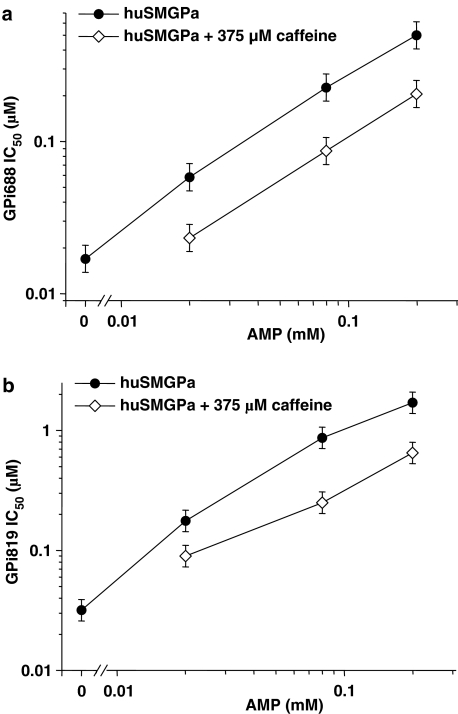
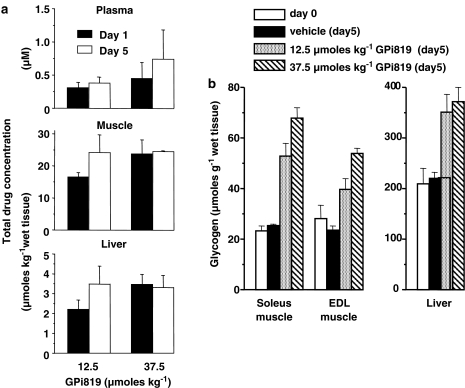
Experimental approach: The activity of glycogen phosphorylase was modulated using the allosteric effectors glucose or caffeine to promote the less active T state, and AMP to promote the more active R state. In vitro potency of indole site inhibitors against liver and muscle glycogen phosphorylase a was examined at different effector concentrations using purified recombinant enzymes. The potency of GPi819 was compared with its in vivo efficacy at raising glycogen concentrations in liver and muscle of Zucker (fa/fa) rats.
Key results: In vitro potency of indole site inhibitors depended upon the activity state of phosphorylase a. Both inhibitors showed selectivity for liver phosphorylase a when the isoform specific activities were equal. After 5 days dosing of GPi819 (37.5 micromol kg(-1)), where free compound levels in plasma and tissue were at steady state, glycogen elevation was 1.5-fold greater in soleus muscle than in liver (P < 0.05).
Conclusions and implications: The in vivo selectivity of GPi819 did not match that seen in vitro when the specific activities of phosphorylase a isoforms are equal. This suggests T state promoters may be important physiological regulators in skeletal muscle. The greater efficacy of indole site inhibitors in skeletal muscle has implications for the overall safety profile of such drugs.
Figures
References
-
- Arabadjis PG, Tullson PC, Terjung RL. Purine nucleoside formation in rat skeletal muscle fiber types. Am J Physiol Cell Physiol. 1993;264:C1246–C1251. - PubMed
-
- AstraZeneca Heterocyclic amide derivatives as inhibitors of glycogen phosphorylase World Intellectual Property Organisation 2003. WO 03/074532 A1
-
- Baker DJ, Timmons JA, Greenhaff PL. Glycogen phosphorylase inhibition in type 2 diabetes therapy. A systematic evaluation of metabolic and functional effects in rat skeletal muscle. Diabetes. 2005;54:2453–2459. - PubMed
-
- Bradford MM. A rapid and sensitive method for the quantitation of microgram quantities of protein utilizing the principle of protein–dye binding. Anal Biochem. 1976;72:248–254. - PubMed
-
- Buchbinder JL, Rath VL, Fletterick RJ. Structural relationships among regulated and unregulated phosphorylases. Annu Rev Biophy Biomol Struct. 2001;30:191–209. - PubMed
MeSH terms
Substances
LinkOut - more resources
Full Text Sources
Other Literature Sources
