


Pharmacological blockade of CCR1 ameliorates murine arthritis and alters cytokine networks in vivo
- PMID: 17016504
- PMCID: PMC2014657
- DOI: 10.1038/sj.bjp.0706912
Pharmacological blockade of CCR1 ameliorates murine arthritis and alters cytokine networks in vivo
Abstract
Background and purpose: The chemokine receptor CCR1 is a potential target for the treatment of rheumatoid arthritis. To explore the impact of CCR1 blockade in experimental arthritis and the underlying mechanisms, we used J-113863, a non-peptide antagonist of the mouse receptor.
Experimental approach: Compound J-113863 was tested in collagen-induced arthritis (CIA) and three models of acute inflammation; Staphylococcus enterotoxin B (SEB)-induced interleukin-2 (IL-2), delayed-type hypersensitivity (DTH) response, and lipopolysaccharide (LPS)-induced tumour necrosis factoralpha (TNFalpha) production. In the LPS model, CCR1 knockout, adrenalectomised, or IL-10-depleted mice were also used. Production of TNFalpha by mouse macrophages and human synovial membrane samples in vitro were also studied.
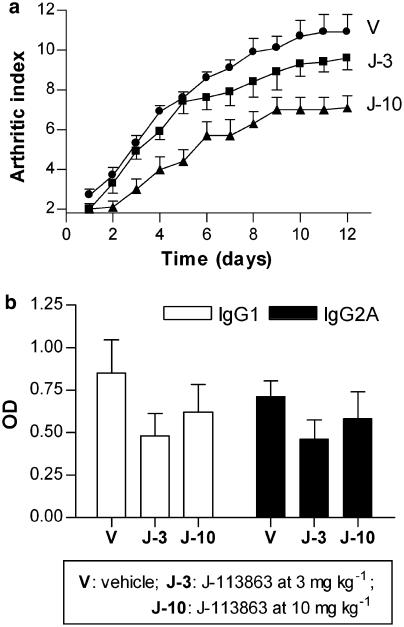
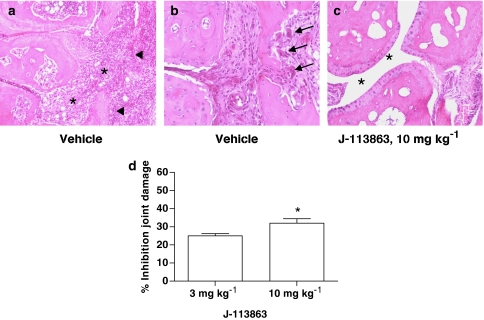
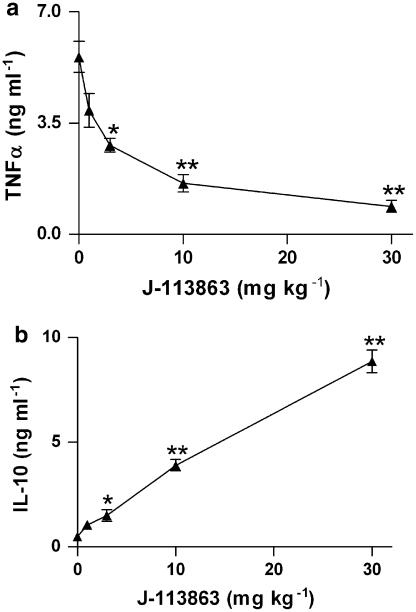
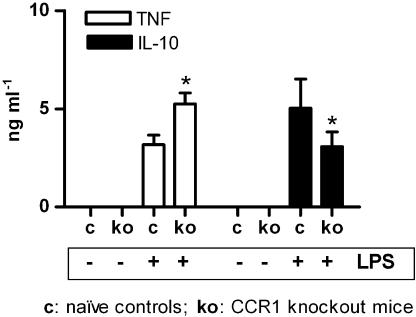
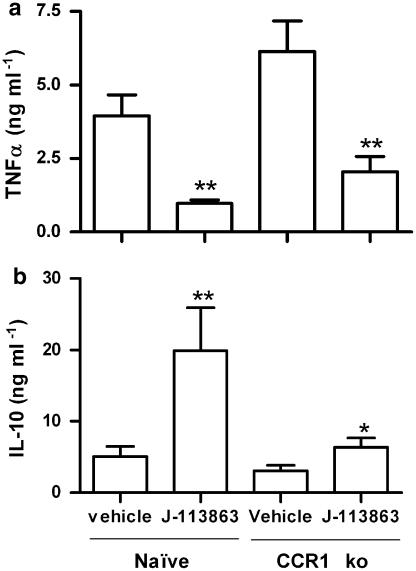
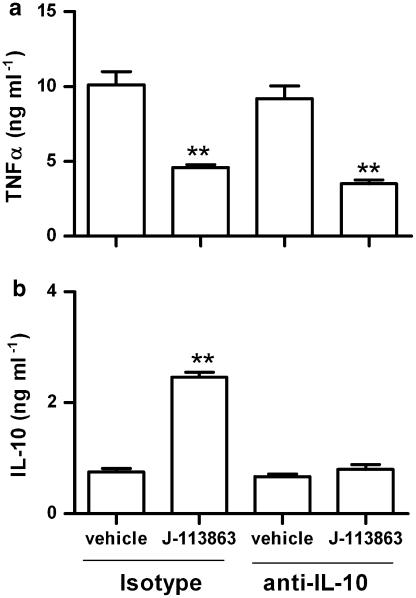
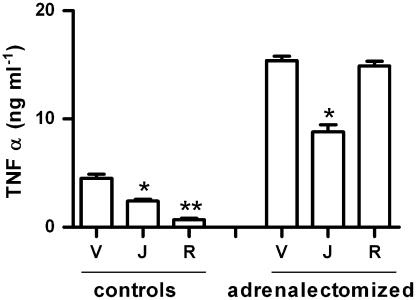
Key results: Treatment of arthritic mice with J-113863 improved paw inflammation and joint damage, and dramatically decreased cell infiltration into joints. The compound did not inhibit IL-2 or DTH, but reduced plasma TNFalpha levels in LPS-treated mice. Surprisingly, CCR1 knockout mice produced more TNFalpha than controls in response to LPS, and J-113863 decreased TNFalpha also in CCR1 null mice, indicating that its effect was unrelated to CCR1. Adrenalectomy or neutralisation of IL-10 did not prevent inhibition of TNFalpha production by J-113863. The compound did not inhibit mouse TNFalpha in vitro, but did induce a trend towards increased TNFalpha release in cells from synovial membranes of rheumatoid arthritis patients.
Conclusions and implications: CCR1 blockade improves the development of CIA, probably via inhibition of inflammatory cell recruitment. However, results from both CCR1-deficient mice and human synovial membranes suggest that, in some experimental settings, blocking CCR1 could enhance TNF production.
Figures
References
-
- Anders H, Belemezova E, Eis S, Segerer S, Vielhauer V, Perez de Lerma G, et al. Late onset of treatment with a chemokine receptor CCR1 antagonist prevents progression of lupus nephritis in MRL-Fas(lpr) mice. J Am Soc Nephro. 2004;15:1504–1513. - PubMed
-
- Blease K, Mehrad B, Standiford T, Lukacs N, Kunkel S, Chensue S, et al. Airway remodeling is absent in CCR1−/− mice during chronic fungal allergic airway disease. J Immunol. 2000;165:1564–1572. - PubMed
-
- Branger J, Van Den Blink B, Weijer S, Madwed J, Bos C, Gupta A, et al. Anti-inflammatory effects of a p38 mitogen-activated protein kinase inhibitor during human endotoxemia. J Immunol. 2002;168:4070–4077. - PubMed
Publication types
MeSH terms
Substances
Grants and funding
LinkOut - more resources
Full Text Sources
Other Literature Sources
Medical
