


Coordinated epithelial NHE3 inhibition and barrier dysfunction are required for TNF-mediated diarrhea in vivo
- PMID: 17016558
- PMCID: PMC1578628
- DOI: 10.1172/JCI29218
Coordinated epithelial NHE3 inhibition and barrier dysfunction are required for TNF-mediated diarrhea in vivo
Abstract
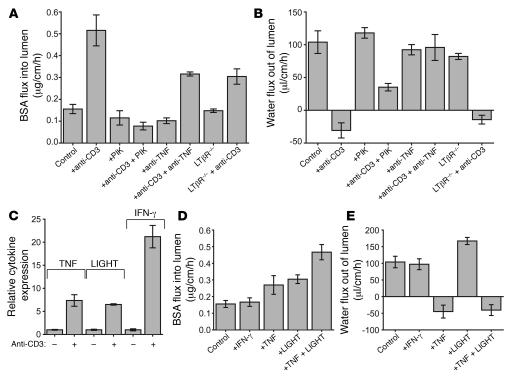
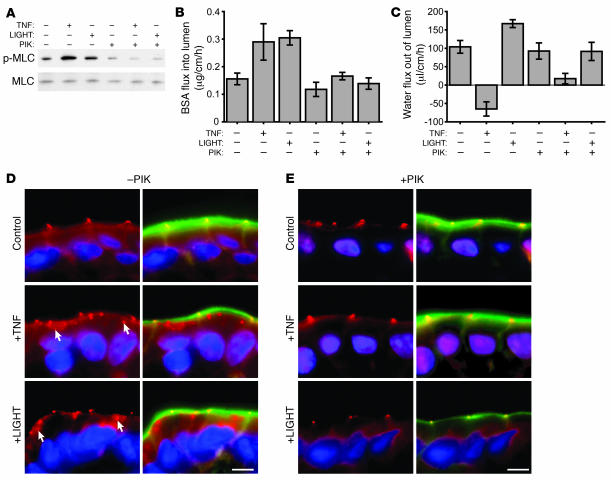
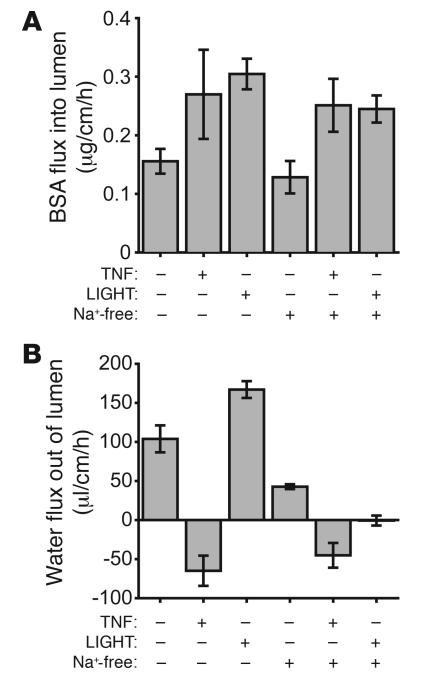
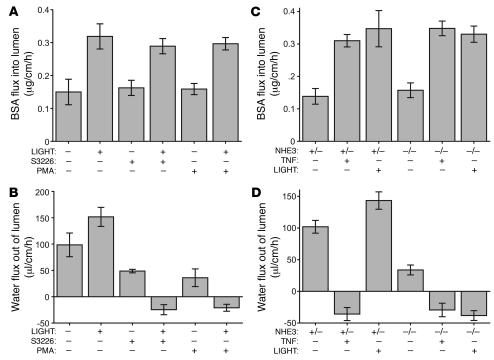
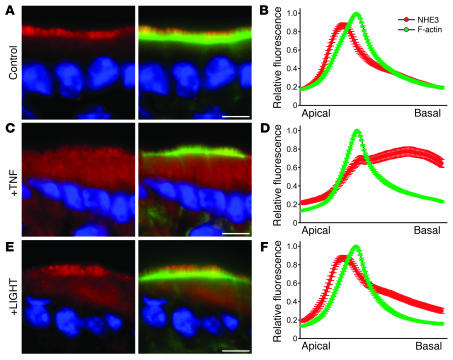
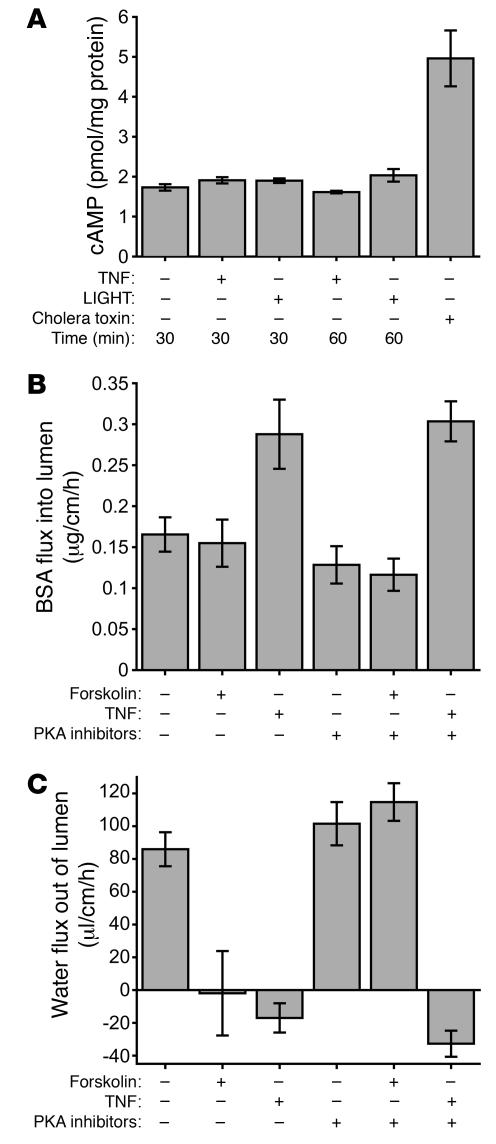
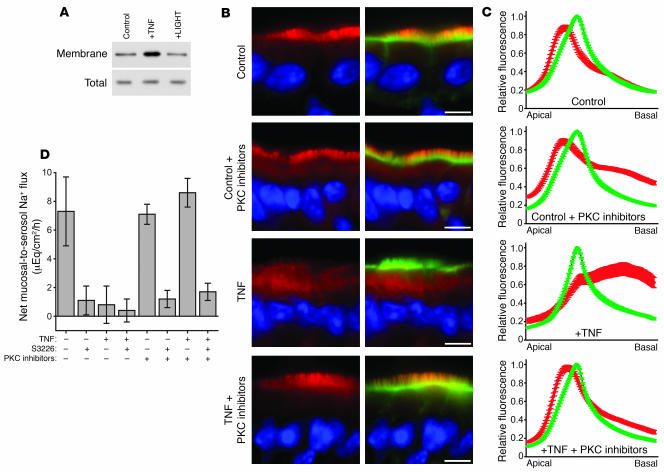
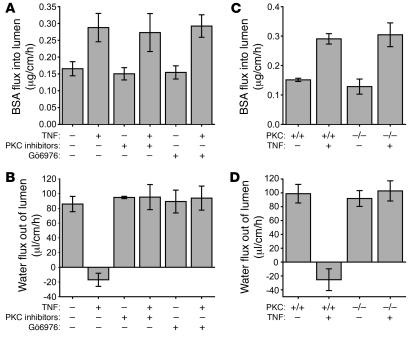
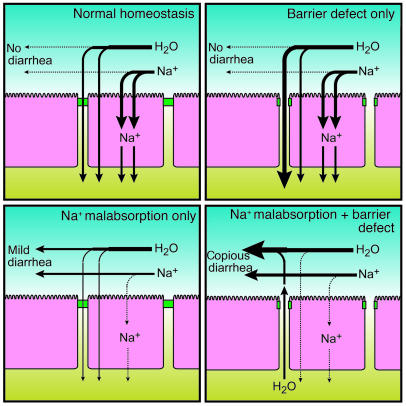
Acute T cell-mediated diarrhea is associated with increased mucosal expression of proinflammatory cytokines, including the TNF superfamily members TNF and LIGHT. While we have previously shown that epithelial barrier dysfunction induced by myosin light chain kinase (MLCK) is required for the development of diarrhea, MLCK inhibition does not completely restore water absorption. In contrast, although TNF-neutralizing antibodies completely restore water absorption after systemic T cell activation, barrier function is only partially corrected. This suggests that, while barrier dysfunction is critical, other processes must be involved in T cell-mediated diarrhea. To define these processes in vivo, we asked whether individual cytokines might regulate different events in T cell-mediated diarrhea. Both TNF and LIGHT caused MLCK-dependent barrier dysfunction. However, while TNF caused diarrhea, LIGHT enhanced intestinal water absorption. Moreover, TNF, but not LIGHT, inhibited Na+ absorption due to TNF-induced internalization of the brush border Na+/H+ exchanger NHE3. LIGHT did not cause NHE3 internalization. PKCalpha activation by TNF was responsible for NHE3 internalization, and pharmacological or genetic PKCalpha inhibition prevented NHE3 internalization, Na+ malabsorption, and diarrhea despite continued barrier dysfunction. These data demonstrate the necessity of coordinated Na+ malabsorption and barrier dysfunction in TNF-induced diarrhea and provide insight into mechanisms of intestinal water transport.
Figures
Comment in
-
T cell activation alters intestinal structure and function.J Clin Invest. 2006 Oct;116(10):2580-2. doi: 10.1172/JCI29985. J Clin Invest. 2006. PMID: 17016551 Free PMC article.
References
-
- Hawker P.C., McKay J.S., Turnberg L.A. Electrolyte transport across colonic mucosa from patients with inflammatory bowel disease. Gastroenterology. 1980;79:508–511. - PubMed
-
- Ferran C., et al. Cytokine-related syndrome following injection of anti-CD3 monoclonal antibody: further evidence for transient in vivo T cell activation. Eur. J. Immunol. 1990;20:509–515. - PubMed
Publication types
MeSH terms
Substances
Grants and funding
LinkOut - more resources
Full Text Sources
Other Literature Sources
Medical
Molecular Biology Databases
