


Steroidogenic acute regulatory protein (StAR): evidence of gonadotropin-induced steroidogenesis in Alzheimer disease
- PMID: 17018137
- PMCID: PMC1592538
- DOI: 10.1186/1750-1326-1-14
Steroidogenic acute regulatory protein (StAR): evidence of gonadotropin-induced steroidogenesis in Alzheimer disease
Abstract
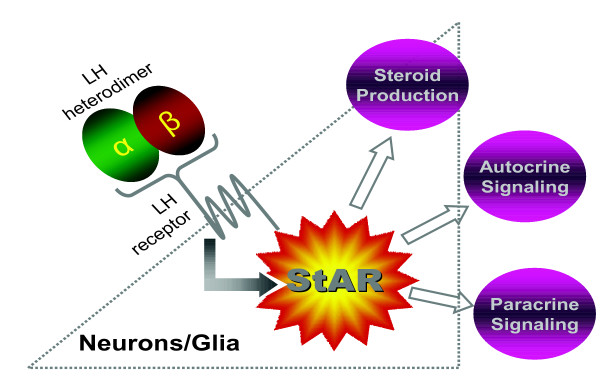
Background: Alzheimer disease (AD) is clinically characterized by progressive memory loss, impairments in behavior, language and visual-spatial skills and ultimately, death. Epidemiological data reporting the predisposition of women to AD has led to a number of lines of evidence suggesting that age-related changes in hormones of the hypothalamic-pituitary-gonadal (HPG) axis following reproductive senescence, may contribute to the etiology of AD. Recent studies from our group and others have reported not only increases in circulating gonadotropins, namely luteinizing hormone (LH) in individuals with AD compared with control individuals, but also significant elevations of LH in vulnerable neuronal populations in individuals with AD compared to control cases as well as the highest density of gonadotropin receptors in the brain are found within the hippocampus, a region devastated in AD. However, while LH is higher in AD patients, the downstream consequences of this are incompletely understood. To begin to examine this issue, here, we examined the expression levels of steroidogenic acute regulatory (StAR) protein, which regulates the first key event in steroidogenesis, namely, the transport of cholesterol into the mitochondria, and is regulated by LH through the cyclic AMP second messenger pathway, in AD and control brain tissue.
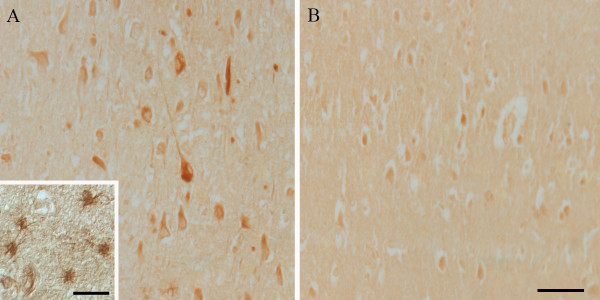
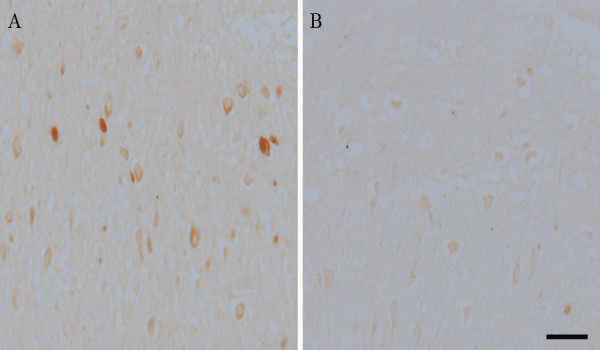
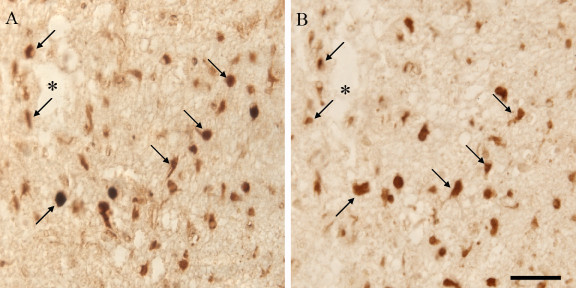
Results: Our data revealed that StAR protein was markedly increased in both the cytoplasm of hippocampal pyramidal neurons as well as in the cytoplasm of other non-neuronal cell types from AD brains when compared with age-matched controls. Importantly, and suggestive of a direct mechanistic link, StAR protein expression in AD brains colocalized with LH receptor expression.
Conclusion: Therefore, our findings suggest that LH is not only able to bind to its receptor and induce potentially pathogenic signaling in AD, but also that steroidogenic pathways regulated by LH may play a role in AD.
Figures
References
-
- Smith MA. Alzheimer disease. Int Rev Neurobiol. 1998;42:1–54. - PubMed
-
- Jorm AF, Korten AE, Henderson AS. The prevalence of dementia: a quantitative integration of the literature. Acta Psychiatr Scand. 1987;76:465–479. - PubMed
-
- Breitner JC, Silverman JM, Mohs RC, Davis KL. Familial aggregation in Alzheimer's disease: comparison of risk among relatives of early-and late-onset cases, and among male and female relatives in successive generations. Neurology. 1988;38:207–212. - PubMed
-
- Rocca WA, Hofman A, Brayne C, Breteler MM, Clarke M, Copeland JR, Dartigues JF, Engedal K, Hagnell O, Heeren TJ, et al. Frequency and distribution of Alzheimer's disease in Europe: a collaborative study of 1980-1990 prevalence findings. The EURODEM-Prevalence Research Group. Ann Neurol. 1991;30:381–390. doi: 10.1002/ana.410300310. - DOI - PubMed
LinkOut - more resources
Full Text Sources
