


Use of a single-nucleotide polymorphism genotyping system to demonstrate the unique epidemiology of methicillin-resistant Staphylococcus aureus in remote aboriginal communities
- PMID: 17021102
- PMCID: PMC1594797
- DOI: 10.1128/JCM.00836-06
Use of a single-nucleotide polymorphism genotyping system to demonstrate the unique epidemiology of methicillin-resistant Staphylococcus aureus in remote aboriginal communities
Abstract
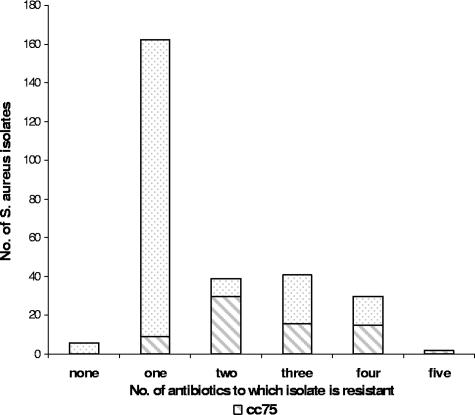
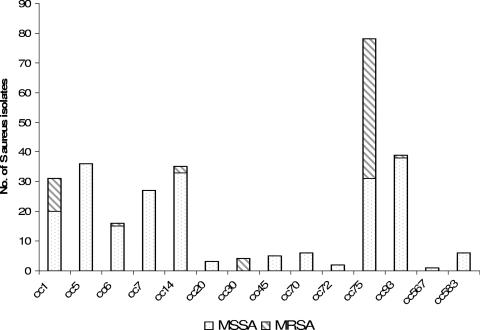
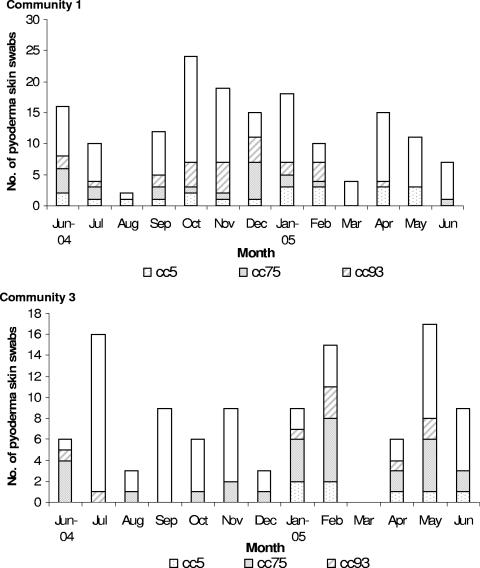
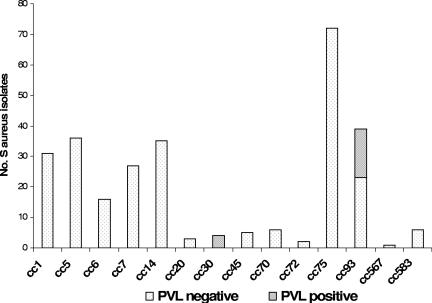
Community-acquired methicillin-resistant Staphylococcus aureus (CA-MRSA) has emerged as a major public health problem in Australia, as in many other parts of the world. High rates of CA-MRSA skin and soft tissue infection have been reported from Aboriginal communities. We used a single-nucleotide polymorphism (SNP) genotyping typing system based on the multilocus sequence type (MLST) database to investigate the epidemiology of CA-MRSA and methicillin-sensitive S. aureus (MSSA) over a 12-month period in three remote Aboriginal communities of Northern Australia. This was supplemented by real-time PCR for Panton-Valentine leukocidin (PVL) genes, staphylococcal cassette chromosome mec (SCCmec) typing, and antimicrobial susceptibility testing. S. aureus was recovered from pyoderma lesions on 221 occasions and throat swabs on 44 occasions. The median monthly recovery rate of S. aureus from skin sores was 58% (interquartile range, 62 to 78%), and there was no seasonal variation. Twenty-three percent of isolates were CA-MRSA; the proportion was similar across the communities and did not vary over the study period. Erythromycin resistance was found in 47% of CA-MRSA and 21% of MSSA. SNP-based typing identified 14 different clonal complexes (cc); however, cc75 was predominant, accounting for 71% of CA-MRSA isolates. These were confirmed as ST75-like by using an additional SNP and MLST of selected isolates. All but one of the cc75 isolates had SSCmec type IV (one had type V), and all were PVL negative. Monthly tracking of SNP-based cc types showed a highly dynamic process. ST75-MRSA-IV appears to be unique to the region and probably evolved de novo in remote Aboriginal communities.
Figures
References
-
- The Australian Group on Antimicrobial Resistance. 2005. MRSA epidemiology and typing report. Staphylococcus aureus Programme 2004. Australian Group on Antimicrobial Resistance, Perth, Western Australia, Australia.
-
- Clinical Laboratory Standards Institute. 2005. Performance standards for antimicrobial susceptibility testing. 15th informational supplement. M2-A8. Wayne, Pa.
-
- Coombs, G. W., G. R. Nimmo, J. M. Bell, F. Huygens, F. G. O'Brien, M. J. Malkowski, J. C. Pearson, A. J. Stephens, and P. M. Giffard. 2004. Genetic diversity among community methicillin-resistant Staphylococcus aureus strains causing outpatient infections in Australia. J. Clin. Microbiol. 42:4735-4743. - PMC - PubMed
Publication types
MeSH terms
LinkOut - more resources
Full Text Sources
Other Literature Sources
Medical
