


Hydroxyproline ingestion and urinary oxalate and glycolate excretion
- PMID: 17021603
- PMCID: PMC2268952
- DOI: 10.1038/sj.ki.5001906
Hydroxyproline ingestion and urinary oxalate and glycolate excretion
Abstract
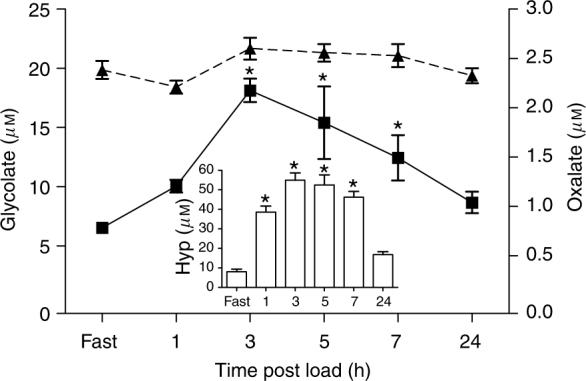
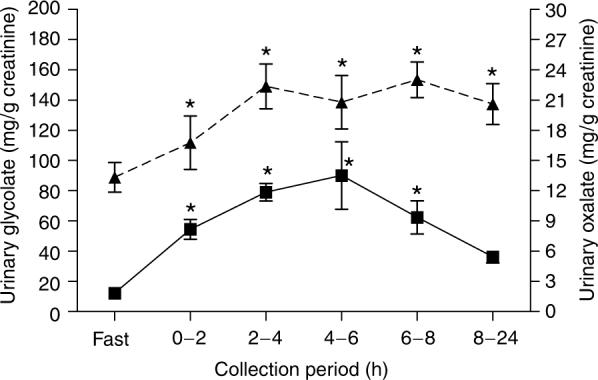
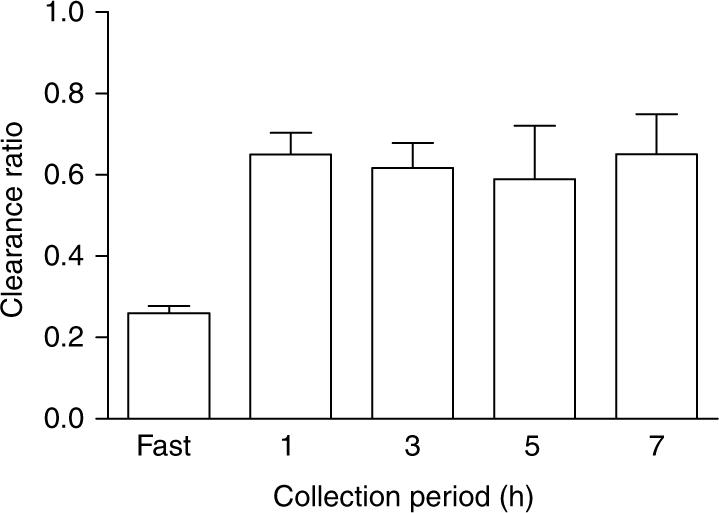
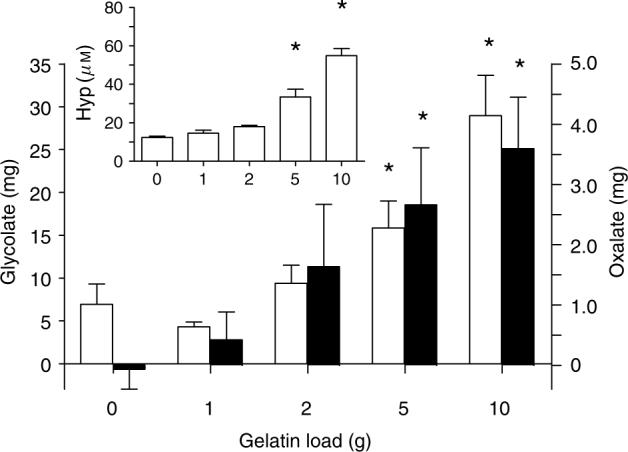
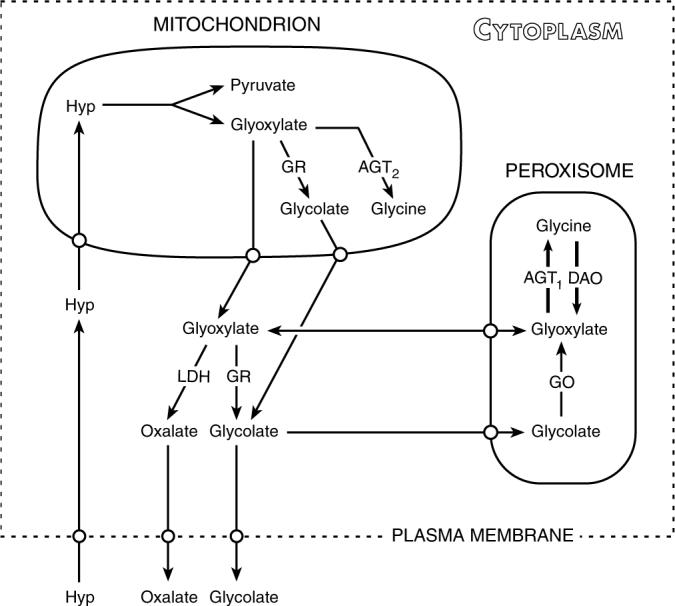
Endogenous synthesis of oxalate is an important contributor to calcium oxalate stone formation and renal impairment associated with primary hyperoxaluria. Although the principal precursor of oxalate is believed to be glyoxylate, pathways in humans resulting in glyoxylate synthesis are not well defined. Hydroxyproline, a component amino acid of collagen, is a potential glyoxylate precursor. We have investigated the contribution of dietary hydroxyproline derived from gelatin to urinary oxalate and glycolate excretion. Responses to the ingestion of 30 g of gelatin or whey protein were compared on controlled oxalate diets. The time course of metabolism of a 10 g gelatin load was determined as well as the response to varying gelatin loads. Urinary glycolate excretion was 5.3-fold higher on the gelatin diet compared to the whey diet and urinary oxalate excretion was 43% higher. Significant changes in plasma hydroxyproline and urinary oxalate and glycolate were observed with 5 and 10 g gelatin loads, but not 1 and 2 g loads. Extrapolation of these results to daily anticipated collagen turnover and hydroxyproline intake suggests that hydroxyproline metabolism contributes 20-50% of glycolate excreted in urine and 5-20% of urinary oxalate derived from endogenous synthesis. Our results also revealed that the kidney absorbs significant quantities of hydroxyproline and glycolate, and their metabolism to oxalate in this tissue warrants further consideration.
Figures

Comment in
-
4-Hydroxyproline metabolism and glyoxylate production: A target for substrate depletion in primary hyperoxaluria?Kidney Int. 2006 Dec;70(11):1891-3. doi: 10.1038/sj.ki.5001987. Kidney Int. 2006. PMID: 17130820
References
-
- Holmes RP, Goodman HO, Assimos DG. Contribution of dietary oxalate to urinary oxalate excretion. Kidney Int. 2001;59:270–276. - PubMed
-
- Danpure CJ. Primary hyperoxaluria. In: Scriver CR, Beaudet AL, Sly WS, Vallee D, Childs B, Kinzler KW, Vogelstein B, editors. The Metabolic and Molecular Bases of Inherited Disease. 8th edn McGraw-Hill; New York: 2001. pp. 3323–3367.
-
- Phang JM, Hu CA, Valle D. Disorders of proline and hydroxyproline metabolism. In: Scriver CR, Beaudet AL, Sly WS, Vallee D, Childs B, Kinzler KW, Vogelstein B, editors. The Metabolic and Molecular Bases of Inherited Disease. McGraw-Hill; New York: 2001. pp. 1821–1838.
-
- Bushinsky DA, Asplin JR, Grynpas MD, et al. Calcium oxalate stone formation in genetic hypercalciuric stone-forming rats. Kidney Int. 2002;61:975–987. - PubMed
Publication types
MeSH terms
Substances
Grants and funding
LinkOut - more resources
Full Text Sources
Other Literature Sources
