


Nicotine induces oxidative stress and activates nuclear transcription factor kappa B in rat mesencephalic cells
- PMID: 17021677
- PMCID: PMC2758082
- DOI: 10.1007/s11010-006-9333-1
Nicotine induces oxidative stress and activates nuclear transcription factor kappa B in rat mesencephalic cells
Abstract
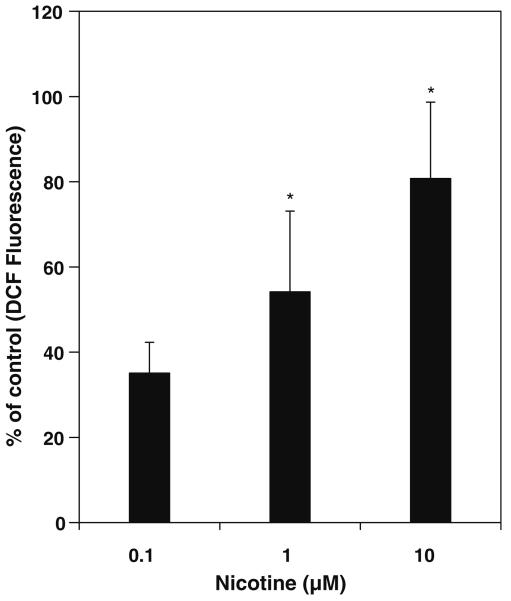
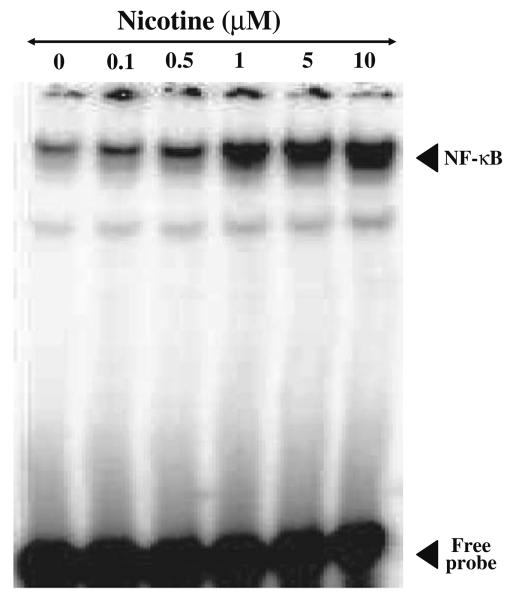
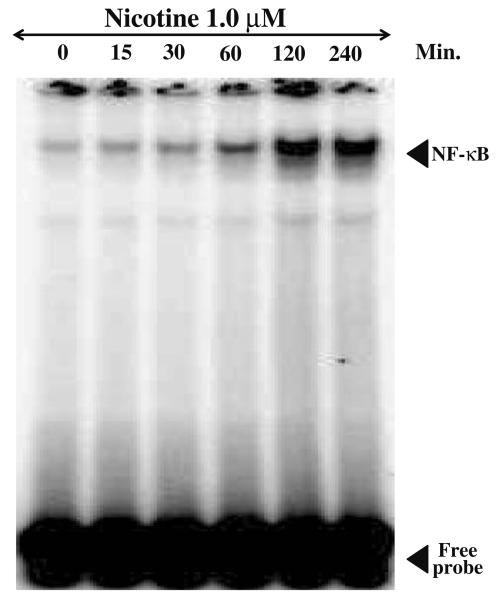
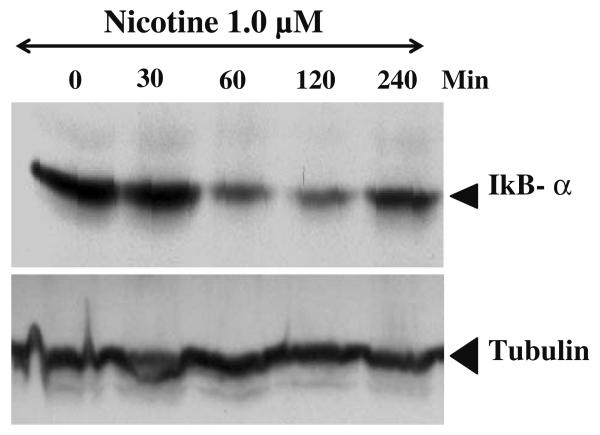
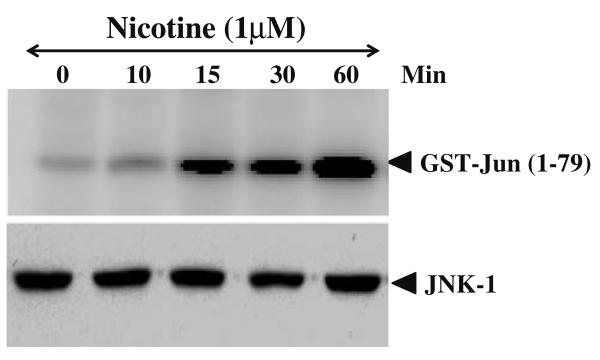
Cigarette smoke is a complex mixture of more than 4700 chemical compounds including free radicals and oxidants. Toxicity exhibited by cigarette smoke may be due to combined action of these compounds inducing many cellular processes mediated through reactive oxygen species (ROS). Major player probably nicotine as it is present in tobacco, in higher concentrations. The compounds that induce intracellular oxidative stress recognized as the important agents involved in the damage of biological molecules. Experiments using animal and cell culture model systems suggested that moderately higher concentrations of some forms of ROS like NO and H(2)O(2) can act as signal transducing agents. Nuclear transcription factor kappaB (NF-kappaB) an inducible transcription factor detected in neurons found to be involved in many biological processes such as inflammation, innate immunity, development, apoptosis, and antiapoptosis. Our present study demonstrates that nicotine induces ROS levels in a dose dependent manner in rat mesencephalic cells. Electro mobility shift analysis showed that nicotine activates inducible NF-kappaB by binding to consensus sequence of DNA. Nicotine added to cell culture stimulates the degradation of IkappaB-alpha subunit in 2 h. Further activation of c-Jun terminal kinase indicates that nicotine induces oxidative stress leading to activation of stress dependent NF-kappaB pathway in mesencephalic cells.
Figures
References
-
- Pailer M. Chemistry of nicotine and related alkaloids (including biosynthetic aspects) In: EulerVon US, editor. Tobacco Alkaloids and Related Compounds. The McMillan Co; New york: 1964. pp. 15–36.
-
- Hammond D, Collishaw NE, Callard C. Secret science: tobacco industry research on smoking behaviour and cigarette toxicity. Lancet. 2006;367:781–787. - PubMed
-
- Maneckjee R, Minna JD. Opioids induce while nicotine suppresses apoptosis in human lung cancer cells. Cell growth Diff. 1994;5:1033–1040. - PubMed
-
- Mandelzys A, Cooper E. Effects of ganglionic satellite cells and NGF on the expression of nicotine acetylcholine currents by rat sensory neurons. J Neurophysiol. 1992;67:1213–1221. - PubMed
-
- Heeschen C, Jang JJ, Weis M, Pathak A, Kaji S, Hu RS, Tsao PS, Johnson FL, Cooke JP. Nicotine stimulates angiogenesis and promotes tumor growth and atherosclerosis. Nat Med. 2001;7:833–839. - PubMed
Publication types
MeSH terms
Substances
Grants and funding
LinkOut - more resources
Full Text Sources
Miscellaneous
